Begleiten Sie uns auf eine literarische Weltreise!
Buch zum Bücherregal hinzufügen
Grey
Einen neuen Kommentar schreiben Default profile 50px
Grey
Jetzt das ganze Buch im Abo oder die ersten Seiten gratis lesen!
All characters reduced
Patriotism - National Allegiance Dynamics Understanding Civic Loyalties - cover

Patriotism - National Allegiance Dynamics Understanding Civic Loyalties

Fouad Sabry

Verlag: One Billion Knowledgeable

  • 0
  • 0
  • 0

Beschreibung

Explore the intricate realm of "Patriotism" with this crucial addition to the "Political Science" series. This detailed examination delves into the roots, debates, and global impacts of national loyalty. In a world where identity and governance are tightly linked to national sentiment, understanding Patriotism is vital for professionals, students, and enthusiasts.
 
Chapters Brief Overview:
 
1-Patriotism-Traces Patriotism’s evolution, examining its psychological, cultural, and political roots.
 
2-Nationalism-Explores the convergence and divergence of Patriotism and Nationalism, addressing conflicts.
 
3-Romantic Nationalism-Analyzes Romanticism’s influence on Patriotism in Europe and beyond.
 
4-American Enlightenment-Examines how Enlightenment ideals shaped American Patriotism.
 
5-Canadian Nationalism-Looks at Canadian Patriotism within its diverse, multicultural, and federalist context.
 
6-American Nationalism-Studies modern American Patriotism in politics, culture, and global relations.
 
7-German Nationalism-Navigates Germany’s Patriotism from Romanticism to reunification and modern identity.
 
8-National Identity-Explores the construction of national identities and their ties to Patriotism.
 
9-Constitutional Patriotism-Discusses a civic form of Patriotism rooted in democratic values and inclusivity.
 
10-Black Nationalism-Examines the interplay of Patriotism with racial identity and social justice.
 
11-Johann Gottfried Herder-Analyzes Herder’s influence on cultural identity and national consciousness.
 
12-Anarchism and Nationalism-Investigates how anarchist thought critiques and intersects with Patriotism.
 
13-Anti-Patriotism-Explores philosophical, political, and ethical critiques of Patriotism.
 
14-Left-wing Nationalism-Discusses how left-wing ideologies reconcile national loyalty with global justice.
 
15-Andrzej Walicki-Analyzes Walicki’s work on Patriotism in Eastern Europe during political shifts.
 
16-Soviet Patriotism-Examines Patriotism in the Soviet context, its ideological manipulation, and genuine expressions.
 
17-Reclaiming Patriotism-Advocates for reclaiming Patriotism, focusing on civic engagement and global ethics.
 
18-Socialist Patriotism-Analyzes Patriotism’s role within socialist frameworks and societal cohesion.
 
19-Finnish Nationalism-Explores Finnish Patriotism in relation to Nordic identity and geopolitical factors.
 
20-Australian Nationalism-Looks at Australia’s evolving Patriotism amidst indigenous and multicultural influences.
 
21-Heimin-Discusses the Japanese concept of Heimin and its unique perspective on Patriotism.
 
Gain profound insights with "Patriotism," a comprehensive guide that goes beyond basic knowledge. Whether you're looking for academic depth, societal reflection, or personal growth, this book offers invaluable perspectives on national loyalty in today’s interconnected world, empowering readers with informed views on the complexities of Patriotism.
Verfügbar seit: 04.09.2024.
Drucklänge: 231 Seiten.

Weitere Bücher, die Sie mögen werden

  • The Hymns of Hermes - cover

    The Hymns of Hermes

    George Robert Stow Mead

    • 0
    • 0
    • 0
    The Hymns of Hermes by G. R. S. Mead is a seminal work that offers an invaluable insight into the ancient Greco-Egyptian religious syncretism of the period. Through its examination of Hermetic texts, particularly those found in the Corpus Hermeticum and related works, this seminal work provides astute analysis of the various conceptual threads that coalesced to form a distinct syncretic religious tradition in antiquity. Read in English, unabridged.
    Zum Buch
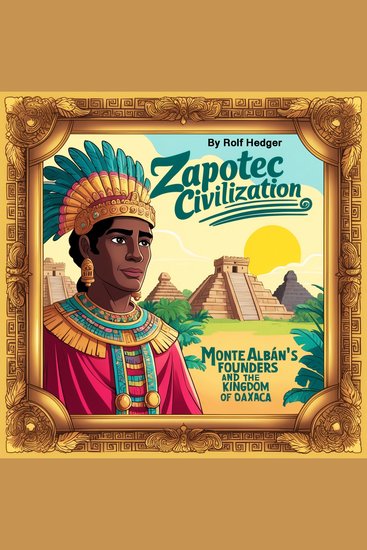
  • Zapotec Civilization - Monte Albán's Founders and the Kingdom of Oaxaca - cover

    Zapotec Civilization - Monte...

    Rolf Hedger

    • 0
    • 0
    • 0
    The Zapotec civilization emerged in the valleys of Oaxaca, a region characterized by its fertile land, diverse ecosystems, and strategic position for trade and agriculture. Archaeological evidence suggests that the earliest Zapotec communities began forming around 1500 BCE, with small farming villages dotting the landscape. Over time, these settlements grew in complexity, giving rise to a society that would become one of Mesoamerica’s most influential civilizations. 
    Early Zapotec communities relied heavily on agriculture, cultivating maize, beans, squash, and chili peppers—staples that formed the foundation of their diet. The region’s rivers and seasonal rains provided a reliable water source, allowing for irrigation techniques that supported larger populations. As food production increased, villages expanded, and the need for organization led to the development of social hierarchies. Religious leaders, warriors, and skilled artisans began to hold distinct roles in society, paving the way for the emergence of political structures. 
    By the first millennium BCE, the Zapotecs had established themselves as a dominant force in the Oaxaca Valley. Unlike nomadic or loosely structured societies, they developed permanent settlements with planned architecture, ceremonial centers, and marketplaces. This period saw the rise of San José Mogote, one of the earliest known Zapotec centers, where the first signs of their writing system and political organization appeared. San José Mogote’s influence laid the groundwork for the later establishment of Monte Albán, which would become the heart of Zapotec power.
    Zum Buch
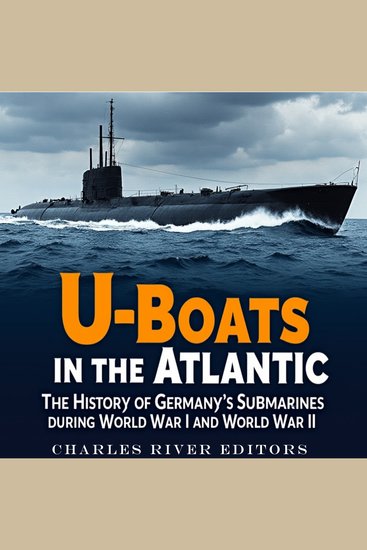
  • U-Boats in the Atlantic: The History of Germany’s Submarines during World War I and World War II - cover

    U-Boats in the Atlantic: The...

    Editors Charles River

    • 0
    • 0
    • 0
    World War I witnessed the First Battle of the Atlantic, when the Kaiserreich unleashed its U-boats against England. During the war, the German submarines sent much of the British merchant marine to the bottom. Indeed, German reliance on U-boats in both World War I and World War II stemmed largely from their nation's geography. The Germans eventually recognized the superiority of the Royal Navy and its capacity to blockade Germany's short coastline in the event of war. While the British could easily interdict surface ships, submarines slipped from their Kiel or Hamburg anchorages unseen, able to prey upon England's merchant shipping. 
    The sleek hunter-killers lurking beneath the waves, using periscopes to close in unnoticed on their prey, added a new, nerve-wracking element to naval warfare. The mere threat of submarine attack immediately altered naval tactics and strategies employed by both the Western Allies and the Central Powers, shifting them towards a more cautious approach, especially at the war’s start when the submarine threat remained untested. 
    One critical innovation in World War II's Atlantic U-boat operations consisted of wolf-pack tactics, in which Admiral Karl Dönitz put great faith: “The greater the number of U-boats that could be brought simultaneously into the attack, the more favourable would become the opportunities offered to each individual attacker. […] it was obvious that, on strategic and general tactical grounds, attacks on convoys must be carried out by a number of U-boats acting in unison.” (Dönitz, 1990, 4). 
    However, even the wolf-pack proved insufficient to defeat the Atlantic convoys and stop Allied commerce – the precise opposite of the Pacific theater, where America's excellent submarine forces annihilated much of Japan's merchant marine and inflicted severe damage on the Imperial Japanese Navy.
    Zum Buch
  • Categories - cover

    Categories

    Aristotle

    • 0
    • 0
    • 0
    "Categories" is a philosophical work written by Aristotle, which is widely considered to be one of the most influential works in the history of Western philosophy. The work explores the nature of reality and how it can be classified into different categories. Aristotle begins by examining the concept of substance, which he defines as the fundamental nature of a thing. He then goes on to consider other categories such as quality, quantity, relation, place, time, position, state, and action. These categories help to organize our understanding of the world and provide a framework for understanding the various phenomena that we encounter. Read in English, unabridged.
    Zum Buch
  • Dodecanese Campaign The: The History of Nazi Germany’s Last Major Victory in World War II - cover

    Dodecanese Campaign The: The...

    Editors Charles River

    • 0
    • 0
    • 0
    By mid-1943, British leaders, particularly Churchill, believed that while the defeat of Germany and Italy were important, victory should not be achieved at the expense of ceding control of post-war Europe to the Soviets. What went unsaid was that Churchill’s goal was British control over the Mediterranean, and his insistence on using Allied resources in the Mediterranean and working to block Russian gains even while the war was still in progress caused some of the most vituperative exchanges between Britain and America. At one point, Churchill even began to actively consider pursuing the war in the Mediterranean independently and without American support. The Chief of the British Imperial General Staff General Sir Alan Brooke, normally one of Churchill’s most ardent supporters, became concerned that his obsession with the Mediterranean was driving the prime minister beyond rational action: “I am slowly becoming convinced that in his old age Winston is becoming less and less well balanced!"[1]  
    	Nowhere were these differences more clearly exposed than during the Dodecanese Campaign, a British attempt to seize islands in the Aegean during the fall and winter of 1943. The campaign in the Aegean brought Anglo-American relations to their lowest point during the war, with the British feeling let down and perhaps even betrayed by their American allies, while the Americans believed the Aegean was relatively unimportant in the overall strategic context of the war and a potential drain on resources that would be better used elsewhere. The Dodecanese Campaign was the tragic outcome of the fundamental differences of opinion and approach between allies who otherwise worked closely and in harmony, and though nobody knew it at the time, it marked one of the last major victories for German forces who had been forced to retreat in every other theater of operations.
    Zum Buch
  • INVASION Vol 1 - How the Conspiracy Has Infiltrated Your Community - cover

    INVASION Vol 1 - How the...

    Ben McClintock

    • 0
    • 0
    • 0
    INVASION is an eye-opening and compelling two-volume work illuminating the reader’s understanding of how their own communities have been infiltrated by this conspiracy. Utilizing documents previously available only through university, religious, and government archives, Invasion not only exposes the Conspiracy’s network, but documents their biggest fear, and what we can do to stop them. 
    INVASION: How the Conspiracy has Infiltrated Your Community discusses the existence of a vast conspiracy working to overthrow freedom and destroy people. The author emphasizes the importance of understanding and actively working to stop this conspiracy, drawing from various resources including the Holy Scriptures and the Book of Mormon. INVASION explores the origins of the conspiracy, starting with the Illuminati and its goals of obliterating Christianity and promoting sensuality. It also delves into the connection between communism and the conspiracy, as well as the emergence of other isms like socialism and anarchism. The author highlights the continued existence of the conspiracy through organizations like the Council on Formulations and the efforts of individuals like David Rockefeller and Hillary Clinton. The document concludes by discussing how the conspiracy infiltrates and directs policy at the local level, with a focus on Utah as an example. Overall, the document aims to raise awareness and empower readers to take action against the conspiracy.
    Zum Buch