Rejoignez-nous pour un voyage dans le monde des livres!
Ajouter ce livre à l'électronique
Grey
Ecrivez un nouveau commentaire Default profile 50px
Grey
Abonnez-vous pour lire le livre complet ou lisez les premières pages gratuitement!
All characters reduced
Pacifism - Strategies for Peace in a World of Conflict - cover

Pacifism - Strategies for Peace in a World of Conflict

Fouad Sabry

Maison d'édition: One Billion Knowledgeable

  • 0
  • 0
  • 0

Synopsis

What is Pacifism
 
Pacifism is the opposition or resistance to war, militarism or violence. The word pacifism was coined by the French peace campaigner Émile Arnaud and adopted by other peace activists at the tenth Universal Peace Congress in Glasgow in 1901. A related term is ahimsa, which is a core philosophy in Indian religions such as Hinduism, Buddhism, and Jainism. While modern connotations are recent, having been explicated since the 19th century, ancient references abound.
 
How you will benefit
 
(I) Insights, and validations about the following topics:
 
Chapter 1: Pacifism
 
Chapter 2: Conscientious objector
 
Chapter 3: Nonviolence
 
Chapter 4: Anarcho-pacifism
 
Chapter 5: Peace churches
 
Chapter 6: Nonresistance
 
Chapter 7: International Fellowship of Reconciliation
 
Chapter 8: Peace News
 
Chapter 9: List of anti-war organizations
 
Chapter 10: War Resisters' International
 
(II) Answering the public top questions about pacifism.
 
Who this book is for
 
Professionals, undergraduate and graduate students, enthusiasts, hobbyists, and those who want to go beyond basic knowledge or information for any kind of Pacifism.
Disponible depuis: 02/06/2024.
Longueur d'impression: 115 pages.

D'autres livres qui pourraient vous intéresser

  • World War II: An Enthralling Guide to the Second World War - cover

    World War II: An Enthralling...

    Enthralling History

    • 0
    • 0
    • 0
    Discover the history of one of the most defining events of the 21st century 
    Regardless of how much has been written about it, new information continues to be discovered about the thousands of events that make up the six years that shaped the world we live in today. 
    WWII is inextricably linked with Hitler and the Nazis; however, there is so much more to discover. In this audiobook, learn about the major events that transpired around the world to create a perfect storm that allowed Hitler to rise to power. 
    As the somewhat shaky peace of the post-war world begins to crumble and tensions begin to brew once more in Europe, it might be more important than ever to learn from the past. 
    This audiobook will provide an overview of the war and will take an in-depth look at some topics like: How the end of the First World War helped lead to the Second World War.Hitler’s rise to power.Conflicts and rumblings in Africa and Asia.The Holocaust.War of ideologies.The staggering number of casualties.The major battles of the war and how they impacted the war effort.And much, much more! 
    Pick up your introductory guide to World War II today. Scroll up and click the “add to cart” button, and begin your journey!
    Voir livre
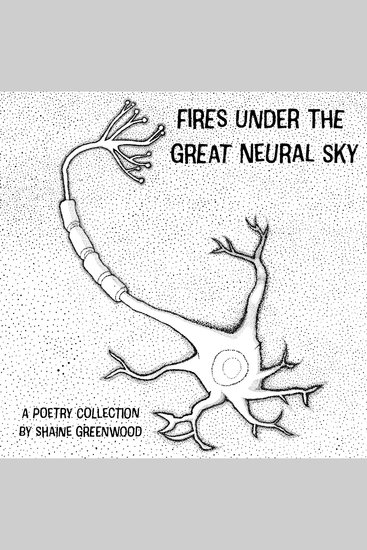
  • Fires Under the Great Neural Sky - A Poetry Collection - cover

    Fires Under the Great Neural Sky...

    Shaine Greenwood

    • 0
    • 0
    • 0
    Written over the course of five years, these poems grapple with purpose and reality from a myriad of existentialist perspectives and themes. Through these poems, we travel through the cosmos, to various mythological settings, and even to our own neurons. If you're seeking to rearrange your grey matter, this is the collection for you. This collection is broken up into seven sections that are based on core existentialist concepts. Each section comes with its own unique stippling drawing and a brief bit of info on the concept. Existentialism is humanism.
    Voir livre
  • EMDR For Dummies - cover

    EMDR For Dummies

    MSW Megan Salar

    • 0
    • 0
    • 0
    EMDR (Eye Movement Desensitization and Reprocessing) is now recognized as one of the most effective treatment modalities for trauma, PTSD, anxiety, depression, addiction, and beyond. EMDR For Dummies is a user-friendly guide for patients who need an introduction to what this type of therapy can do for them. You'll learn about the symptoms that EMDR can treat, and you'll have a chance to assess yourself to determine whether it might be a good fit for you. Explore the different types of EMDR interventions, what to expect during and after treatment, and the phases of therapy. Most of all, find out why everyone's talking about EMDR. 


    ● Learn what EMDR is, why it's effective, and what issues it can treat 


    ● Gain a step-by-step understanding of the process and types of EMDR therapy 


    ● Move your personal healing journey forward by overcoming past negative experiences 


    ● Work through the most difficult challenges that patients and clinicians face during EMDR therapy 


    This easy-to-follow Dummies guide is a great resource for patients and loved ones looking for information on EMDR, as well as mental and behavioral health professionals seeking a guide to using EMDR.
    Voir livre
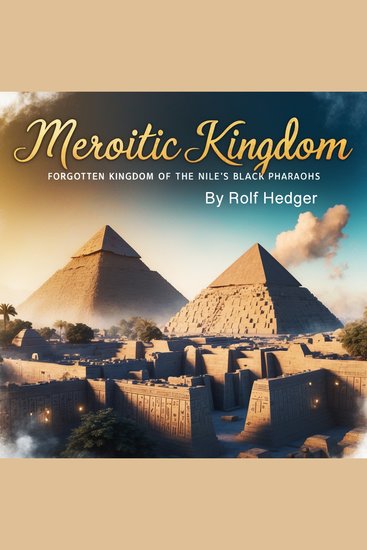
  • Meroitic Kingdom - Forgotten Kingdom of the Nile's Black Pharaohs - cover

    Meroitic Kingdom - Forgotten...

    Rolf Hedger

    • 0
    • 0
    • 0
    The Land of Kush, an ancient and powerful civilization, thrived along the banks of the Nile in what is now Sudan. Situated south of Egypt, Kush was a land of vast deserts, fertile floodplains, and rich natural resources. This region played a crucial role in shaping the history of northeastern Africa, serving as a bridge between central Africa and the Mediterranean world. The rise of the Kingdom of Kush was deeply influenced by its geography, trade networks, and interactions with neighboring civilizations. 
    The Nile River was the lifeline of Kush, providing water for agriculture, transportation, and trade. The river's annual flooding deposited nutrient-rich silt, allowing the Kushites to cultivate crops such as barley, wheat, and sorghum. This agricultural abundance supported growing populations and enabled the kingdom to expand its influence. The vast deserts surrounding Kush acted as natural barriers, protecting the civilization from invasions while also encouraging the development of trade routes that connected Kush to Egypt, the Red Sea, and beyond. 
    Kush's wealth was largely derived from its abundant natural resources, particularly gold, iron, and precious stones. Gold mines in Nubia were among the richest in the ancient world, making Kush a major supplier of gold to Egypt and other civilizations. Ironworking became another defining feature of Kushite industry, allowing the kingdom to produce advanced tools and weapons that strengthened its economy and military. The Kushites also controlled trade routes that transported luxury goods such as ivory, ebony, and incense, further enriching their civilization.
    Voir livre
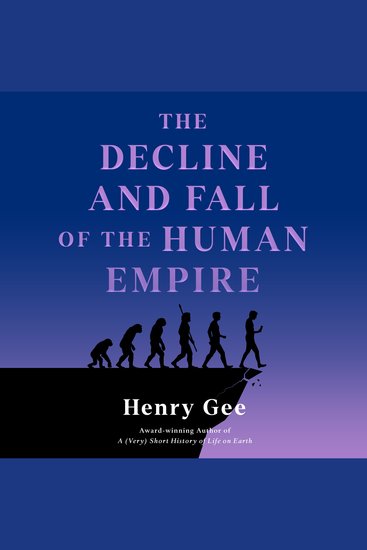
  • The Decline and Fall of the Human Empire - Why Our Species Is on the Edge of Extinction - cover

    The Decline and Fall of the...

    Henry Gee

    • 0
    • 0
    • 0
    "Henry Gee presents a pithy, fascinating account of the stages of biological evolution. ... a meditative and friendly listening experience. —AudioFile on A (Very) Short History of Life on EarthWritten and read by the award-winning author of A (Very) Short History of Life on Earth: a history of humanity on the brink of decline.A Next Big Idea Club Must-Read SelectionWe are living through a period that is unique in human history. For the first time in more than ten thousand years, the rate of human population growth is slowing down. In the middle of this century population growth will stop, and the number of people on Earth will start to decline—fast. In this provocative book, award-winning science writer Henry Gee offers a concise, brilliantly-told history of our species—and argues that we are on a rapid, one-way trip to extinction. The Decline and Fall of the Human Empire narrates the dramatic rise of humanity, how a scattered range of small groups across several continents eventually inbred, interacted, fought, established stable communities and food supplies, and began the process of dominating the planet. The human story is relatively brief—the oldest fossils of H. Sapiens date to approximately 300,000 years ago—yet the spread of our species has been unstoppable…until recently. As Gee demonstrates, our population has peaked, and is declining; our environment is becoming inimical to human life in many locations; our core resources of water, arable land, and air are diminishing; and new diseases, simmering conflicts, and ambiguous technologies threaten our collective health. Can we still change our course? Or is our own extinction inevitable?There could be a way out, but the launch window is narrow.Unless Homo sapiens establishes successful colonies in space within the next two centuries, our species is likely to stay earthbound and will have vanished entirely within another ten thousand years, bringing the seven-million-year story of the human lineage to an end.With assured narration, dramatic stories, and his signature sprightly humor, Henry Gee envisions new opportunities for the future of humanity—a future that will reward facing challenges with ingenuity, foresight, and cooperation.A Macmillan Audio production from St. Martin’s Press.
    Voir livre
  • The VESPA Handbook - 40 new activities to boost student commitment motivation and productivity - cover

    The VESPA Handbook - 40 new...

    Martin Griffin, Steve Oakes

    • 0
    • 0
    • 0
    Offers 40 concrete, practical tools and activities that will supercharge learners' ambition, organisation, persistence and determination. Where some education books focus on how individual teachers might sequence and deliver pieces of information in the clearest, most helpful and supportive way, engaging as many learners as possible, this one is different. This book looks at how you can help learners manage their workload and take control of their own knowledge and skills. It explores the characteristics, qualities and habits of successful students and shares forty replicable tools and tactics that all students can use immediately, both in and out of the classroom – activities that will help them to set goals, work more efficiently, organise their resources, revise more effectively and solve problems. This book is a perfect introduction to the VESPA approach, as well as being a practical addition to previous resources. The VESPA Handbook will help teachers develop the five key characteristics and behaviours that students need to be successful: vision, effort, systems, practice and attitude. When it comes to achieving academic success, these characteristics are crucial. Suitable for teachers, tutors and parents who want to boost academic outcomes in 14–18-year-olds and equip them with powerful tools and techniques in preparation for further education and employment.
    Voir livre