Join us on a literary world trip!
Add this book to bookshelf
Grey
Write a new comment Default profile 50px
Grey
Subscribe to read the full book or read the first pages for free!
All characters reduced
Optical Braille Recognition - Empowering Accessibility Through Visual Intelligence - cover

Optical Braille Recognition - Empowering Accessibility Through Visual Intelligence

Fouad Sabry

Publisher: One Billion Knowledgeable

  • 0
  • 0
  • 0

Summary

What is Optical Braille Recognition
 
Optical braille recognition is technology to capture and process images of braille characters into natural language characters. It is used to convert braille documents for people who cannot read them into text, and for preservation and reproduction of the documents.
 
How you will benefit
 
(I) Insights, and validations about the following topics:
 
Chapter 1: Optical braille recognition
 
Chapter 2: Computer vision
 
Chapter 3: Optical character recognition
 
Chapter 4: Handwriting recognition
 
Chapter 5: Image scanner
 
Chapter 6: Document layout analysis
 
Chapter 7: Document processing
 
Chapter 8: Video tracking
 
Chapter 9: 3D scanning
 
Chapter 10: Optical music recognition
 
(II) Answering the public top questions about optical braille recognition.
 
(III) Real world examples for the usage of optical braille recognition in many fields.
 
Who this book is for
 
Professionals, undergraduate and graduate students, enthusiasts, hobbyists, and those who want to go beyond basic knowledge or information for any kind of Optical Braille Recognition.
Available since: 05/04/2024.
Print length: 114 pages.
Other books that might interest you

  • Lifelines: A Journey to the Heart of Our Rivers new for 2027 - cover

    Lifelines: A Journey to the...

    John Bailey

    • 0
    • 0
    • 0
    Not Yet Available
    Show book
  • On the Origin of Species - cover

    On the Origin of Species

    Charles Darwin

    • 0
    • 0
    • 0
    "There is grandeur in this view of life."
    
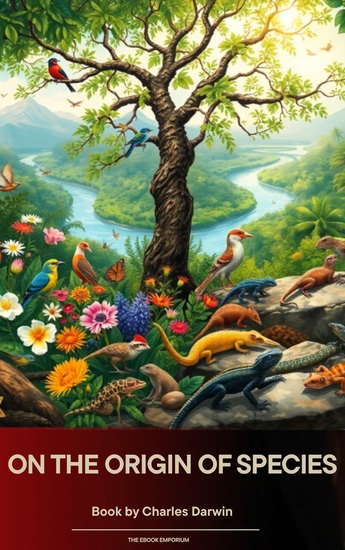
    In 1859, Charles Darwin published a book that would forever alter the course of human thought. On the Origin of Species introduced the world to the concept of Natural Selection—the process by which populations of living organisms adapt and change. Moving away from the static view of nature, Darwin presented a world of constant, slow, and magnificent transformation.
    
    The Mechanism of Life: Through decades of meticulous observation—from the beak shapes of Galápagos finches to the breeding of domestic pigeons—Darwin laid out a compelling case for how biological diversity arises. He explains how favorable traits are preserved over generations, allowing species to fill specific niches in their environment.
    
    A Masterpiece of Scientific Logic: Despite the controversy it initially sparked, On the Origin of Species is written with remarkable clarity and humility. Darwin anticipates and addresses the potential objections of his contemporaries, grounding his revolutionary ideas in overwhelming evidence from geology, embryology, and paleontology. It remains not just a textbook of biology, but a beautifully written tribute to the interconnectedness of all living things.
    
    Explore the foundation of your own history. Purchase "On the Origin of Species" today and witness the dawn of modern biology.
    Show book
  • The Vibe Coding Business Model - Sell Apps You Built Without Knowing How to Code - cover

    The Vibe Coding Business Model -...

    Erica Thompson

    • 0
    • 0
    • 0
    This audiobook is narrated by an AI Voice. Build and Sell Profitable Apps Without Writing a Single Line of Code 
     
    What if you could turn your business ideas into real, revenue-generating software applications in just 48 hours, without any programming knowledge? The AI revolution has made this possible, and thousands of entrepreneurs are already capitalizing on it. 
     
    The Vibe Coding Business Model reveals the complete system for building, launching, and selling micro SaaS businesses using AI-powered tools like Lovable, Bolt.new, and Replit. This is not a theory. This is a proven framework that non-technical founders are using right now to create passive-income software and sell their apps for five- and six-figure exits. 
     
    Inside This Step-by-Step Guide: 
     
    The 48-Hour MVP Framework - Transform any business idea into a functional, deployable application using no-code app development tools. Learn the exact prompting techniques that generate production-ready code, not just demos. 
     
    Profitable Niche Discovery - Use the three-circle framework to identify micro SaaS startup opportunities in tiny markets where you can become the default solution fast. Includes specific research techniques using Reddit, Indie Hackers, and proven market validation methods. 
     
    AI Business Automation Systems - Master authentication, Stripe payment processing, and database design without technical expertise. Every business requirement is explained in plain English with specific prompts you can use immediately. 
     
    Launch Strategies That Work - Multi-channel approaches across Product Hunt, Reddit, LinkedIn, and email that generate your first users without spending money on ads. Learn the building-in-public tactics that create invested audiences before you launch. 
     
    The App Flipping Model - Build applications specifically for acquisition and achieve 3 to 5 times annual profit valuations on marketplaces like Flippa. Understand what buyers look for and how to structure deals that close quickly.
    Show book
  • The Mathematical Principles of Natural Philosophy - cover

    The Mathematical Principles of...

    Issac Newton

    • 0
    • 0
    • 0
    The revolutionary work that transformed our understanding of the universe and laid the foundation for modern science.
    
    Discover "The Mathematical Principles of Natural Philosophy" by Sir Isaac Newton, the landmark scientific masterpiece that reshaped physics, mathematics, and astronomy. Commonly known as the Principia, this historic work remains one of the most influential books ever written.
    
    First published in 1687, Newton presents the mathematical principles that explain motion, gravity, and the behavior of physical bodies. Through rigorous reasoning and groundbreaking analysis, he establishes the laws of motion and the principle of universal gravitation, creating a framework that would guide scientific discovery for centuries. The work combines mathematical precision with profound scientific insight, marking a turning point in the history of human knowledge.
    
    Recognized as one of the greatest achievements in the history of science, "The Mathematical Principles of Natural Philosophy" has inspired generations of physicists, mathematicians, engineers, astronomers, and scholars. Its influence extends from classical mechanics to modern scientific thought, making it an essential work for anyone interested in the development of physics and mathematics.
    
    Perfect for readers of science, mathematics, physics, astronomy, the history of science, and classic nonfiction, this monumental work offers a fascinating look into the ideas that changed the world.
    
    Explore the book that revolutionized scientific understanding. Add "The Mathematical Principles of Natural Philosophy" to your Kindle library today and discover one of the greatest intellectual achievements in history.
    Show book
  • In the Herbarium - The Hidden World of Collecting and Preserving Plants - cover

    In the Herbarium - The Hidden...

    Maura C. Flannery

    • 0
    • 0
    • 0
    Collections of preserved plant specimens, known as herbaria, have existed for nearly five centuries. These pressed and labeled plants have been essential resources for scientists, allowing them to describe and differentiate species and to document and research plant changes and biodiversity over time—including changes related to climate. 


    Maura C. Flannery tells the history of herbaria, from the earliest collections belonging to such advocates of the technique as sixteenth-century botanist Luca Ghini, to the collections of poets, politicians, and painters, and to the digitization of these precious specimens today. She charts the growth of herbaria during the Age of Exploration, the development of classification systems to organize the collections, and herbaria's indispensable role in the tracking of climate change and molecular evolution. Herbaria also have historical, aesthetic, cultural, and ethnobotanical value—these preserved plants can be linked to the Indigenous peoples who used them, the collectors who sought them out, and the scientists who studied them. 


    This book testifies to the central role of herbaria in the history of plant study and to their continued value, not only to biologists but to entirely new users as well: gardeners, artists, students, and citizen-scientists.
    Show book
  • Benny the Blue Whale - A Descent into Story Language and the Madness of ChatGPT - cover

    Benny the Blue Whale - A Descent...

    Andy Stanton

    • 0
    • 0
    • 0
    A bestselling author and AI team up to write a novel. Chaos ensues. 
     
    AI is changing the world at frightening speed. A bestselling author decides to find out more… 
     
    Is ChatGPT the end of creative industries as we know them? An ethical quagmire from which there is no return? A threat to all our jobs, as we keep hearing on the news? 
     
    Bestselling children’s author Andy Stanton has made a career out of writing differently – from the unconventional ‘hero’ of his bestselling Mr Gum series to his penchant for absurdist plots, his children’s books are anything but formulaic. 
     
    When a friend introduces him to ChatGPT, the new large language chatbot, Andy is as sceptical as he is curious. Can this jumble of algorithms really mimic the spontaneity of human thought? Could it one day replace human authors like him for good? And are we soon to be ruled over by despotic robot overlords. 
     
    He decides there’s only one thing for it – he must test this bot’s capabilities. Eventually, he settles on a prompt that will push the algorithm to its creative limits: ‘tell me a story about a blue whale with a tiny penis.’ 
     
    Chaos ensues. 
     
    What follows is a surprising and illuminating battle between Andy and ChatGPT that maybe, just maybe, might help us all understand AI a little bit better. Join Andy and his beleaguered AI lackey on a rollicking metafictional journey through the art of storytelling. Presenting his prompts and the AI-generated narrative alongside extensive commentary, Stanton provides a startling paean to the art of a good story and boundless human creativity. Hopeful and hilarious, Benny the Blue Whale provides a joyfully anarchic meditation on AI, literature and why we write.
    Show book