Rejoignez-nous pour un voyage dans le monde des livres!
Ajouter ce livre à l'électronique
Grey
Ecrivez un nouveau commentaire Default profile 50px
Grey
Abonnez-vous pour lire le livre complet ou lisez les premières pages gratuitement!
All characters reduced
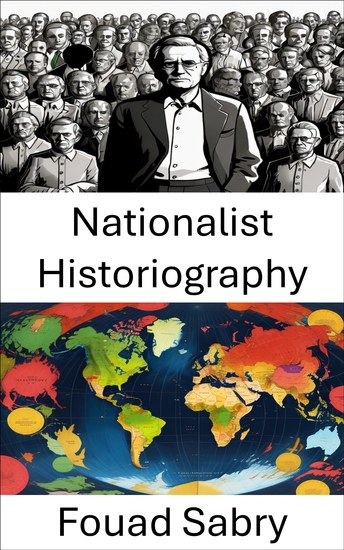
Nationalist Historiography - Analyzing the Role of History in Shaping National Identity - cover

Nationalist Historiography - Analyzing the Role of History in Shaping National Identity

Fouad Sabry

Maison d'édition: One Billion Knowledgeable

  • 0
  • 0
  • 0

Synopsis

Nationalist Historiography examines how nationalist agendas influence historical narratives and national identity. This essential read explores the impact of nationalism on historiography across various contexts.
 
Chapters Highlights:
 
- 1: Nationalist Historiography - Basics of how nationalist views shape historical writing.
 
- 2: Chinese Historiography - Influence of Chinese nationalism on historical scholarship.
 
- 3: Nationalism - Broad implications of nationalism on historical interpretation.
 
- 4: Aryan Race - Misuse of the Aryan race concept in nationalist historiography.
 
- 5: National Myth - Construction of national myths through historical writing.
 
- 6: Phoenicianism - Role of Phoenicianism in nationalist historiography.
 
- 7: Vinko Pribojević - Contributions of Vinko Pribojević to nationalist historiography.
 
- 8: Macedonian Nationalism - Historiographical approaches to Macedonian nationalism.
 
- 9: Albanian Nationalism - Historiographical narratives surrounding Albanian nationalism.
 
- 10: Indigenism - Influence of indigenism on nationalist movements and historical interpretations.
 
- 11: Nationalization of History - Process and effects of nationalizing history.
 
- 12: Ethnosymbolism - Role of symbols in nationalist historiography.
 
- 13: Korean Nationalist Historiography - Features and influence of Korean nationalist historiography.
 
- 14: Historiography of Albania - Development of Albanian historiography and national consciousness.
 
- 15: Antiquization - Reinterpretation of historical figures for nationalist agendas.
 
- 16: Serbian Historiography - Impact of Serbian historiography on Balkan perspectives.
 
- 17: Albanian Nationalism in Albania - Specifics of Albanian nationalism and local historiography.
 
- 18: Historiography in North Macedonia - North Macedonian historiography amidst regional conflicts.
 
- 19: Historiography of India - Influence of nationalism on Indian historical interpretations.
 
- 20: Nationalism in the Middle Ages - Nationalism’s impact on medieval historical narratives.
 
- 21: Nationalism and Archaeology - Intersection of nationalism and archaeological findings.
 
Nationalist Historiography offers critical insights into the political dimensions of historical writing, making it a valuable resource for anyone interested in the intersection of history and nationalism.
Disponible depuis: 06/08/2024.
Longueur d'impression: 307 pages.
D'autres livres qui pourraient vous intéresser

  • Living Together - Inventing Moral Science - cover

    Living Together - Inventing...

    David Schmitz

    • 0
    • 0
    • 0
    Is moral philosophy more foundational than political theory? It is often assumed to be. David Schmidtz argues that the reverse is true: the question of how to live in a community is more fundamental than questions about how to live. This book questions whether we are getting to the foundations of human morality when we ignore contingent features of communities in which political animals live. 


    Schmidtz contends that theorizing about how to live together should take its cue from contemporary moral philosophy's attempts to go beyond formal theory, and ask which principles have a history of demonstrably being organizing principles of actual thriving communities at their best. Ideals emerging from such research should be a distillation of social scientific insight from observable histories of successful community building. What emerges from ongoing testing in the crucible of life experience will be path-dependent in detail even if not in general outline, partly because any way of life is a response to challenges that are themselves contingent, path dependent, and in flux. 


    Building on this view, Schmidtz argues that justice evolved as a device for grounding peace in the mutual recognition that everyone has their own life to live, and everyone has the right and the responsibility to decide for themselves what to want.
    Voir livre
  • The Vimy Trap - or How We Learned To Stop Worrying and Love the Great War - cover

    The Vimy Trap - or How We...

    Ian McKay, Jamie Swift

    • 0
    • 0
    • 0
    The story of the bloody 1917 Battle of Vimy Ridge is, according to many of today’s tellings, a heroic founding moment for Canada. This noble, birth-of-a-nation narrative is regularly applied to the Great War in general. Yet this mythical tale is rather new. “Vimyism”—today’s official story of glorious, martial patriotism—contrasts sharply with the complex ways in which veterans, artists, clerics, and even politicians who had supported the war interpreted its meaning over the decades.
    		 
    Was the Great War a futile imperial debacle? A proud, nation-building milestone? Contending Great War memories have helped to shape how later wars were imagined. The Vimy Trap provides a powerful probe of commemoration cultures. This subtle, fast-paced work of public history—combining scholarly insight with sharp-eyed journalism, and based on primary sources and school textbooks, battlefield visits and war art—explains both how and why peace and war remain contested terrain in ever-changing landscapes of Canadian memory.
    Voir livre
  • Roswell & UFO Conspiracies – What Happened in 1947? - Alien Crash Government Cover-ups and the Search for the Truth - cover

    Roswell & UFO Conspiracies –...

    Dylan Watson

    • 0
    • 0
    • 0
    The Roswell Incident remains one of the most controversial UFO events in history. Was it a weather balloon, a military experiment, or a crashed alien spacecraft? The official explanation changed multiple times, fueling decades of speculation, conspiracy theories, and classified investigations. 
    This audiobook explores declassified government files, eyewitness testimonies, and UFO research, diving deep into the mysteries surrounding Roswell, Area 51, and modern UFO disclosures. Were extraterrestrials involved? Or was it all part of something even bigger? 
    Roswell & UFO Conspiracies – What Happened in 1947? is a must-listen for UFO enthusiasts, conspiracy theorists, and anyone fascinated by government secrets and the unknown.
    Voir livre
  • They Called Us River Rats - The Last Batture Settlement of New Orleans - cover

    They Called Us River Rats - The...

    Macon Fry

    • 0
    • 0
    • 0
    They Called Us River Rats: The Last Batture Settlement of New Orleans is the previously untold story of perhaps the oldest outsider settlement in America, an invisible community on the annually flooded shores of the Mississippi River. This community exists in the place between the normal high and low water line of the Mississippi River, a zone known in Louisiana as the batture. 


    Until now the stories of this way of life have existed only in the memories of those who have lived here. They Called Us River Rats also explores the troubled relationship between people inside the levees, the often-reviled batture folks, and the river itself. It traces the struggle between batture folks and city authorities, the commercial interests that claimed the river, and Louisiana's most powerful politicians. 


    Today Fry is among the senior generation of "River Rats" living in a vestigial colony of twelve "camps" on New Orleans's river batture, a fragment of a settlement that once stretched nearly six miles and numbered hundreds of homes. It is the last riparian settlement on the Lower Mississippi and a contrarian, independent life outside urban zoning, planning, and flood protection. This book is for everyone who ever felt the pull of the Mississippi River or saw its towering levees and wondered who could live on the other side.
    Voir livre
  • Huey P Newton - Smoking Out Fascist America - cover

    Huey P Newton - Smoking Out...

    Geoffrey Giuliano

    • 0
    • 0
    • 0
    Huey Newton was born on February 17, 1942. He was an African-American revolutionary, notable as the founder of the Black Panther Party. Newton crafted the Party's ten-point manifesto with Bobby Seale in 1966. 
     
    The Black Panther Party founded over 60 community support programs including food banks, medical clinics, sickle cell anemia tests, prison busing for families of inmates, legal advice seminars, clothing banks, housing cooperatives, and their own ambulance service. The most famous of these programs was the Free Breakfast for Children program which fed thousands of impoverished children daily during the early 1970s. Newton also co-founded the Black Panther newspaper service, which became one of America's most widely distributed African-American newspapers. 
     
    In 1989, he was murdered in Oakland, California, by Tyrone Robinson, a member of the Black Guerrilla Family. Newton was known for being an advocate of self-defense and used his position as a leader within the Black Panther Party to welcome women and LGBT people into the party, holding the belief that homosexuals "might be the most oppressed people". 
     
    Huey Newton was never shy in talking to the media because after all the powerful movement he started with bobby Seale was all about communication and understanding leading to meaningful change. 
     
    What follows is a collection of interviews with the controversial charismatic leader commencing from his prison cell in 1968 right up until 1989 just weeks before his tragic death. Here is a chance to get to know and understand not only Huey the forward-thinking and intractable black rights advocate but also the sensitive and sensible intellectual ultimately compassionate and caring man.
    Voir livre
  • The Search for Reagan - The Appealing Intellectual Conservatism of Ronald Reagan - cover

    The Search for Reagan - The...

    Craig Shirley

    • 0
    • 0
    • 0
    Never before has anyone explored the mind, soul, and heart of Ronald Reagan. The Search for Reagan explores the challenges and controversies in Reagan's life and how he successfully dealt with each, depicting a man who was never as conservative as some conservatives wanted him to be, but rather as conservative as he was comfortable being—a man who wanted to win on his own terms and integrity. 


    Ronald Reagan was a singularly unique man and conservative who championed a wildly successful revolution—leading to more freedom and less government for the American people and to the fall of communism, while boosting American morale. He was the first president in many years who believed optimism from the Oval Office had a direct bearing on the affairs of the nation. As a consequence, he left office more popular than when he entered, with a whopping 73 percent approval. He understood that American conservatism was based upon the individual and not the group. In his presidency, he solved the mystery of high inflation that had bedeviled his predecessor, high interest rates, and high gas prices. He created over twenty million new jobs, and the number of American millionaires grew from 4,414 to 34,944. He is considered by most historians to be one of our four greatest presidents, along with George Washington, Abraham Lincoln, and Franklin Roosevelt.
    Voir livre