Rejoignez-nous pour un voyage dans le monde des livres!
Ajouter ce livre à l'électronique
Grey
Ecrivez un nouveau commentaire Default profile 50px
Grey
Abonnez-vous pour lire le livre complet ou lisez les premières pages gratuitement!
All characters reduced
Military Justice - Balancing Discipline and Law in the Armed Forces - cover

Military Justice - Balancing Discipline and Law in the Armed Forces

Fouad Sabry

Maison d'édition: One Billion Knowledgeable

  • 0
  • 0
  • 0

Synopsis

What is Military Justice
 
Military justice is the body of laws and procedures governing members of the armed forces. Many nation-states have separate and distinct bodies of law that govern the conduct of members of their armed forces. Some states use special judicial and other arrangements to enforce those laws, while others use civilian judicial systems. Legal issues unique to military justice include the preservation of good order and discipline, the legality of orders, and appropriate conduct for members of the military. Some states enable their military justice systems to deal with civil offenses committed by their armed forces in some circumstances.
 
How you will benefit
 
(I) Insights, and validations about the following topics:
 
Chapter 1: Military Justice
 
Chapter 2: Court-martial
 
Chapter 3: Military Police
 
Chapter 4: Uniform Code of Military Justice
 
Chapter 5: United States Court of Appeals for the Armed Forces
 
Chapter 6: Court Martial Appeal Court of Canada
 
Chapter 7: Military Prison
 
Chapter 8: Judicial System of Finland
 
Chapter 9: Courts-martial of the United States
 
Chapter 10: Code of Service Discipline
 
(II) Answering the public top questions about military justice.
 
Who this book is for
 
Professionals, undergraduate and graduate students, enthusiasts, hobbyists, and those who want to go beyond basic knowledge or information for any kind of Military Justice.
Disponible depuis: 19/06/2024.
Longueur d'impression: 149 pages.

D'autres livres qui pourraient vous intéresser

  • Eli and the Octopus - The CEO Who Tried to Reform One of the World’s Most Notorious Corporations - cover

    Eli and the Octopus - The CEO...

    Matt Garcia

    • 0
    • 0
    • 0
    At 8 a.m. on February 3, 1975, Eli Black leapt to his death from the 44th floor of Manhattan's Pan Am building. The immigrant-turned-CEO of United Brands—formerly United Fruit, now Chiquita—Black seemed an embodiment of the American dream. United Brands was transformed under his leadership—from the "octopus," a nickname that captured the corrupt power the company had held over Latin American governments, to "the most socially conscious company in the hemisphere." How did it all go wrong? 


    Eli and the Octopus traces the rise and fall of a business leader and his influence on the nascent project of corporate social responsibility. Born Menashe Elihu Blachowitz in Poland, Black arrived in New York at the age of three and became a rabbi before entering the business world. Driven by the moral tenets of his faith, he charted a new course in industries known for poor treatment of workers, partnering with labor leaders to improve conditions. But risky investments, economic recession, and a costly wave of natural disasters led Black away from the path of reform and toward corrupt backroom dealing. 


    Matt Garcia presents an unvarnished portrait of Black's complicated legacy. Exploring the limits of corporate social responsibility on American life, Eli and the Octopus offers pointed lessons for those who hope to do good while doing business.
    Voir livre
  • Chola Empire : 9th to 12th Century - cover

    Chola Empire : 9th to 12th Century

    Saurabh Kumar

    • 0
    • 0
    • 0
    The book takes us through the era of the Great Chola Empire between the 9th and 12th centuries and also throws light on the era of Rajaraja and Rajendra I.
    Voir livre
  • The Prison Angel - Mother Antonia's Journey from Beverly Hills to a Life of Service in a Mexican Jail - cover

    The Prison Angel - Mother...

    Kevin Sullivan, Mary Jordan

    • 0
    • 0
    • 0
    The winners of the 2003 Pulitzer Prize for international reporting tell the astonishing story of Mary Clarke. At the age of fifty, Clarke left her comfortable life in suburban Los Angeles to follow a spiritual calling to care for the prisoners in one of Mexico's most notorious jails. She actually moved into a cell  
    to live among drug king pins and petty thieves. She has led many of them through profound spiritual transformations in which they turned away from their lives of crime, and has deeply touched the lives of all who have witnessed the depth of her compassion. Donning a nun's habit, she became Mother  
    Antonia, renowned as "the prison angel," and has now organized a new community of sisters—the Servants of the Eleventh Hour—widows and divorced women seeking new meaning in their lives. "We had never heard a story like hers," Jordan and Sullivan write, "a story of such powerful goodness." 
     
    Born in Beverly Hills, Clarke was raised around the glamour of Hollywood and looked like a star herself, a beautiful blonde reminiscent of Grace Kelly. The choreographer Busby Berkeley spotted her at a restaurant and offered her a job, but Mary's dream was to be a happy wife and mother. She raised  
    seven children, but her two unfulfilling marriages ended in divorce. Then in the late 1960s, in midlife, she began devoting herself to charity work, realizing she had an extraordinary talent for drumming up donations for the sick and poor.  
     
    On one charity mission across the Mexican border to the drug-trafficking capitol of Tijuana, she visited La Mesa prison and experienced an intense feeling that she had found her true life's work. As she recalls, "I felt like I had come home." Receiving the blessings of the Catholic Church for her mission, on  
    March 19, 1977, at the age of fifty, she moved into a cell in La Mesa, sleeping on a bunk with female prisoners above and below her. Nearly twenty-eight years later she is still living in that cell, and the remarkable power of her spiritual counseling to the prisoners has become legendary. 
     
    The story of both one woman's profound journey of discovery and growth and of the deep spiritual awakenings she has called forth in so many lost souls, The Prison Angel is an astonishing testament to the powers of personal transformation.
    Voir livre
  • Hotel Goodbyes - cover

    Hotel Goodbyes

    Stephen Jon Thompson

    • 0
    • 0
    • 0
    Stephen Jon Thompson was just nine years old when his mother said goodbye to him and his four younger siblings in a motel room in Reno, Nevada in January 1980. In Hotel Goodbyes, Stephen tells his incredible, gripping life story and how his mother may have abandoned him, but she also gave him a gift, the gift of a better life.
    Voir livre
  • Honourable Rebel - The Memoirs of Elizabeth Montagu Aristocrat turned spy a life lived boldly - cover

    Honourable Rebel - The Memoirs...

    Elizabeth Montagu

    • 0
    • 0
    • 0
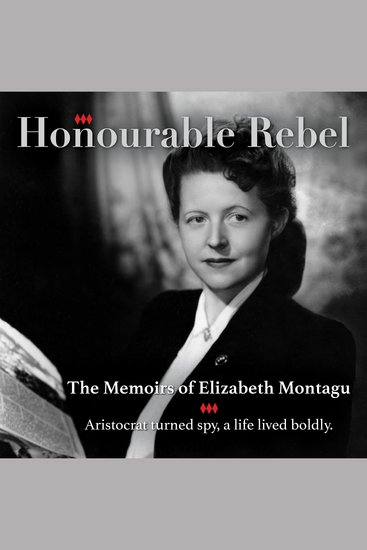
    Honourable Rebel tells the remarkable story of The Honourable Elizabeth Montagu, a woman born into the upper echelons of British society who defied expectations to forge a life of fierce independence, artistic brilliance, and covert service. 
      
     Raised in a world of privilege, Elisabeth chose passion over propriety, becoming a celebrated pianist, a gifted librettist, and a powerful presence in British cultural life. She was fluent in four European languages, a skill that not only deepened her creative reach but would later prove vital during wartime intelligence work. 
      
     She moved easily among artistic giants — Toscanini, Horowitz, Edwin Fischer, Benjamin Britten, Peter Pears — not as a mere admirer, but as a creative collaborator and kindred spirit. In theatre and film, she worked both in front of the camera and behind the scenes, collaborating with cinematic legends like Orson Welles, Joseph Cotten, Graham Greene, and Sir Alexander Korda, as both an actress and respected film dialogue director. 
      
     During the Second World War, Elizabeth turned her intellect and multilingual talents to espionage, serving in British intelligence. She lived many lives — artist, spy, aristocrat, and cultural connector — but was always herself: daring, original, and unapologetically independent. Her story, long hidden in the margins of history, comes vividly to life in this audiobook, wonderfully narrated by Dorothea Myer-Benett who also played Elizabeth in the Drama Documentary based on the book, reminding us that rebels don’t always ride into battle — sometimes they play the piano.
    Voir livre
  • Ludwig Wittgenstein - Language Logic and the Limits of Philosophy - cover

    Ludwig Wittgenstein - Language...

    Hector Davidson

    • 0
    • 0
    • 0
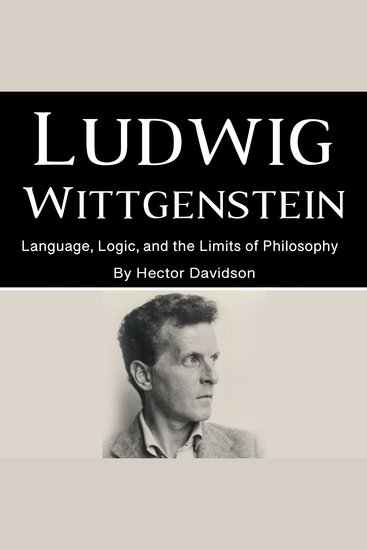
    Ludwig Wittgenstein, one of the most influential philosophers of the 20th century, profoundly shaped modern thought, particularly in the realms of language, logic, and the philosophy of mind. His philosophy spans two distinct periods, marked by an evolution in his views on the relationship between language, meaning, and reality. Wittgenstein’s work challenges the way we think about and use language, positing that philosophical problems often arise from misunderstandings of language and its limitations. 
    Wittgenstein’s early philosophy, as presented in his landmark work Tractatus Logico-Philosophicus, was grounded in the belief that language could mirror the structure of reality. According to his "picture theory of meaning," words and sentences are pictures that represent facts in the world. He argued that the limits of language are also the limits of the world, and anything that could not be meaningfully expressed through language was simply beyond the scope of philosophy. This view led him to conclude that many traditional philosophical problems were nonsensical, arising from a misuse of language. 
    However, Wittgenstein underwent a significant philosophical transformation after his work on the Tractatus, largely due to his dissatisfaction with the results of his early approach. By the time of his later work, particularly in Philosophical Investigations, Wittgenstein had rejected the picture theory of meaning and developed the concept of "language games." He argued that meaning is not inherent in words themselves but is derived from their use in various social contexts. Language, for Wittgenstein, is a tool embedded in human practices and activities. He claimed that understanding language requires understanding the ways it functions in specific contexts, challenging the idea of a fixed, underlying structure of meaning.
    Voir livre