


Begleiten Sie uns auf eine literarische Weltreise!
Buch zum Bücherregal hinzufügen
Grey
Einen neuen Kommentar schreiben Default profile 50px
Grey
Jetzt das ganze Buch im Abo oder die ersten Seiten gratis lesen!
All characters reduced
Military Aid to Civil Power - Strengthening National Security and Public Order - cover

Military Aid to Civil Power - Strengthening National Security and Public Order

Fouad Sabry

Verlag: One Billion Knowledgeable

  • 0
  • 0
  • 0

Beschreibung

What is Military Aid to Civil Power
 
Aid to the Civil Power (ACP) or Military Aid to the Civil Power (MACP) is the use of the armed forces in support of the civil authorities of a state. Different countries have varying policies regarding the relationship between their military and civil authorities.
 
How you will benefit
 
(I) Insights, and validations about the following topics:
 
Chapter 1: Military aid to the civil power
 
Chapter 2: Indonesian National Armed Forces
 
Chapter 3: Malaysian Armed Forces
 
Chapter 4: Nigerian Armed Forces
 
Chapter 5: Posse Comitatus Act
 
Chapter 6: Military aid to the civil community
 
Chapter 7: Commander-in-chief
 
Chapter 8: Military police
 
Chapter 9: Sky marshal
 
Chapter 10: Defence Forces (Ireland)
 
(II) Answering the public top questions about military aid to civil power.
 
Who this book is for
 
Professionals, undergraduate and graduate students, enthusiasts, hobbyists, and those who want to go beyond basic knowledge or information for any kind of Military Aid to Civil Power.
Verfügbar seit: 18.06.2024.
Drucklänge: 167 Seiten.
Weitere Bücher, die Sie mögen werden

  • Summary of James Lindsay's Race Marxism - cover

    Summary of James Lindsay's Race...

    Falcon Press

    • 0
    • 0
    • 0
    Buy now to get the main key ideas from James Lindsay's Race Marxism 
      
    Critical Race Theory is a revolutionary and generally neo-Marxist form of activism, based on the idea that systemic racism was developed and perpetuated by white people to maintain a social framework that gives them a myriad of unfair advantages over people of color, particularly black people. 
    James Lindsay asserts that CRT may sound innocent, but its goals are much darker than one would imagine – its adherents want to take over Western societies and reorganize them, pushing them closer towards Communism. In Race Marxism (2022), Lindsay aims to explore the roots of CRT in order to uncover its true intentions, the threats it poses, and how we can fight it before it’s too late.
    Zum Buch
  • Philippines - Culture Smart! - The Essential Guide to Customs & Culture - cover

    Philippines - Culture Smart! -...

    Graham Colin-Jones, Jorge...

    • 0
    • 0
    • 0
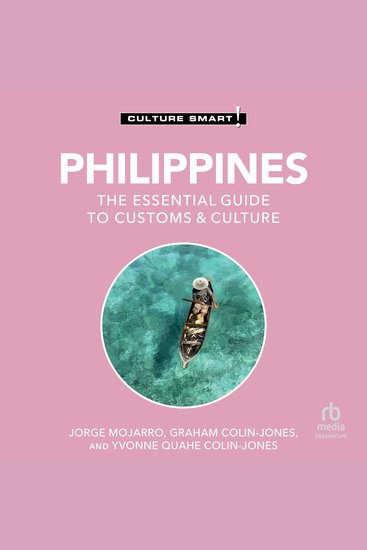
    Don't just see the sights—get to know the people.The Philippines may appear to be one of the most Westernized countries in Asia. However, the realities of Filipino life are complex; the façade of the English language does not run deep.Philippines – Culture Smart! gives you the inside story of this unique and attractive country and unpacks the daily lives of its inhabitants. An explanation of the values, attitudes, and customs of the Filipinos today opens the way to a more meaningful experience, while an abundance of practical information on socializing, working, shopping, and communicating will help to make it a more enjoyable experience, too.Have a richer and more meaningful experience abroad through a better understanding of the local culture. Chapters on history, values, attitudes, and traditions will help you to better understand your hosts, while tips on etiquette and communicating will help you to navigate unfamiliar situations and avoid faux pas.
    Zum Buch
  • The Examined Run - Why Good People Make Better Runners - cover

    The Examined Run - Why Good...

    Sabrina B. Little

    • 0
    • 0
    • 0
    Can running make me a more moral person? Can striving to be a better person make me a better runner? 


    In The Examined Run, philosopher and ultramarathon runner Sabrina B. Little asks whether running can be a laboratory for developing our character. She looks at the key ideas in virtue ethics—virtue, vice, exemplarism, moral emotions, and competition—and brings them into conversation with her experience in training and racing. Little pushes against the frequent conversations about ethics and sport that focus on the negative—doping and other forms of cheating or on simplistic expressions like "no pain, no gain." She argues that these ideas don't address the rich picture of how athletics inform a good life, and sport's relationship to acts of justice or courage. A good athlete is not just one who avoids cheating—rather, they perform feats of perseverance and courage, and succeed by working to develop their natural capacities. Little employs her own experiences in training, coaching, and racing in world class ultramarathons to reveal how athletics and virtue are deeply interconnected.
    Zum Buch
  • A Rare Recording of Che Guevara - cover

    A Rare Recording of Che Guevara

    Che Guevara

    • 1
    • 1
    • 0
    Ernesto "Che" Guevara (June 14, 1928 - October 9, 1967) was an Argentine Marxist revolutionary, ruthless executioner, physician, author, guerrilla leader, diplomat, and military theorist. A major figure of the Cuban Revolution, his stylized visage has become a ubiquitous countercultural symbol of rebellion and global insignia in popular culture. The following recording is from a December 16, 1964 interview of Che Guevara (speaking Spanish) by journalists at the Cuban Mission headquarters in New York City.
    Zum Buch
  • The Neoliberal Revolution - How Neoliberalism Transformed Global Economies - cover

    The Neoliberal Revolution - How...

    Arlo Holders

    • 0
    • 0
    • 0
    Neoliberalism is a term widely used to describe a set of economic policies and ideas that emphasize the importance of free markets, deregulation, privatization, and limited government intervention. Emerging in the mid-20th century, neoliberalism represented a distinct shift away from the welfare state and Keynesian economics, which had dominated Western economies in the post-World War II era. At its core, neoliberalism advocates for the belief that markets, if left to operate freely, will create wealth, drive economic growth, and improve human well-being. This chapter introduces the key tenets of neoliberal thought and traces its rise to prominence. 
    The intellectual origins of neoliberalism can be traced back to economists and thinkers such as Friedrich Hayek, Milton Friedman, and Ludwig von Mises, who were critical of state intervention in the economy. They argued that government efforts to regulate markets, redistribute wealth, and promote social welfare were inefficient and counterproductive. Instead, they believed that economic freedom, unencumbered by regulation or state control, would lead to more prosperous societies. These ideas gained traction in the 1970s when the world was facing economic stagnation, inflation, and high unemployment, a period often referred to as the “stagflation” crisis. 
    As a response to these challenges, neoliberalism became the intellectual and policy framework that justified sweeping changes in global economic practices. It was championed by leaders such as British Prime Minister Margaret Thatcher and U.S. President Ronald Reagan, who implemented reforms based on neoliberal principles. These included reducing taxes, privatizing state-owned industries, cutting social welfare programs, and embracing global free trade. The goal was to increase individual freedom and market efficiency by minimizing the role of the state in economic affairs.
    Zum Buch
  • Dispersals - On Plants Borders and Belonging - cover

    Dispersals - On Plants Borders...

    Jessica J. Lee

    • 0
    • 0
    • 0
    A prize-winning memoirist and nature writer turns to the lives of plants entangled in our human world to explore belonging, displacement, identity, and the truths of our shared future 


    A seed slips beyond a garden wall. A tree is planted on a precarious border. A shrub is stolen from its culture and its land. What happens when these plants leave their original homes and put down roots elsewhere? 


    In fourteen essays, Dispersals explores the entanglements of the plant and human worlds: from species considered invasive, like giant hogweed; to those vilified but intimate, like soy; and those like kelp, on which our futures depend. Each of the plants considered in this collection are somehow perceived as being "out of place"—weeds, samples collected through imperial science, crops introduced and transformed by our hand. Combining memoir, history, and scientific research in poetic prose, Jessica J. Lee meditates on the question of how both plants and people come to belong, why both cross borders, and how our futures are more entwined than we might imagine.
    Zum Buch
