Rejoignez-nous pour un voyage dans le monde des livres!
Ajouter ce livre à l'électronique
Grey
Ecrivez un nouveau commentaire Default profile 50px
Grey
Abonnez-vous pour lire le livre complet ou lisez les premières pages gratuitement!
All characters reduced
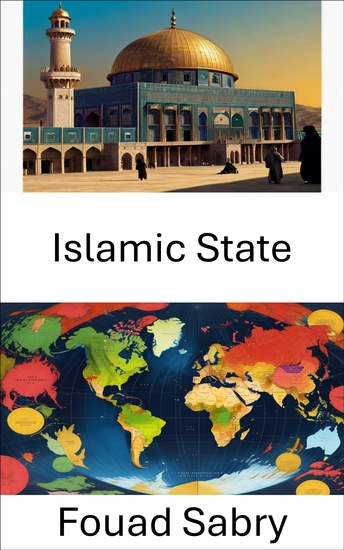
Islamic State - Exploring Governance and Ideology in Modern Theocracies - cover

Islamic State - Exploring Governance and Ideology in Modern Theocracies

Fouad Sabry

Maison d'édition: One Billion Knowledgeable

  • 0
  • 0
  • 0

Synopsis

Unlock a deeper understanding of the intricate relationship between religion and politics with "Islamic State," a key volume in the "Political Science" series. This comprehensive guide explores Islamic states, their governance, legal frameworks, and global impact. Ideal for professionals, students, and enthusiasts, it provides advanced insights into this complex topic.
 
1-Islamic State-Explore the concept, characteristics, and historical models of an Islamic state.
 
2-History of Islam-Trace Islam’s origins, evolution, and its impact on political structures.
 
3-Islamism-Examine Islamism’s rise, ideological basis, and its influence on politics.
 
4-Political Aspects of Islam-Investigate the integration of Islamic principles into political systems and Sharia law.
 
5-Caliphate-Explore interpretations of the Caliphate and its role in Islamic state formation.
 
6-Ottoman Caliphate-Study the Ottoman Caliphate's governance and its historical impact.
 
7-List of Muslim Military Leader-Discover influential Muslim leaders and their impact on Islamic history.
 
8-Criticism of Islamism-Address debates and controversies surrounding Islamism.
 
9-Outline of Islam-Get an overview of Islamic teachings, practices, and sects.
 
10-The Caliphate or the Supreme Imamate-Analyze the roles of the Caliphate and Supreme Imamate in Islamic governance.
 
11-Sultan-Learn about the Sultan’s role and significance in Islamic history.
 
12-Shura-Understand Shura (consultation) and its role in Islamic decision-making.
 
13-Vizier-Investigate the Vizier’s position and its role in Islamic governance.
 
14-Pan-Islamism-Explore Pan-Islamism’s ideology and its impact on Islamic unity.
 
15-Ahmadiyya Caliphate-Study the unique features and development of the Ahmadiyya Caliphate.
 
16-Islam and Democracy-Examine how Islamic states integrate democratic values.
 
17-Index of Islam-Related Articles-Utilize this index for key articles and sources on Islam and Islamic states.
 
18-Amir al-Mu'minin-Learn about the title Amir al-Mu'minin and its significance.
 
19-Islamic Flag-Discover the symbolism and history of the Islamic flag.
 
20-Al-Dawla-Explore the concept of Al-Dawla (the state) in Islamic context.
 
21-Abbasid Dynasty-Examine the Abbasid Dynasty's contributions to governance and culture.
 
"Islamic State" provides essential insights into Islamic governance and its global impact. Enhance your understanding of political Islam with this comprehensive guide.
Disponible depuis: 04/09/2024.
Longueur d'impression: 610 pages.

D'autres livres qui pourraient vous intéresser

  • ELECTORAL COLLEGE THE - A Biography of America's Peculiar Creation Through the Eyes of the People Who Shaped It - cover

    ELECTORAL COLLEGE THE - A...

    Thomas E. Weaver

    • 0
    • 0
    • 0
    A timely look at how the Electoral College has changed US history and why it endures—told through the lenses of specific people who both influenced the process and were impacted by the results. 


    "Over the years, no feature of the Constitution has attracted more criticism than that strange creature called the Electoral College. Thomas E. Weaver has made that history into a story with an intriguing cast of characters, some familiar, several new to me. If you want to know why it is so hard to do away with this long-standing anachronism, Weaver's story will help you understand." —JOSEPH J. ELLIS, Professor Emeritus of History, Mount Holyoke College, author of Pulitzer Prize–winning Founding Brothers: The Revolutionary Generation 


    "Those who think that throwing stones at political institutions is the same as reasoned debate should take some lessons from this carefully researched book. With a cast of colorful characters in tow, Weaver examines the long-standing controversies surrounding the EC and sets out numerous proposals for reform, which range from outright abolition to removing the "plus two" clause. Weaver brings a wealth of historical research to the task, writing with authority and clarity." —Kirkus
    Voir livre
  • Cold Peace - Avoiding the New Cold War - cover

    Cold Peace - Avoiding the New...

    Michael W. Doyle

    • 0
    • 0
    • 0
    An urgent examination of the world barreling toward a new Cold War. 


    With a historian's eye and a theorist's ingenuity, Michael Doyle, whose writings on liberal peace have revolutionized modern statesmanship, cogently assesses the tectonic shifts threatening a global order that has held for more than seventy years. As tensions among China, Russia, and the US escalate perilously toward a new Cold War, Doyle introduces a radical paradigm that will facilitate the international cooperation necessary to avert the global threats of our time. 


    Combining dramatic history with trenchant analysis and landmark theory, Doyle explores the impacts of cyberwarfare, foreign election meddling, and the unprecedented schism of modern politics on American foreign policy. He demonstrates that there can be no success in addressing climate change without China's cooperation, nor any hope of averting nuclear catastrophe without Russia's. 


    In the tradition of Gaddis's The Cold War and Clark's The Sleepwalkers, Cold Peace provides one of the most necessary analyses of global power in decades.
    Voir livre
  • On Liberty - cover

    On Liberty

    John Stuart Mill

    • 0
    • 0
    • 0
    On Liberty by John Stuart Mill is a powerful and enduring philosophical essay that explores the nature and boundaries of individual freedom in society. Written in 1859 during a period of political and intellectual upheaval, Mill makes an impassioned case for the sanctity of personal liberty—arguing that individuals should be free to act, think, and express themselves as they choose, so long as they do not harm others. 
    Mill’s central thesis, often referred to as the "harm principle," remains one of the cornerstones of liberal political thought: that the only justification for societal or governmental interference in a person’s life is to prevent harm to others. With remarkable clarity, he examines the relationship between authority and autonomy, tackling issues like free speech, individuality, moral policing, and the role of dissent in democratic society. 
    Narrated with depth and thoughtfulness by Luke Oldham, this audiobook brings to life one of the most influential works in political philosophy—a timeless defense of freedom and a clarion call for the courage to think for oneself.
    Voir livre
  • Identity and Violence - The Illusion of Destiny - cover

    Identity and Violence - The...

    Amartya Sen

    • 0
    • 0
    • 0
    "One of the few world intellectuals on whom we may rely to make sense out of our existential confusion." —Nadine Gordimer 


    In this sweeping philosophical work, Amartya Sen proposes that the murderous violence that has riven our society is driven as much by confusion as by inescapable hatred. Challenging the reductionist division of people by race, religion, and class, Sen presents an inspiring vision of a world that can be made to move toward peace as firmly as it has spiraled in recent years toward brutality and war.
    Voir livre
  • Profits Over People: How Healthcare Became Sickcare - cover

    Profits Over People: How...

    Dr. Adrian Mehmedi

    • 0
    • 0
    • 0
    What if everything you thought you knew about healthcare was wrong? 
    In Profits Over People: How Healthcare Became Sickcare, Dr. Adrian Mehmedi exposes the truth about a broken medical system that prioritizes profits over patient well-being. From the rise of Big Pharma’s influence to the suppression of alternative medicine, this book reveals how corporate greed, flawed policies, and a pharmaceutical-driven agenda have transformed healthcare into a business that thrives on illness rather than healing. 
    🔹 Why are prescription drugs the go-to solution, even when they cause harm? 
    🔹 Why is the U.S. healthcare system the most expensive in the world—yet ranks among the worst in health outcomes? 
    🔹 How did we move from natural, holistic healing to a profit-driven sickcare model?A Deep Dive Into the Past, Present & Future of Medicine 
    Dr. Mehmedi takes readers on a compelling journey through history, unveiling how theFlexner Report, medical monopolization, and pharmaceutical lobbying shaped the modern healthcare system. He explores today’s crises, from skyrocketing medical costs to the overprescription of drugs—and reveals how we can reclaim our health.A Roadmap for a Better Future 
    This book isn’t just an exposé—it’s a call to action. With insights into holistic medicine, decentralized healthcare, regenerative practices, and emerging innovations, Profits Over People offers a vision for a new paradigm of healing—one where people, not profits, come first. 
    If you care about your health, your family’s well-being, or the future of medicine, this book is a must-read.
    Voir livre
  • The Postmodern Predicament - Existential Challenges of the Twenty-First Century - cover

    The Postmodern Predicament -...

    Bruce Ackerman

    • 0
    • 0
    • 0
    Human beings have taken one thing for granted since our earliest days: we are bodily creatures dealing with one another on a face-to-face basis. The internet has shattered this fundamental feature of human existence. We are suddenly living our lives in two worlds at once—shifting endlessly from virtual to physical reality as we reach out to others. 


    Worse yet, we are developing different personal identities in our two worlds. We say and do things in virtual reality that flatly contradict our face-to-face commitments to family, friends, and fellow-workers—and vice versa. The Postmodern Predicament explores these dilemmas at each phase of the life cycle, beginning at the moment a young child picks up a cell phone. 


    The existentialist tradition of the twentieth century provides a precious perspective on our postmodern dilemmas. Thinkers and doers like Simone de Beauvoir and Jean-Paul Sartre considered the fragmentation of modern life as a central source of contemporary anxieties. Like them, Ackerman views the challenges of the internet age as a political, no less than personal, problem—and proposes concrete reforms that that could mobilize broad-based support for democracy against demagogic assaults on its very foundations.
    Voir livre