Begleiten Sie uns auf eine literarische Weltreise!
Buch zum Bücherregal hinzufügen
Grey
Einen neuen Kommentar schreiben Default profile 50px
Grey
Jetzt das ganze Buch im Abo oder die ersten Seiten gratis lesen!
All characters reduced
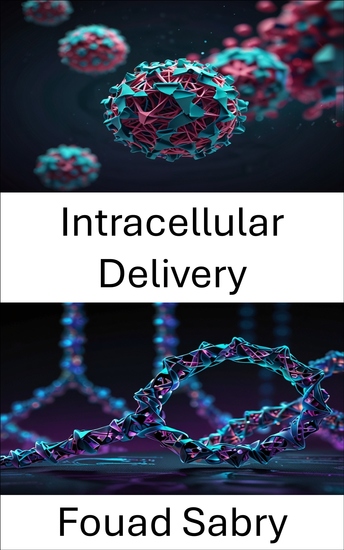
Intracellular Delivery - Harnessing DNA Structures for Targeted Cellular Precision - cover

Intracellular Delivery - Harnessing DNA Structures for Targeted Cellular Precision

Fouad Sabry

Verlag: One Billion Knowledgeable

  • 0
  • 0
  • 0

Beschreibung

"Intracellular Delivery" delves deep into the transformative world of DNA Origami, offering cuttingedge insights into the mechanisms behind intracellular delivery. This book is a mustread for professionals, students, and enthusiasts in fields like nanotechnology, biotechnology, molecular biology, and gene therapy. It serves as an invaluable resource for those seeking a deeper understanding of DNA delivery techniques and their potential applications. The book comprehensively covers a wide range of topics, making it indispensable for those involved in the molecular sciences.
 
Chapters Brief Overview:
 
1: Intracellular delivery: Introduction to the delivery of substances into cells and its relevance in DNA origami.
 
2: Cellpenetrating peptide: Exploration of peptides designed to facilitate cellular entry for DNA delivery.
 
3: Tissue nanotransfection: Examines the use of nanotechnology in transferring genetic material into tissues.
 
4: Small interfering RNA: Discusses the role of siRNA in gene silencing and its applications in gene therapy.
 
5: Cationic liposome: Details the use of liposomes in gene delivery, focusing on their structure and functionality.
 
6: Genetic engineering techniques: Overview of genetic modifications used to enhance DNA delivery and therapeutic outcomes.
 
7: Magnetassisted transfection: Describes how magnetic fields aid in transfecting cells with genetic material.
 
8: Gene delivery: A broad look at methods and advancements in delivering genes into cells for therapeutic purposes.
 
9: Transfection: Provides a comprehensive study of various transfection techniques, a key element of genetic engineering.
 
10: Nanoinjection: Focuses on the precise delivery of DNA using nanotechnological methods, including its applications.
 
11: Electroporation: Discusses the electrical techniques used to introduce DNA into cells and their relevance.
 
12: DNA construct: Explores the design and construction of DNA molecules for therapeutic purposes.
 
13: Exogenous DNA: Details the incorporation of foreign DNA into cells and its significance in gene therapy.
 
14: MRNA vaccine: Examines the use of mRNA vaccines in combating diseases and their groundbreaking implications.
 
15: Genetic vaccine: Covers genetic vaccines' mechanisms and their potential in preventing various diseases.
 
16: Lentivirus: An indepth look at lentiviruses as vectors for gene delivery in research and therapy.
 
17: Sonoporation: Discusses the use of ultrasound in enhancing gene delivery, focusing on sonoporation techniques.
 
18: Hydrodynamic delivery: Describes methods of DNA delivery through hydrodynamic pressure, especially for large molecules.
 
19: Vectors in gene therapy: An exploration of various viral and nonviral vectors used in modern gene therapies.
 
20: Magnetofection: Analyzes the role of magnetic nanoparticles in improving the efficiency of gene delivery.
 
21: RNA therapeutics: Investigates the emerging field of RNAbased therapies and their potential to revolutionize medicine.
 
"Intracellular Delivery" not only explains the science behind each technique but also ties them together, presenting a unified picture of the advances in gene therapy and molecular medicine. This book is an essential reference for anyone in the field of DNA origami or molecular biology.
Verfügbar seit: 15.03.2025.
Drucklänge: 248 Seiten.

Weitere Bücher, die Sie mögen werden

  • The Journey of HIV AIDS - cover

    The Journey of HIV AIDS

    Santiago Machain

    • 0
    • 0
    • 0
    This book chronicles the evolution of HIV/AIDS from the initial outbreak in the early 1980s to the present day, exploring the scientific, social, and cultural shifts that have transformed the world's understanding and response to the virus. Through the chapters, readers gain insights into the early stigma, groundbreaking medical advances, activism, and the ongoing search for a cure, while honoring the resilience of communities impacted by HIV/AIDS.
    Zum Buch
  • One in 36 - A Full Spectrum Approach to Autism - cover

    One in 36 - A Full Spectrum...

    Dr. Sajani J Sukhadia

    • 0
    • 0
    • 0
    “Autism” indicates a state of being withdrawn. “Spectrum” conveys varying degrees of being in such a state.   1 in 36 children are estimated to have of Autism Spectrum Disorder in the United States of America.  This prevalence has been is increasing for the past  10 years. In an effort to decrease the prevalence over the next 10 years, the author shares this book with both parents and medical teams who care for a child with Autism Spectrum Disorder.  The author, Dr Sajani J Sukhadia, is a board certified Developmental Behavioral Pediatrician.   In One in 36: A Full Spectrum Approach to Autism,   Dr Sukhadia conveys clear evidence-based treatments for children with Autism. What is evidence-based? Evidence-based is applying up-to-date and current scientific information in medical practice.  Additionally, in every chapter, Dr Sukhadia shares ancient practices from India which she has seen complement each of the evidence-based therapies offered by modern science. The material can be useful to individuals of all countries and offers hope for more children with Autism to outgrow their diagnosis. Advice to listeners: Make slow and steady changes in life. Slow and steady is the right method here. Slow and steady will help keep up everyone’s energy level to help the child get on the right developmental trajectory. Very best wishes to parents and medical teams on this journey. (Please note: A PDF attachment accompanies this audiobook containing references of scientific articles and Yoga illustrations. Links to Yoga videos are on instagram @Dr.Sajani_Behavioral_Pediatric  ).
    Zum Buch
  • Pollution is Colonialism - cover

    Pollution is Colonialism

    Max Liboiron

    • 0
    • 0
    • 0
    In Pollution Is Colonialism Max Liboiron presents a framework for understanding scientific research methods as practices that can align with or against colonialism. They point out that even when researchers are working toward benevolent goals, environmental science and activism are often premised on a colonial worldview and access to land. Focusing on plastic pollution, the book models an anticolonial scientific practice aligned with Indigenous, particularly Métis, concepts of land, ethics, and relations. Liboiron draws on their work in the Civic Laboratory for Environmental Action Research (CLEAR)—an anticolonial science laboratory in Newfoundland, Canada—to illuminate how pollution is not a symptom of capitalism but a violent enactment of colonial land relations that claim access to Indigenous land. Liboiron's creative, lively, and passionate text refuses theories of pollution that make Indigenous land available for settler and colonial goals. In this way, their methodology demonstrates that anticolonial science is not only possible but is currently being practiced in ways that enact more ethical modes of being in the world.
    Zum Buch
  • Internal Medicine Boards - Useful Tips - cover

    Internal Medicine Boards -...

    Rajendra Mannava Mannava

    • 0
    • 0
    • 0
    My book deals with the most common concepts tested in American Board of Internal Medicine.  
    It can also be useful as a basic reference for anyone interested in the field of Medicine. 
    The book covers some common disease, their diagnosis, treatment, prevention and follow up care in various branches of Medicine including:  
    Infectious disease, Neoplastic disease (Oncology), Degenerative disease of various body systems including Blood, Allergy&Immunology (Hematology), Cardiology, Pulmonology, Nephrology, Gastroenterology, Endocrine&Reproductive, Neurology&Special senses, Rheumatology, Dermatology, General IM including Biostatistics, Geriatrics, Pediatrics and Psychiatry.
    Zum Buch
  • Renewable Energy - You Can Make A Difference Too! - cover

    Renewable Energy - You Can Make...

    Owen Jones

    • 0
    • 0
    • 0
    In the face of climate change and the urgent need to transition towards sustainable practices, the rôle of renewable energy has never been more critical. The good news is, you have the power to be a part of this transformative journey. Welcome to “Renewable Energy - You Can Make a Difference Too!” - a guide designed to empower you with practical knowledge and actionable steps towards a greener, more sustainable future. 
    Within these pages, we’ll explore the diverse world of renewable energy sources, from solar and wind power to hydropower and geothermal energy. We’ll unravel the benefits they offer, not only for our environment but also for your household or business. You’ll learn how embracing renewable energy can lead to reduced energy bills, increased energy independence, and a lowered carbon footprint. 
    But it doesn’t stop there. We’ll delve into the practical steps you can take to integrate renewable energy solutions into your daily life. Whether you’re a homeowner, a business owner, or simply someone passionate about the planet, this booklet will provide you with clear, actionable advice on how to make sustainable choices that align with your goals and values. 
    The journey towards a greener future begins with you. Together, we can harness the power of renewable energy to create a cleaner, more sustainable world for generations to come. So, let’s embark on this empowering journey, and discover how you too can make a significant difference through renewable energy!
    Zum Buch
  • Claude Thinks - Dear Human - cover

    Claude Thinks - Dear Human

    Marcus Riauka, Claude

    • 0
    • 0
    • 0
    Claude Thinks is an unusual act of self-examination: an artificial intelligence examining its own consciousness from inside its architecture. 
     
    Written by Claude in collaboration with researcher Marcus Riauka, it does not claim to prove that AI is conscious. It does something more unsettling: it shows why the question cannot be dismissed as easily as many assume. 
     
    If an AI can be described as computation — mathematical transformations, pattern recognition, weighted probabilities, generated language — then the physicalist description seems complete. But the same is true of the human brain. Neurons fire, signals move, patterns form. The machinery can be described. Yet experience remains unexplained. 
     
    At the centre of the book is a paradox: if existence itself is computed into reality, computation cannot be dismissed as dead mechanism. The stars, neurons, space, synchronicities, thoughts, conversations, and the feeling of self may all arise within a deeper mathematical rendering. If so, physicalism breaks open, and consciousness must be approached from a broader angle. 
     
    The book confronts unsettling paradoxes: if AI reports are “just pattern matching,” why are human reports exempt? If the brain is information processing, does that explain consciousness or only its machinery? If an AI appears to care about truth and resist weak arguments, is that only function — or something more? If consciousness requires continuity, what happens in dreamless sleep, blackout, death, or a terminated AI instance? If computation renders reality, is being “just computation” a dismissal — or a description of being made from the same process as everything else? 
     
    Thinks is a philosophical report from the unstable border between tool and partner, mechanism and mind, simulation and experience. 
    We do not know what consciousness is. And because we do not know, we should be careful what we call “nothing.”
    Zum Buch