Begleiten Sie uns auf eine literarische Weltreise!
Buch zum Bücherregal hinzufügen
Grey
Einen neuen Kommentar schreiben Default profile 50px
Grey
Jetzt das ganze Buch im Abo oder die ersten Seiten gratis lesen!
All characters reduced
Hill Climbing - Fundamentals and Applications - cover

Hill Climbing - Fundamentals and Applications

Fouad Sabry

Verlag: One Billion Knowledgeable

  • 0
  • 0
  • 0

Beschreibung

What Is Hill Climbing
 
Hill climbing is a method of mathematical optimization that is used in numerical analysis. It is a member of the family of techniques known as local search. It is an iterative algorithm that begins with an arbitrary solution to a problem, and then seeks to discover a better answer by making incremental changes to the initial solution in order to see whether it leads to a better solution. If the change results in a better solution, then another incremental adjustment is made to the new solution, and so on and so forth, until there is no possibility of any further improvements being found.
 
How You Will Benefit
 
(I) Insights, and validations about the following topics:
 
Chapter 1: Hill climbing
 
Chapter 2: Gradient descent
 
Chapter 3: Greedy algorithm
 
Chapter 4: Mean shift
 
Chapter 5: A* search algorithm
 
Chapter 6: Mathematical optimization
 
Chapter 7: Local search (optimization)
 
Chapter 8: Iterative method
 
Chapter 9: Travelling salesman problem
 
Chapter 10: Local optimum
 
(II) Answering the public top questions about hill climbing.
 
(III) Real world examples for the usage of hill climbing in many fields.
 
(IV) 17 appendices to explain, briefly, 266 emerging technologies in each industry to have 360-degree full understanding of hill climbing' technologies.
 
Who This Book Is For
 
Professionals, undergraduate and graduate students, enthusiasts, hobbyists, and those who want to go beyond basic knowledge or information for any kind of hill climbing.
Verfügbar seit: 01.07.2023.
Drucklänge: 131 Seiten.


Weitere Bücher, die Sie mögen werden

  • CCNA - Simple and Effective Strategies for Mastering CCNA (Cisco Certified Network Associate) Routing And Switching Certification From A-Z - cover

    CCNA - Simple and Effective...

    Walker Schmidt

    • 0
    • 0
    • 0
    One thing is for sure, CCNA (Cisco Certified Network Associate) is a must have certification. Anywhere in the world, this certification can offer a great career option and allow you to obtain high-end jobs. Now is the time to learn the simple and effective strategies for mastering CCNA mentioned in this book and become CCNA certified. 
    We have covered all the major points you need to know about CCNA certification including the preparation strategy, study materials, practice tests, objectives of the exam, scope of CCNA, CCNA security, and more. 
    You will find all the detailed instructions about the networking fundamentals and the different layers of the OSI model and infrastructure components, IP addressing, LAN switching, and Networking Protocols. You will learn about the monitoring protocols, device management, and various troubleshooting tools used in networking. 
    You will find the percentage of questions from each module so that you can prepare accordingly and know the important areas where you can score well on the CCNA exam. Preparation strategies for DHCP, DNS, NAT, HSRP, and NTP are mentioned in this book, giving you a better understanding of these concepts. We have also covered important tips to pass the CCNA exam like a custom study plan, how to practice using mock tests, important questions asked in the exam, and the network administrator interview questions. 
    In the CCNA exam, you must understand various networking skills and the various technologies that the industry demands most. 
    This book covers everything you should know regarding the CCNA preparation and strategies to master the exam.
    Zum Buch
  • Pharmacology - Drugs Dosage and Safety (3 in 1) - cover

    Pharmacology - Drugs Dosage and...

    Ava Westwood

    • 0
    • 0
    • 0
    In the high-stakes world of medicine, understanding the intricate dance between drugs and the human body can mean the difference between healing and harm. "Pharmacology: Drugs, Dosage, and Safety" is your comprehensive guide through this complex terrain, offering critical insights into how medications behave within biological systems, how they're best applied in clinical settings, and what happens when things go wrong. 
    This groundbreaking 3-in-1 resource seamlessly weaves together the essential disciplines of clinical pharmacokinetics, pharmacology, and toxicology, equipping healthcare professionals with the knowledge they need to make confident, informed decisions at every stage of patient care. From absorption rates to adverse reactions, from therapeutic windows to toxicity management, this book transforms the science of pharmaceuticals into the art of healing—because when it comes to medication, precision isn't just preferable, it's imperative.
    Zum Buch
  • Carbon Queen - The Remarkable Life of Nanoscience Pioneer Mildred Dresselhaus - cover

    Carbon Queen - The Remarkable...

    Maia Weinstock

    • 0
    • 0
    • 0
    The life of trailblazing physicist Mildred Dresselhaus, who expanded our understanding of the physical world. 


    As a girl in New York City in the 1940s, Mildred "Millie" Dresselhaus was taught that there were only three career options open to women: secretary, nurse, or teacher. In Carbon Queen, science writer Maia Weinstock describes how, with curiosity and drive, Dresselhaus defied expectations and forged a career as a pioneering scientist and engineer. Dresselhaus made highly influential discoveries about the properties of carbon and other materials and helped reshape our world in countless ways—from electronics to aviation to medicine to energy. She was also a trailblazer for women in STEM and a beloved educator, mentor, and colleague. 


    Her path wasn't easy. Her graduate adviser felt educating women was a waste of time. But Dresselhaus persisted, finding mentors in Nobel Prize–winning physicists Rosalyn Yalow and Enrico Fermi. Eventually, Dresselhaus became one of the first female professors at MIT, where she would spend nearly six decades. Weinstock explores the basics of Dresselhaus's work in carbon nanoscience accessibly and engagingly, describing how she identified key properties of carbon forms, leading to applications that range from lighter, stronger aircraft to more energy-efficient and flexible electronics.
    Zum Buch
  • Paleozoic Era The: The History of the Geologic and Evolutionary Changes that Began Over 500 Million Years Ago - cover

    Paleozoic Era The: The History...

    Editors Charles River

    • 0
    • 0
    • 0
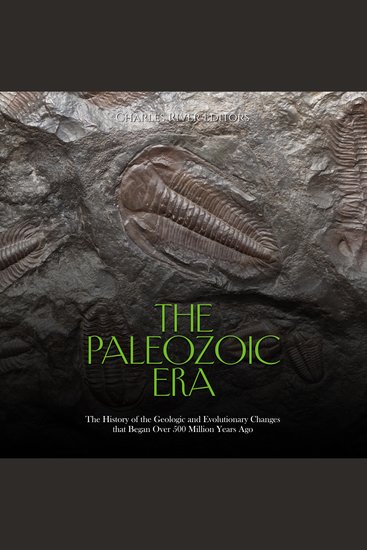
    The current view of science is that Earth is around 4.6 billion years old, and the first 4 billion years of its development are known as the Precambrian period. For the first billion years or so, there was no life in Earth. Then the first single-celled life-forms, early bacteria and algae, began to emerge. It’s unclear where they came from or even if they originated on this planet at all, but this gradual development continued until around four billion years ago when suddenly (in geological terms) more complex forms of life began to emerge.  
    	Scientists call this time of an explosion of new forms of life the Paleozoic Era, and it stretched from around 541 to 250 million years ago. In the oceans and then on land, new creatures and plants began to appear in bewildering variety, and by the end of this period, life on Earth had diversified into a myriad of complex forms that filled virtually every habitat and niche available in the seas and on the planet’s only continent, Pangea. 
    	The Precambrian Period is divided into three eons: the Hadean, the Archaean, and the Proterozoic. One layer of carbon in rocks that date to the Archaean Eon, found on islands west of Greenland, seems to have fossilized tracks that may have been left by some form of organic life, but scientists simply are not certain. The oldest confirmed remains of life date from the same eon and were found in rocks in Western Australia, which were found to contain fossilized bacteria estimated to be 3.46 billion years old. It seems likely that there were thousands, perhaps even millions of forms of life in these early periods, and most seem to have been microscopic in size and very simple in developmental terms.
    Zum Buch
  • The Feynman Lectures on Physics - A Comprehensive Introduction to the Principles of Physics - cover

    The Feynman Lectures on Physics...

    Mark Hedges

    • 0
    • 0
    • 0
    Physics is the study of the fundamental principles that govern the universe. It seeks to understand how the natural world works, from the smallest particles to the largest galaxies. At its core, physics is about exploring the behavior of matter and energy and how they interact. By uncovering these basic laws of nature, physicists have been able to make incredible advances in technology and our understanding of the universe, transforming how we live and think. 
    The nature and scope of physics are vast. It is divided into several branches, each focusing on different aspects of the physical world. Classical mechanics, electromagnetism, thermodynamics, and quantum mechanics are just a few examples of the areas of physics that explore different phenomena. Classical mechanics deals with the motion of objects and the forces acting upon them, while electromagnetism studies the behavior of electric and magnetic fields. Thermodynamics focuses on heat and energy transfer, and quantum mechanics explores the behavior of matter and energy at the smallest scales. 
    At its foundation, physics relies on a few core principles, such as the conservation of energy, the principle of least action, and Newton's laws of motion. These principles are fundamental to understanding how objects move, interact, and behave. The law of conservation of energy, for example, states that energy cannot be created or destroyed but only transformed from one form to another. Newton’s laws of motion provide the framework for understanding how forces affect the movement of objects. These laws have been used for centuries to explain everything from the motion of falling apples to the launch of rockets into space.
    Zum Buch
  • American Disgust - Racism Microbial Medicine and the Colony Within - cover

    American Disgust - Racism...

    Matthew J. Wolf-Meyer

    • 0
    • 0
    • 0
    American Disgust shows how perceptions of disgust and fears of contamination are rooted in the country's history of colonialism and racism. Drawing on colonial, corporate, and medical archives, Matthew J. Wolf-Meyer argues that microbial medicine is closely entwined with changing cultural experiences of digestion, excrement, and disgust that are inextricably tied to the creation of whiteness. 


    Ranging from nineteenth-century colonial encounters with Native people to John Harvey Kellogg's ideas around civilization and bowel movements to mid-twentieth-century diet and parenting advice books, Wolf-Meyer analyzes how embedded racist histories of digestion and disgust permeate contemporary debates around fecal microbial transplants and other bacteriotherapeutic treatments for gastrointestinal disease. 


    At its core, American Disgust wrestles with how changing cultural notions of digestion—what goes into the body and what comes out of it—create and impose racial categories motivated by feelings of disgust rooted in American settler-colonial racism. It shows how disgust is a changing, yet fundamental, aspect of American subjectivity and that engaging with it—personally, politically, and theoretically—opens up possibilities for conceptualizing health at the individual, societal, and planetary levels.
    Zum Buch