Rejoignez-nous pour un voyage dans le monde des livres!
Ajouter ce livre à l'électronique
Grey
Ecrivez un nouveau commentaire Default profile 50px
Grey
Abonnez-vous pour lire le livre complet ou lisez les premières pages gratuitement!
All characters reduced
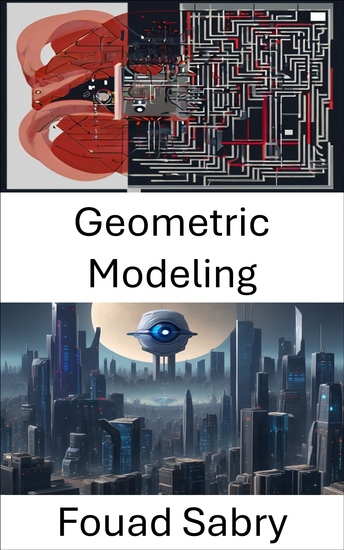
Geometric Modeling - Exploring Geometric Modeling in Computer Vision - cover

Geometric Modeling - Exploring Geometric Modeling in Computer Vision

Fouad Sabry

Maison d'édition: One Billion Knowledgeable

  • 0
  • 0
  • 0

Synopsis

What is Geometric Modeling
 
Geometric modeling is a branch of applied mathematics and computational geometry that studies methods and algorithms for the mathematical description of shapes.The shapes studied in geometric modeling are mostly two- or three-dimensional, although many of its tools and principles can be applied to sets of any finite dimension. Today most geometric modeling is done with computers and for computer-based applications. Two-dimensional models are important in computer typography and technical drawing. Three-dimensional models are central to computer-aided design and manufacturing (CAD/CAM), and widely used in many applied technical fields such as civil and mechanical engineering, architecture, geology and medical image processing.
 
How you will benefit
 
(I) Insights, and validations about the following topics:
 
Chapter 1: Geometric modeling
 
Chapter 2: Computer-aided design
 
Chapter 3: Computational geometry
 
Chapter 4: Bézier surface
 
Chapter 5: Constructive solid geometry
 
Chapter 6: Solid modeling
 
Chapter 7: Subdivision surface
 
Chapter 8: Mesh generation
 
Chapter 9: Procedural modeling
 
Chapter 10: Geometric constraint solving
 
(II) Answering the public top questions about geometric modeling.
 
(III) Real world examples for the usage of geometric modeling in many fields.
 
Who this book is for
 
Professionals, undergraduate and graduate students, enthusiasts, hobbyists, and those who want to go beyond basic knowledge or information for any kind of Geometric Modeling.
Disponible depuis: 04/05/2024.
Longueur d'impression: 79 pages.

D'autres livres qui pourraient vous intéresser

  • Biocivilisations - A New Look at the Science of Life - cover

    Biocivilisations - A New Look at...

    Predrag B. Slijepcevic, Vandana...

    • 0
    • 0
    • 0
    Biocivilisations is an important, original rethinking of the mystery of life and its deep uncertainty, exploring the complex civilisations that existed on Earth long before humans.  
    What is life? Many scientists believe life can be reduced to ‘mechanistic’ factors, such as genes and information codes. Yet there is a growing army of scientists, philosophers and artists who reject this view. The gene metaphor is not only too simplistic but deeply misleading. If there is a way to reduce life to a single principle, that principle must acknowledge the creativity of life, turning genetic determinism on its head.  
    The term biocivilisations is the acknowledgement of this uncertainty of life, as opposed to a quasi-certainty of the human position governed by a narrow time window of the scientific revolution. Life existed without humans for more than 99.99 percent of the Earth’s existence. Life will also continue without humans long after our inevitable extinction.  
    In Biocivilisations, Dr Predrag Slijep?evi? shows how bacteria, amoebas, plants, insects, birds, whales, elephants and countless other species not only preceded human beings but demonstrate elements of how we celebrate human civilisation – complex communication, agriculture, science, art, medicine and more.  
    Humans must try to adopt this wisdom from other biocivilisations that have long preceded our own. By rethinking the current scientific paradigm, Dr Slijep?evi? makes clear that a transformation – from a naïve young species into a more mature species in tune with its surroundings – will save us from our own violence and the violence we inflict on the rest of our living planet.
    Voir livre
  • The Sprint - A day-to-day feel of life on a Scrum team - cover

    The Sprint - A day-to-day feel...

    Julian Cambridge

    • 0
    • 0
    • 0
    The Sprint reflects an experience from life on a scrum team. Walking through the mandatory and optional scrum ceremonies as documented in The Scrum Guide. Experiences of scrum team life will differ across the world, but for people who have never been on a scrum team; you will get a clear insight of a singular experience to the everyday running’s. And for those scrum team regulars, you will relate to and perhaps chuckle at what you are about to read.
    Voir livre
  • All Through the Night: Why Our Lives Depend on Dark Skies - cover

    All Through the Night: Why Our...

    Dani Robertson

    • 0
    • 0
    • 0
    Best New Books on Space 2024 – Forbes 
    ‘Rarely is a non-fiction book about science this engaging’ – Forbes 
    Why darkness is so important – to plants, to animals, and to ourselves – and why we must protect it all costs. 
    Darkness is the first thing we know in our human existence. Safe and warm inside the bubble of the womb, we are comfortable in that embracing dark. But as soon as we are bought into the light, we learn to fear the dark. Why? 
    This book is a celebration of all things that go bump in the night and the joy that can be found when the sun goes down. As a society we have closed our curtains to the darkness, now Dani Robertson urges you to cast those curtains wide, step out of your front door and let the darkness pull you in. 
    Some 99 per cent of Western Europeans live under light polluted skies, but what is this doing to our health? Our wellbeing? Our connection to the cycles of nature? 
    Our wildlife, too, has been cast into the harsh glare of our light addiction, with devastating impacts. 
    In this book Dani shares with you the excitement and adventure she has found when everyone else is tucked up in bed. She explores constellations and cultures, enjoys environmental escapades, all whilst learning why we are addicted to light and why it is ruining our lives. She’ll show you why the darkness is so important and why we must protect it all costs. You’ll become a crusader of Darkness and an expert on what we can do to stop the onward march of light pollution (clue: it’s as easy as the flick of a switch). 
    Her life depends on darkness, and yours does too. 
    Dani Robertson's All Through The Night is a non-fiction exploration of the importance of darkness in our ecosystems. It's a journey through the wilderness of the night sky, touching on topics of astronomy, ecology, and conservation. This bestseller is a call to action for the protection of our habitats from light pollution. 
    For fans of John Lewis-Stempel (England), Katherine May (Enchantment), Robin Wall Kimmerer (Gathering Moss), Matt Haig (The Comfort Book), and Derek Gow (Birds, Beasts and Bedlam). 
    HarperCollins 2023
    Voir livre
  • Quintessence International Volume 1 - Editorial board's selected articles - cover

    Quintessence International...

    Eli Eliav

    • 0
    • 0
    • 0
    This Quintessence International (QI) annual yearbook is a compilation of selected articles representing the most significant work from the past year. Through a double-blind process that ensures anonymity and quality, our team of editors and reviewers performed the remarkable and difficult task of reviewing and evaluating many deserving submissions to present you with this outstanding selection of 20 articles. Organized by disciplines and topics, the articles provide a valuable and user-friendly resource that we hope you find enjoyable and informative.
    Voir livre
  • AI as Author - Exploring the Future of Publishing - cover

    AI as Author - Exploring the...

    D Nathan Venture

    • 0
    • 0
    • 0
    This audiobook is narrated by an AI Voice.   
    Revolutionizing the World of Publishing with Artificial Intelligence 
    Are you ready to dive into the future of publishing? This transformative journey will challenge everything you know about the literary world and open your eyes to the extraordinary possibilities of AI in publishing. 
    In "AI as Author: Exploring the Future of Publishing", you’ll discover the innovative ways artificial intelligence is redefining the landscape of content creation, editing, marketing, and distribution. With a comprehensive exploration of AI tools, you’ll see how machines are enhancing the writing process, ensuring superior quality control, and personalizing reader experiences like never before. 
    Imagine harnessing the power of AI to tailor your content to your audience's needs and interests, boosting reader engagement to unprecedented heights. Picture a world where predictive analytics optimize your sales strategies and AI-driven SEO practices catapult your work to visibility on the internet's vast expanse. 
    This book delves deeply into the current state and future possibilities of AI in publishing, from enhancing editorial processes to making marketing more efficient and effective. You’ll learn about the economic impacts, the ethical dilemmas, and the changing roles within the industry. 
    Discover the ways AI is revolutionizing academic and educational publishing, customizing learning materials, and aiding research. With practical insights, detailed case studies, and resources for further learning, you’ll be equipped with the skills and knowledge to thrive in this new era. 
    Join the forefront of the AI revolution in publishing. Whether you’re an author, editor, publisher, or avid reader, "AI as Author: Exploring the Future of Publishing" is your essential guide to navigating and mastering this brave new world.
    Voir livre
  • Structure of Scientific Revolutions The: Book Summary & Analysis - cover

    Structure of Scientific...

    Briefly Summaries

    • 0
    • 0
    • 0
    This is a concise summary and analysis of The Structure of Scientific Revolutions, by Thomas Kuhn. It is not the original book and is not affiliated with or endorsed by Thomas Kuhn. Ideal for those seeking a quick and insightful overview.
     
    This groundbreaking work challenges the traditional understanding of scientific progress, introducing the concept of paradigm shifts—fundamental changes in the way scientific communities perceive and interpret the world. It argues that scientific revolutions do not occur gradually but through periods of crisis and transformation, where existing frameworks are replaced by new, incommensurable paradigms. This influential study reshapes how we think about knowledge, progress, and the history of science.
    Voir livre