Rejoignez-nous pour un voyage dans le monde des livres!
Ajouter ce livre à l'électronique
Grey
Ecrivez un nouveau commentaire Default profile 50px
Grey
Abonnez-vous pour lire le livre complet ou lisez les premières pages gratuitement!
All characters reduced
Fabian Strategy - Fabian Strategy - The Art of Deliberate Delay in Warfare - cover

Fabian Strategy - Fabian Strategy - The Art of Deliberate Delay in Warfare

Fouad Sabry

Maison d'édition: One Billion Knowledgeable

  • 0
  • 0
  • 0

Synopsis

What is Fabian Strategy
 
The Fabian strategy is a military strategy where pitched battles and frontal assaults are avoided in favor of wearing down an opponent through a war of attrition and indirection. While avoiding decisive battles, the side employing this strategy harasses its enemy through skirmishes to cause attrition, disrupt supply and affect morale. Employment of this strategy implies that the side adopting this strategy believes time is on its side, usually because the side employing the strategy is fighting in, or close to, their homeland and the enemy is far from home and by necessity has long and costly supply lines. It may also be adopted when no feasible alternative strategy can be devised.
 
How you will benefit
 
(I) Insights, and validations about the following topics:
 
Chapter 1: Fabian strategy
 
Chapter 2: Quintus Fabius Maximus Verrucosus
 
Chapter 3: Hannibal
 
Chapter 4: Punic Wars
 
Chapter 5: Second Punic War
 
Chapter 6: 210s BC
 
Chapter 7: 203 BC
 
Chapter 8: Hamilcar Barca
 
Chapter 9: Marcus Claudius Marcellus
 
Chapter 10: Battle of Cannae
 
(II) Answering the public top questions about fabian strategy.
 
Who this book is for
 
Professionals, undergraduate and graduate students, enthusiasts, hobbyists, and those who want to go beyond basic knowledge or information for any kind of Fabian Strategy.
Disponible depuis: 27/05/2024.
Longueur d'impression: 105 pages.
D'autres livres qui pourraient vous intéresser

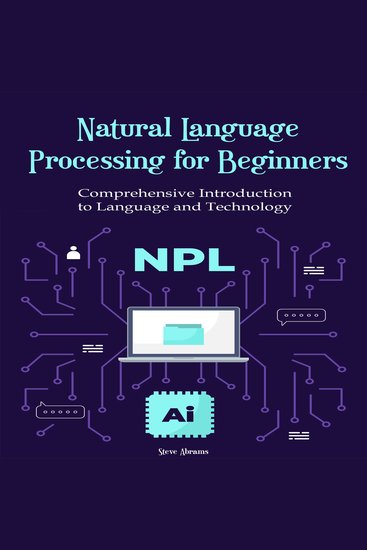
  • Natural Language Processing for Beginners - Comprehensive Introduction to Language and Technology - cover

    Natural Language Processing for...

    Steve Abrams

    • 0
    • 1
    • 0
    Dive into the fascinating world of Natural Language Processing (NLP) with "Natural Language Processing for Beginners: Comprehensive Introduction to Language and Technology," a thorough and accessible guide designed to introduce beginners to the rich field of NLP and its myriad applications. This book serves as a bridge between theoretical concepts and practical applications, offering readers a solid foundation in both the linguistic and computational aspects of NLP. 
    Starting with a clear explanation of what NLP is and its significance in today's digital age, the book covers essential linguistic principles and computational techniques. Readers will learn about the historical evolution of NLP, key components like syntax, semantics, and machine learning algorithms that enable computers to understand and generate human language. The guide simplifies complex ideas such as tokenization, neural networks, and deep learning, making them accessible to those without a background in computer science or linguistics. 
    Practicality is at the heart of this book, which includes step-by-step tutorials on using popular NLP libraries such as NLTK, SpaCy, and frameworks like TensorFlow and PyTorch. These tools are illustrated through exciting projects like building a sentiment analyzer, developing a conversational chatbot, and creating a multilingual translator. 
    "Natural Language Processing for Beginners" also addresses contemporary challenges and ethical considerations in NLP, discussing bias, fairness, and the future potential of NLP technology. Whether you are a student, a budding data scientist, or a curious tech enthusiast, this book will equip you with the knowledge and skills you need to start your journey into NLP, opening the door to a world of possibilities where language and technology meet. 
     
    Voir livre
  • Cheating Death - The New Science of Living Longer and Better - cover

    Cheating Death - The New Science...

    Dr. Rand McClain

    • 0
    • 0
    • 0
    In this golden age of medical discovery, cutting-edge treatments are emerging that increase longevity, stave off disease, and enhance our appearance and quality of life—our "healthspan." But chances are, these advances are not readily available at most doctor's offices, in stores, or easy to find online. 


    Dr. Rand McClain takes a fresh approach to genetics, natural aging, and proactive medical treatments. He is the founder and head of the Regenerative and Sports Medicine Clinic, a leading practitioner of alternative and cutting-edge treatments. In Cheating Death, he shares the best drugs and supplements, treatment methods, and devices—approaches that are backed by extensive research as well as McClain's own work with his patients. 


    McClain shows how you can get access to these therapies and jumpstart your body's regenerative processes—everything from stabilizing mood swings, relieving depression and anxiety, extending hormone balance and sexual function, improving muscle strength and stamina, relieving debilitating pain, and restoring a youthful appearance. 


    Bolstered with research and recovery stories from real people, this book gives listeners the tools to live healthier, longer lives.
    Voir livre
  • Mechanical Engineering - Handbook for Electrical Technology and Machinery - cover

    Mechanical Engineering -...

    Phil Gilberts

    • 0
    • 0
    • 0
    Mechanical technology encompasses a broad spectrum of techniques and tools used in the design, analysis, manufacturing, and maintenance of mechanical systems. This field merges principles from physics, engineering, and materials science to create and improve machinery and devices that perform specific functions. 
    The evolution of mechanical technology is a testament to human ingenuity, marked by significant innovations that have transformed societies and industries. 
      
    In ancient times, early humans utilized basic tools such as levers, wedges, and inclined planes to aid in tasks. The invention of the wheel around 3500 BCE revolutionized transport and labor. Ancient civilizations also harnessed the power of water wheels and windmills to provide mechanical power for grinding grain and pumping water.Looking towards the future, artificial intelligence (AI) and machine learning are being integrated into mechanical systems, leading to smarter and more adaptive technologies. There is also a growing focus on sustainability, driving the development of energy-efficient machinery and renewable energy systems. Additionally, 3D printing is transforming production processes, allowing for rapid prototyping and custom manufacturing. 
      
    The field of mechanical technology continues to evolve, driven by human creativity and the relentless pursuit of efficiency and innovation. Each historical milestone builds upon previous knowledge, propelling the field towards new and exciting advancements.
    Voir livre
  • Killer Tech - and the Drive to Save Humanity - cover

    Killer Tech - and the Drive to...

    Mark Stross

    • 0
    • 0
    • 0
    In Killer Tech and the Drive to Save Humanity, Mark Stross presents a gripping exploration of our entanglement with technology in a world where digital platforms increasingly dictate our lives. With thought-provoking insights and real-life anecdotes, Mark unveils the hidden costs of our digital addiction and challenges readers to reconsider their relationship with technology.The message is clear: "If you're not paying for the product, you are the product." Mark sheds light on how tech giants, corporations, and algorithms categorize and manipulate us, turning us into "users" and stripping away our humanity. But he doesn't just point out the problems; he provides a road map for taking back control.As the pace of technological change accelerates, Mark offers guardrails to help us navigate this uncertain new world. Killer Tech goes beyond the obvious and delves into the fascinating rise of virtual worlds, NFTs, deepfakes, UFOs, and the blurry line between the real and the virtual. He challenges us to consider a digital bill of rights and the need to take charge of our data and online personas.Killer Tech is a wake-up call, a call to action, and a promise of empowerment. It is your guide to making informed choices, reshaping your digital destiny, and reclaiming your humanity.Author: Mark StrossNarrated by Douglas Martin
    Voir livre
  • Data-Oriented Programming for Beginners - cover

    Data-Oriented Programming for...

    SAM CAMPBELL

    • 0
    • 0
    • 0
    In the digital age, data reigns supreme. Yet, for many beginners, navigating the complex landscape of data management, manipulation, and application can be daunting. "Data-Oriented Programming for Beginners" is your compass in the vast world of data-centric development, offering a clear, accessible path to mastering the principles and practices that make data work for you. 
    This book demystifies the concept of Data-Oriented Programming (DOP), a paradigm that prioritizes data and its structure over the traditional focus on procedures and objects. With an emphasis on practical application, readers are guided through the core principles of DOP, including the crucial role of immutability, the separation of data and behavior, and the strategic design of data structures. 
    Through engaging explanations, hands-on examples, and real-world case studies, "Data-Oriented Programming for Beginners" equips you with the knowledge and skills to:Understand the nature and nuances of data in programmingLeverage functional programming languages and libraries for data manipulationDesign efficient, scalable data structures and schemasImplement data-oriented design patterns for robust application developmentNavigate the challenges of data integrity, security, and privacyScale and manage data-driven applications in complex systems 
    "Data-Oriented Programming for Beginners" is more than just a guide; it's a launchpad for harnessing the transformative power of data in your programming endeavors. Embrace the data-oriented approach and unlock new levels of efficiency, clarity, and performance in your software projects. 
     
    Voir livre
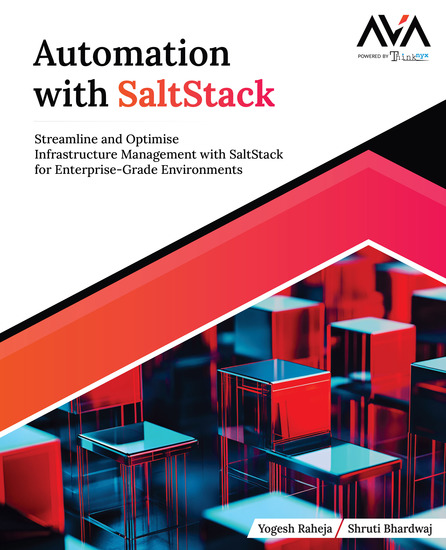
  • Automation with SaltStack - Streamline and Optimise Infrastructure Management with SaltStack for Enterprise-Grade Environments - cover

    Automation with SaltStack -...

    Yogesh Raheja

    • 0
    • 0
    • 0
    Empower Your Infrastructure with SaltStack Automation. 
    Book Description
    Unleash the full potential of SaltStack to transform your infrastructure management and automation practices. This book is crafted to provide clear, step-by-step guidance, ensuring you can apply SaltStack's capabilities to automate and streamline your workflows effectively. 
    Starting with the basics, the book introduces the fundamentals and SaltStack framework, guiding you through configuring and managing infrastructure with this versatile tool. Detailed chapters cover the architecture of SaltStack, various deployment models, and the prerequisites for setting up SaltStack masters and minions. You will learn how to effectively manage modules and perform remote execution tasks, mastering state file management and highstate concepts along the way. 
    Dive deep into advanced features such as grains for targeting and customizing data, Jinja templates for dynamic configuration, and multi-environment infrastructure management. Understand the critical role of pillars in SaltStack, their configuration, and their importance in managing sensitive data and configuring the state tree. 
    With a focus on practical application, this book includes real-world examples and scenarios to help you implement what you have learned. You will discover industry best practices for optimal configuration, deployment, maintenance, and scaling of SaltStack-managed infrastructure, ensuring your automation processes are efficient and robust. 
    
    Table of Contents
    
    1. Introduction to SaltStack and Its Framework
    2. Architecture and SaltStack Deployment
    3. Modules and Remote Execution with SaltStack
    4. State File Management
    5. HighState and Salt Tree
    6. Grains, Jinja Templates, and Environments
    7. Pillars
    8. The Salt Event-Driven Infrastructure
    9. Masterless and Agentless Salt   
    Index
    Voir livre