Begleiten Sie uns auf eine literarische Weltreise!
Buch zum Bücherregal hinzufügen
Grey
Einen neuen Kommentar schreiben Default profile 50px
Grey
Jetzt das ganze Buch im Abo oder die ersten Seiten gratis lesen!
All characters reduced
European Studies - Understanding Governance Politics and Integration in the Continent - cover

European Studies - Understanding Governance Politics and Integration in the Continent

Fouad Sabry

Verlag: One Billion Knowledgeable

  • 0
  • 0
  • 0

Beschreibung

Unlock the secrets of Europe with European Studies, a comprehensive guide that delves into the continent’s intricate political systems, institutions, and policies. This essential resource helps readers understand Europe's dynamic role in global politics and international relations.
 
1: European Studies - An overview of European Studies, its significance, and impact on political science.
 
2: Political Science - Explore methodologies and theories of political science as they relate to Europe.
 
3: Social Science - Discover how social science disciplines enrich our understanding of European societies.
 
4: Outline of Academic Disciplines - Insight into various disciplines contributing to European Studies for a holistic view.
 
5: Maastricht University - Investigate Maastricht University's role in shaping European Studies and its research contributions.
 
6: Heinrich Heine University Düsseldorf - Highlight Heinrich Heine University's impact on European studies and research focus.
 
7: East Asian Studies - Examine the intersection of East Asian and European Studies through comparative analysis.
 
8: European University Institute - Learn about the European University Institute's influence on research and policy discourse.
 
9: Research Centre for East European Studies - Explore contributions of the Research Centre for understanding Eastern European dynamics.
 
10: Centre International de Formation Européenne - Investigate the Centre's impact on European integration and policy education.
 
11: University of Potsdam - Uncover the University of Potsdam’s contributions to contemporary European political research.
 
12: Çanakkale Onsekiz Mart University - Explore academic insights from Çanakkale Onsekiz Mart University relevant to European Studies.
 
13: Panteion University - Review Panteion University’s role in advancing European political theory and practice.
 
14: Riga Graduate School of Law - Investigate the Riga Graduate School of Law’s impact on legal and political studies in Europe.
 
15: Kozminski University - Discover Kozminski University's contributions through its research and academic programs.
 
16: Centre for Studies on Federalism - Delve into the role of federalism in European governance explored by this Centre.
 
17: Vistula University - Learn about Vistula University's contributions to understanding European political systems.
 
18: Migration Studies - Examine migration studies' role in shaping Europe's socio-political landscape and policies.
 
19: European Union - Explore the EU’s formation, structure, and its significant impact on global politics.
 
20: National University of Public Service - Review the University’s contributions to European public administration and policy.
 
21: List of Cambridge University Press Book Series - Familiarize yourself with additional resources that complement European Studies.
Verfügbar seit: 16.10.2024.
Drucklänge: 396 Seiten.

Weitere Bücher, die Sie mögen werden

  • SHAKESPEARE IN METAPHORS - The Art of Hidden Meanings in his Words Insights & Interpretations for Shakespeare's Metaphors - cover

    SHAKESPEARE IN METAPHORS - The...

    Lázaro Droznes

    • 0
    • 0
    • 0
     “Shakespeare in Metaphors” delve deep into the heart of the Bard's most poignant and vivid metaphoric expressions.  
     Shakespeare's plays and sonnets are renowned not just for their timeless themes and complex characters, but also for their rich tapestry of metaphors that paint pictures beyond the ordinary.  
     This meticulously researched study explores how these metaphors, recurring throughout his works, become the signature strokes of Shakespeare's literary genius.  
     From the world as a stage to the tempests of the mind, journey through an exploration that decodes the layers of meaning and context behind each metaphor.  
     Whether you're a Shakespeare enthusiast, a student of literature, or someone simply entranced by the power of language, “Shakespeare in Metaphors” offers a fresh perspective on how Shakespeare's metaphoric mastery shapes his legacy. Dive in and rediscover the Bard in a light you've never seen before." 
     Download your copy now and delve into Shakespeare's vivid images and metaphors! < 
     
    Zum Buch
  • Follow Me to Hell - McNelly's Texas Rangers and the Rise of Frontier Justice - cover

    Follow Me to Hell - McNelly's...

    Tom Clavin

    • 0
    • 0
    • 0
    "[Narrator George] Newbern's clear voice and appealing staccato delivery move well from phrase to phrase, keeping listeners' interest." —AudioFile on The Heart of Everything That IsTom Clavin's Follow Me to Hell is the explosive true story of how legendary Ranger Leander McNelly and his men brought justice to a lawless Texan frontier.In turbulent 1870s Texas, the revered and fearless Ranger Leander McNelly led his men in one dramatic campaign after another, throwing cattle thieves, desperadoes, border ruffians, and other dangerous criminals into jail or, if that's how they wanted it, six feet under. They would stop at nothing in pursuit of justice, even sending 26 Rangers across the border to retrieve stolen cattle—taking on hundreds of Mexican troops with nothing but their Sharps rifles and six-guns. The nation came to call them “McNelly’s Rangers.”Set against the backdrop of 200 years of thrilling Texas Rangers history, this spine-tingler takes listeners into the tough life along the Texas border that was tamed by a courageous, yet doomed, captain and his team of fearless men.It was one hell of a ride!A Macmillan Audio production from St. Martin’s Press.
    Zum Buch
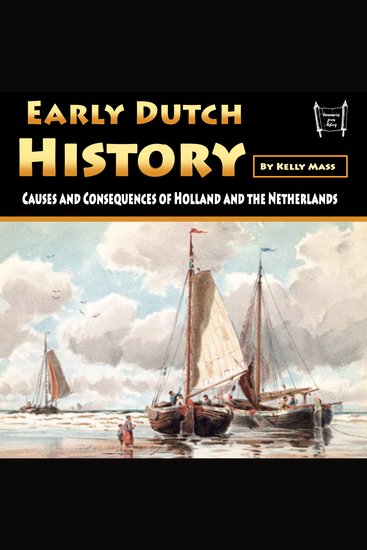
  • Early Dutch History - Causes and Consequences of Holland and the Netherlands - cover

    Early Dutch History - Causes and...

    Kelly Mass

    • 0
    • 0
    • 0
    The Netherlands has a history that dates far back, even before Roman times. Although some of the years and estimates of how far back that goes, are based on professional opinions, it is clear that there were people in this area of the world long ago, whether that was 5,000 years ago or 10,000. 
    Early people resided in what's now the Netherlands thousands of years ago, according to flint artifacts discovered in Woerden in the year 2010. A supposed thousands-year-old Neanderthal skull piece was found in sand scraped from the North Sea floor off the coast of Zeeland in the year 2009. 
    Let’s take a look at what happened during the times of the Romans. I remember visiting the Netherlands and visiting the city of Utrecht, a major hub in the central part of the country. According to history, it was called Ultratrajectum about 2,000 years ago, and it was a Roman settlement. Another city with ancient history is Nijmegen, which was called Noviomagus in Roman times. This is all fascinating stuff. 
    After the fall of the Roman Empire, or during it, we slowly see a transition into different cultures, habits, and beliefs, which inaugurated, at the time, the Medieval centuries, the Middle Ages. Let’s explore what happened to the Netherlands area during that time as well.
    Zum Buch
  • Käthe Kollwitz: A short biography - 5 Minutes: Short on time – long on info! - cover

    Käthe Kollwitz: A short...

    5 Minutes, 5 Minute Biographies,...

    • 0
    • 0
    • 0
    Käthe Kollwitz, German paintress and world-famous sculptress : Life and work in a short biography! Everything you need to know, brief and concise. Infotainment, education and entertainment at its best!
    Zum Buch
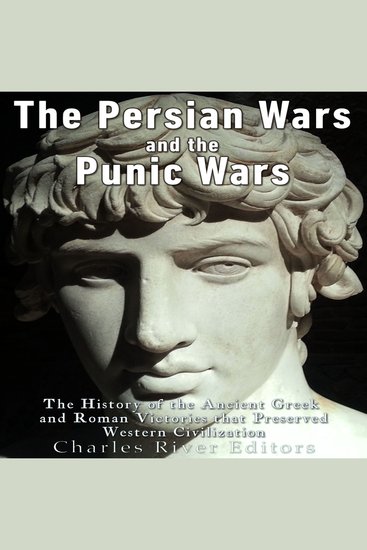
  • Persian Wars and the Punic Wars The: The History of the Ancient Greek and Roman Victories that Preserved Western Civilization - cover

    Persian Wars and the Punic Wars...

    Editors Charles River

    • 0
    • 0
    • 0
    The Ancient Greeks have long been considered the forefathers of modern Western civilization, but the Golden Age of Athens and the spread of Greek influence across much of the known world only occurred due to one of the most crucial battles of antiquity: the Battle of Marathon. In 491 B.C., following a successful invasion of Thrace over the Hellespont, the Persian emperor Darius sent envoys to the main Greek city-states, including Sparta and Athens, demanding tokens of earth and water as symbols of submission, but Darius didn’t exactly get the reply he sought. According to Herodotus in his famous Histories, “Xerxes however had not sent to Athens or to Sparta heralds to demand the gift of earth, and for this reason, namely because at the former time when Dareios had sent for this very purpose, the one people threw the men who made the demand into the pit and the others into a well, and bade them take from thence earth and water and bear them to the king.”  
    In the wake of Thermopylae, the Athenians watched in horror as Xerxes’ troops plundered the defenseless city, set it aflame, and razed the Acropolis. However, the Athenians remained belligerent, in part because according to the oracle at Delphi, “only the wooden wall shall save you.” Indeed, this would prove true when Themistocles managed to lure the Persian fleet into the straits of Salamis.  
    Although the Romans gained the upper hand in the wake of the First Punic War, Hannibal brought the Romans to their knees for over a decade during the Second Punic War. While military historians are still amazed that he was able to maintain his army in Italy near Rome for nearly 15 years, scholars are still puzzled over some of his decisions, including why he never attempted to march on Rome in the first place. After the serious threat Hannibal posed during the Second Punic War, the Romans didn’t wait much longer to take the fight to the Carthaginians in the Third Punic War.
    Zum Buch
  • America’s Westward Expansion Trails: The History and Legacy of the 19th Century’s Most Famous Routes to the West - cover

    America’s Westward Expansion...

    Editors Charles River

    • 0
    • 0
    • 0
    The Lewis and Clark Expedition, notwithstanding its merits as a feat of exploration, was also the first tentative claim on the vast interior and the western seaboard of North America by the United States. It set in motion the great movement west that began almost immediately with the first commercial overland expedition funded by John Jacob Astor’s Pacific Fur Company and would continue with the establishment of the Oregon Trail and California Trail.  
    The westward movement of Americans in the 19th century was one of the largest and most consequential migrations in history, and as it so happened, the paths were being formalized and coming into use right around the time gold was discovered in the lands that became California in January 1848. Located thousands of miles away from the country’s power centers on the East Coast at the time, the announcement came a month before the Mexican-American War had ended, and among the very few Americans that were near the region at the time, many of them were Army soldiers who were participating in the war and garrisoned there. San Francisco was still best known for being a Spanish military and missionary outpost during the colonial era, and only a few hundred called it home. Mexico’s independence, and its possession of those lands, had come only a generation earlier. 
    The most well-known is the Oregon Trail, which was not a single trail but a network of paths that began at one of four “jumping off” points. The eastern section of the Oregon Trail, which followed the Missouri River through Kansas, Nebraska, and Wyoming, was shared by people traveling along the California, Bozeman, and Mormon Trails. These trails branched off at various points, and the California Trail diverged from the Oregon Trail at Fort Hall in southern Idaho. From there, the Oregon Trail moved northward, along the Snake River, then through the Blue Mountains to Fort Walla Walla.
    Zum Buch