Begleiten Sie uns auf eine literarische Weltreise!
Buch zum Bücherregal hinzufügen
Grey
Einen neuen Kommentar schreiben Default profile 50px
Grey
Jetzt das ganze Buch im Abo oder die ersten Seiten gratis lesen!
All characters reduced
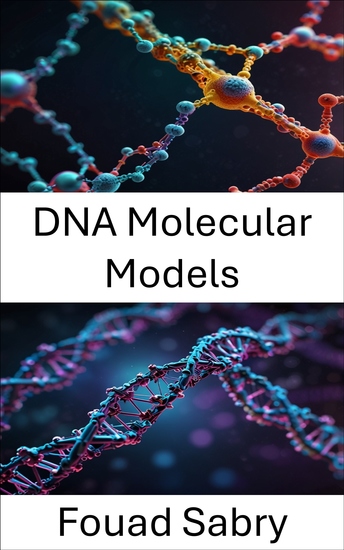
DNA Molecular Models - Advancing Nanotechnology Through Structural Insights and Molecular Innovations - cover

DNA Molecular Models - Advancing Nanotechnology Through Structural Insights and Molecular Innovations

Fouad Sabry

Verlag: One Billion Knowledgeable

  • 0
  • 0
  • 0

Beschreibung

The book "DNA Molecular Models," part of the "DNA Nanotechnology" series, delves into the world of DNA structure, offering both theoretical and practical insights. This comprehensive guide examines crucial aspects of DNA, providing key insights into how molecular models shape our understanding of nucleic acids and their application in the rapidly advancing field of DNA nanotechnology. Whether you're a professional, student, or enthusiast, this book offers a fascinating exploration of the intricate world of DNA structures.
 
Chapters Brief Overview:
 
1: Molecular models of DNA: Introduces the foundational concepts of DNA's molecular structures, setting the stage for further exploration.
 
2: DNA base flipping: Explores how base flipping affects DNA functionality and its implications in nanotechnology.
 
3: Nucleic acid structure determination: Discusses methods used to determine nucleic acid structures, focusing on their importance in research.
 
4: Raymond Gosling: Highlights the contributions of Raymond Gosling in uncovering DNA's structure, crucial for scientific progress.
 
5: DNA nanotechnology: An introduction to the revolutionary field of DNA nanotechnology and its potential applications.
 
6: Structural biology: Offers insights into the relationship between the structure and function of biological molecules.
 
7: DNA: Examines the basic building blocks and unique features of DNA, providing a deeper understanding of its role in molecular biology.
 
8: Obsolete models of DNA structure: Looks at earlier DNA models and how they were eventually replaced by more accurate representations.
 
9: Alec Stokes: Focuses on Alec Stokes' contributions to understanding DNA, emphasizing his legacy in modern molecular biology.
 
10: Molecular Structure of Nucleic Acids: A Structure for Deoxyribose Nucleic Acid: Discusses Watson and Crick's pivotal model of DNA structure, foundational to molecular biology.
 
11: Structural chemistry: Investigates the chemical principles that govern the structure of nucleic acids and their molecular interactions.
 
12: Nuclear magnetic resonance spectroscopy of nucleic acids: Explores how NMR spectroscopy is used to study nucleic acid structures and dynamics.
 
13: Structural bioinformatics: Highlights the role of computational tools in modeling and predicting nucleic acid structures.
 
14: Hoogsteen base pair: Describes the Hoogsteen base pairing and its relevance to the study of DNA and RNA structures.
 
15: Nucleic acid double helix: Discusses the iconic doublehelix structure of DNA and its significance in molecular biology.
 
16: Nucleic acid secondary structure: Examines the various secondary structures of nucleic acids, essential for their function.
 
17: Maurice Wilkins: Focuses on Maurice Wilkins' contributions to the discovery of DNA's structure and his role in science.
 
18: Biomolecular structure: Explores how the structure of biomolecules like DNA determines their biological function.
 
19: Nucleic acid tertiary structure: Investigates the higherorder folding of nucleic acids and their biological significance.
 
20: History of molecular biology: Provides a historical perspective on how molecular biology emerged and its evolution.
 
21: Francis Crick: Details Francis Crick's groundbreaking contributions to molecular biology, particularly in DNA research.
 
The book provides an accessible yet comprehensive look at DNA models and their connection to nanotechnology, making it an essential read for anyone interested in the future of molecular biology and nanotechnology.
Verfügbar seit: 14.03.2025.
Drucklänge: 320 Seiten.

Weitere Bücher, die Sie mögen werden

  • Artificial Intelligence Real Profits - Mastering ChatGPT-4 for Business Marketing - cover

    Artificial Intelligence Real...

    Jack Pemberton

    • 0
    • 0
    • 0
    Are you tired of traditional marketing strategies that fail to deliver the results you need? Are you ready to embrace the power of Artificial Intelligence (AI) to take your business marketing to the next level? Look no further than "Artificial Intelligence, Real Profits: Mastering ChatGPT-4 for Business Marketing." 
     
    This comprehensive guide is your gateway to unlocking the full potential of AI-driven marketing. From content creation to social media management, ChatGPT-4 has the power to revolutionize the way you do business. But what exactly is ChatGPT-4, and how can it benefit your business? ChatGPT-4 is a cutting-edge AI technology that uses natural language processing to generate human-like responses to text-based prompts. In other words, it can write like a human, but at a much faster pace and with greater accuracy. This makes it an invaluable tool for businesses looking to streamline their marketing efforts and drive real, tangible results. 
     
    In "Artificial Intelligence, Real Profits," you'll learn how to leverage ChatGPT-4 to create compelling content that resonates with your target audience. Whether you're writing blog posts, email newsletters, or social media updates, ChatGPT-4 can help you craft messages that are engaging, persuasive, and free of errors. This book also covers advanced topics like chatbot development, lead generation, and customer service automation. With ChatGPT-4 as your secret weapon, you'll be able to create personalized experiences for your customers that drive conversions and build brand loyalty. 
     
    "Artificial Intelligence, Real Profits" also covers best practices for working with AI, including how to avoid bias and ensure ethical use of the technology. Whether you're a seasoned marketing professional or a budding entrepreneur, "Artificial Intelligence, Real Profits" is your ultimate guide to mastering AI-driven business marketing.
    Zum Buch
  • The Way of the Gardener - Lost in the Weeds along the Camino de Santiago - cover

    The Way of the Gardener - Lost...

    Lyndon Penner

    • 0
    • 0
    • 0
    Reverence takes on a new meaning in this original memoir of an avid gardener walking the Camino de Santiago.
    		 
    The Camino de Santiago has been a journey for pilgrims for more than 1,000 years, testing—to varying degrees—their spirit, faith, and physical endurance. Lyndon Penner’s attention lies elsewhere. A renowned gardener and lover of literature, he revels in the plants, trees, and flowers that tell the history of the people and ecology of northern Spain.
    		 
    Brimming with wry observations—of nature, himself, and other pilgrims on the road—The Way of the Gardener reveals the beauty and the darkness of the human condition while underscoring the deeply fascinating nature of nature itself. This textured work makes for perfect armchair—or garden—reading.
    Zum Buch
  • Medical Laboratory Science - Techniques and Applications - cover

    Medical Laboratory Science -...

    Ava Westwood

    • 0
    • 0
    • 0
    Medical Laboratory Science (MLS) is a vital component of modern healthcare, providing crucial diagnostic information to aid in the prevention, diagnosis, and treatment of diseases. It encompasses a broad range of laboratory tests and analyses that are performed on patient samples to provide data essential for clinical decision-making. As healthcare continues to evolve, the role of medical laboratory scientists becomes increasingly significant, and understanding the field is essential for those entering the profession. 
    The history of medical laboratory science dates back to the late 19th century, when advancements in microbiology, chemistry, and hematology laid the foundation for laboratory testing. Early laboratory pioneers such as Louis Pasteur and Robert Koch revolutionized the understanding of infectious diseases, while the development of diagnostic tools allowed for the detection of bacteria and other pathogens in clinical samples. As science and technology advanced throughout the 20th century, laboratory science grew to encompass an even broader range of tests, including blood analyses, genetics, and molecular diagnostics. 
    The role of the medical laboratory scientist is multifaceted. These professionals work in a variety of settings, including hospitals, clinics, research institutions, and public health laboratories. They are responsible for performing laboratory tests, analyzing results, maintaining laboratory equipment, and ensuring the accuracy and precision of test outcomes. In addition, medical laboratory scientists play a critical role in monitoring the quality of laboratory processes and adhering to safety and regulatory standards. They also collaborate with physicians, nurses, and other healthcare professionals to ensure that test results are properly interpreted and applied to patient care.
    Zum Buch
  • Warts And Moles - Understanding And Managing These Common Skin Conditions - cover

    Warts And Moles - Understanding...

    Owen Jones

    • 0
    • 0
    • 0
    Warts are a common skin condition that affects people of all ages. They are caused by the human papillomavirus (HPV) and can appear anywhere on the body. While warts are usually harmless, they can be unsightly and cause embarrassment or discomfort. In this book, you will learn about the causes, symptoms, and treatment options for warts, as well as tips for preventing their recurrence. 
    This guide will cover the different types of warts, including common warts, plantar warts, and flat warts, as well as moles It will explain how warts are spread and how to protect yourself and others from getting them. It will also discuss the various treatment options available, including over-the-counter medications, prescription medications, and home remedies, and the advantages and disadvantages of each. 
    Furthermore, this guide will provide information on how to prevent warts from recurring. It will cover the best practices for keeping the skin healthy and clean, as well as the importance of maintaining a healthy immune system. 
    This guide is written for anyone who is interested in learning more about warts and moles, whether you are someone who has warts or moles or is looking to prevent them. It is also written for people who may be affected by warts or moles and are looking for information on how to manage this common skin condition. It provides clear, concise, and up-to-date information on warts. 
    I hope that you will find it helpful, useful and profitable. 
    The information in this book on various aspects of warts and related subjects is organized into 16 chapters of about 500-600 words each.
    Zum Buch
  • Image Generation AI - A comprehensive Guide to Image Generation with Artificial Intelligence - cover

    Image Generation AI - A...

    Et Tu Code

    • 0
    • 0
    • 0
    Image Generation AI is a comprehensive guide that covers the basics of image generation with artificial intelligence. The book provides an in-depth understanding of the field, including its applications, challenges, and future trends. It is designed for both beginners and advanced learners who want to explore the world of image generation using machine learning techniques. 
    The book starts with an introduction to image generation AI, covering the foundations of the field and its significance in various industries. It then delves into the different types of image generation models, including Generative Adversarial Networks (GANs) and Variational Autoencoders (VAEs), and their capabilities. The book also explores advanced techniques in image generation, such as conditional image generation and transfer learning. 
    Another significant aspect of the book is its emphasis on building an image generation model from scratch. It provides a step-by-step guide to creating a simple image generation model using Python and the Keras library, making it accessible to readers with no prior knowledge in machine learning. The book also covers popular image generation models, including DALL-E and Stable Diffusion Models, and their applications. 
    The book concludes by discussing the challenges and limitations of image generation AI, such as ethical considerations and future trends. It also provides an overview of interactive image generation, image generation for specific domains, and case studies in image generation. Finally, it offers practical advice on building a scalable image generation pipeline and explores the various applications of image generation AI.
    Zum Buch
  • Neurology - Understanding Brain and Nerve Disorders - cover

    Neurology - Understanding Brain...

    Ava Westwood

    • 0
    • 0
    • 0
    The human brain is often described as the most intricate and remarkable organ in the known universe. It serves as the control center for every thought, emotion, movement, and sensation we experience, seamlessly integrating billions of neural connections to create the essence of who we are. Despite centuries of scientific inquiry, the brain remains a profound mystery—an organ that not only governs our basic survival but also fuels creativity, innovation, and the very consciousness that allows us to ponder its complexity. 
    What makes the brain so fascinating is its duality: it is both fragile and resilient, capable of extraordinary feats yet vulnerable to a wide range of disorders. Its 86 billion neurons form networks that enable everything from the rhythmic beating of the heart to the abstract contemplation of art, philosophy, and science. This complexity has driven countless researchers to explore its depths, seeking to understand how such a compact structure can hold the vastness of human thought, memory, and emotion. 
    Throughout history, our understanding of the brain has evolved dramatically. Early civilizations believed that the heart was the seat of intelligence, while the brain was considered secondary. It wasn’t until the work of ancient scholars like Hippocrates and later neurologists such as Thomas Willis and Santiago Ramón y Cajal that the brain was recognized as the epicenter of human experience. Today, advanced imaging technologies allow us to observe the brain in action, mapping areas responsible for speech, movement, and even complex emotions. Yet, for all our progress, we have only begun to scratch the surface of its potential.
    Zum Buch