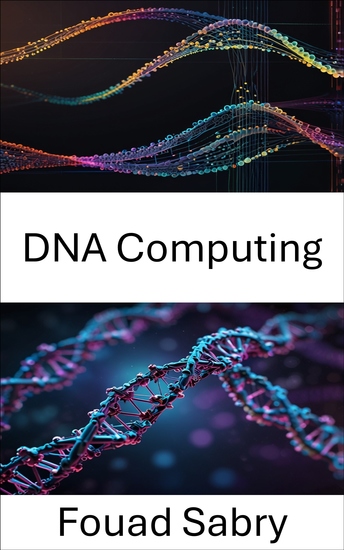
DNA Computing - Unveiling the Power of Molecular Information Processing
Fouad Sabry
Verlag: One Billion Knowledgeable
Beschreibung
In an age where technology continually transforms our world, DNA Nanotechnology stands at the forefront of the next big revolution. "DNA Computing" explores this powerful intersection of biology and computing, making it an essential read for professionals, undergraduate and graduate students, and enthusiasts interested in this cuttingedge field. Whether you're seeking a deep dive into molecular computing or looking to broaden your understanding of modern scientific advancements, this book is a vital resource. It connects the theoretical foundations with practical applications, making the complex world of DNAbased computation accessible and engaging

Chapters Brief Overview:

DNA computing: Introduces the concept of DNA computing and its potential to solve complex problems faster than conventional computing

DNA: Explores the foundational biological structure of DNA and its importance in the realm of computation

Chemical computer: Delves into the creation of chemical computers, explaining how DNA molecules can simulate computational processes

Adaptor hypothesis: Covers the adaptor hypothesis and its role in understanding DNA's capability to function as a computational system

Molecular logic gate: Examines molecular logic gates that use DNA strands to perform logical operations, key to DNA computing

Lulu Qian: Discusses the contributions of Lulu Qian to the field, highlighting her work in designing DNAbased logic circuits

Timeline of quantum computing and communication: Provides a historical overview of quantum computing, shedding light on its convergence with DNA nanotechnology

Deoxyribozyme: Focuses on deoxyribozymes, catalytic DNA molecules, and their applications in DNA computing and nanotechnology

Natural computing: Explores natural computing, using DNA and biological processes to solve computational problems efficiently

Biological computing: Investigates how biological systems, including DNA, can be harnessed to perform computations

Type II topoisomerase: Analyzes the role of Type II topoisomerase in DNA manipulation, vital for DNA computing processes

Leonard Adleman: Chronicles the pioneering work of Leonard Adleman, the founder of DNA computing, and its significance

Toehold mediated strand displacement: Explains the concept of toeholdmediated strand displacement, a crucial mechanism in DNA computing

Linear optical quantum computing: Discusses the intersection of optical quantum computing and DNA, pushing the boundaries of computational technology

DNA nanotechnology: Offers a comprehensive overview of DNA nanotechnology, its applications, and its potential to revolutionize computing

Nucleic acid design: Explores the design of nucleic acid molecules for use in computing systems and their applications in nanotechnology

Quantum computing: Provides an indepth look at quantum computing, and its potential collaboration with DNAbased systems

Unconventional computing: Introduces unconventional computing methods, exploring how DNA can play a role in future computational models

Molecular models of DNA: Discusses molecular models of DNA and their relevance in understanding DNA's computational capabilities

Optical computing: Covers optical computing systems and their potential integration with DNAbased computations for faster processing

Nucleic acid secondary structure: Focuses on the secondary structures of nucleic acids and their impact on DNA computation and nanotechnology

In this book, you’ll find not just theoretical insights but also practical applications that will propel you to the forefront of DNA nanotechnology. From groundbreaking logic gates to the exploration of quantum computing, "DNA Computing" is a mustread for anyone eager to unlock the full potential of molecularbased technologies.
Verfügbar seit: 06.03.2025.
Drucklänge: 329 Seiten.