Rejoignez-nous pour un voyage dans le monde des livres!
Ajouter ce livre à l'électronique
Grey
Ecrivez un nouveau commentaire Default profile 50px
Grey
Abonnez-vous pour lire le livre complet ou lisez les premières pages gratuitement!
All characters reduced
Democratic Revolution - Transforming Power and Politics in Modern Societies - cover

Democratic Revolution - Transforming Power and Politics in Modern Societies

Fouad Sabry

Maison d'édition: One Billion Knowledgeable

  • 0
  • 0
  • 0

Synopsis

Democratic Revolution
 
This book explores pivotal moments in the history of democratic revolutions. It analyzes the strategies, challenges, and outcomes of efforts to establish or enhance democratic governance across the world, offering deep insights into the factors that drive democratic transitions and revolutions.
 
How will you benefit?
 
1: Democratic Revolution - Discover the core ideas and significance of democratic revolutions.
 
2: Democracy - Understand global forms and principles of democracy.
 
3: Revolution - Explore the causes and societal impact of revolutions.
 
4: Political Movement - Examine movements that catalyze democratic change.
 
5: Democratization - Learn about the process and challenges of democratization.
 
6: Liberal Democracy - Analyze the role of liberal democracy in individual rights.
 
7: Criticism of Democracy - Investigate the limits and debates on democracy.
 
8: Democratic Backsliding - Understand threats to democratic systems.
 
9: Democracy and Economic Growth - Explore democracy’s impact on economic development.
 
10: Social Origins of Dictatorship and Democracy - Study the social roots of dictatorship and democracy.
 
11: Totalitarian Democracy - Examine the paradoxes within totalitarian democracy.
 
12: Alexis de Tocqueville - Learn about Tocqueville’s insights into democracy.
 
13: Democracy in America - Analyze Tocqueville’s study on American democracy.
 
14: Civil Society - Understand civil society’s role in supporting democracy.
 
15: Modernization Theory - Explore theories on democratic institutional development.
 
16: Barrington Moore Jr. - Analyze Moore’s theories on democracy’s social origins.
 
17: Soft Tyranny - Investigate the concept and dangers of soft tyranny.
 
18: Hybrid Regime - Understand regimes combining democratic and authoritarian elements.
 
19: Democratization of Technology - Examine technology’s influence on democratic participation.
 
20: Embedded Democracy - Explore factors that ensure stable democracies.
 
21: Tocqueville Effect - Understand how rising expectations drive social change.
 
Essential for professionals and students, this book offers in-depth analysis of democratic revolutions. By addressing key questions and exploring fundamental concepts, it’s an invaluable resource for enhancing understanding of the dynamics of democracy and political change.
Disponible depuis: 10/10/2024.
Longueur d'impression: 274 pages.
D'autres livres qui pourraient vous intéresser

  • The Great Retreat - How Political Parties Should Behave and Why They Don't - cover

    The Great Retreat - How...

    Didi Kuo

    • 0
    • 0
    • 0
    Once a centralizing force of the democratic process, political parties have eroded over the past fifty years. Parties now rank among the most unpopular institutions in society—less trusted than business, the police, and the media. Identification with parties has plummeted, and even those who are loyal to a party report feeling that parties care more about special interests than about regular citizens. What does a "good" political party look like? Why do we urgently need them? And how do we get them? 


    The Great Retreat explores the development of political parties as democracy expanded across the West in the nineteenth century. It focuses in particular on mass parties, and the ways they served as intermediaries that fostered ties between citizens and governments. 


    For democracy to adapt to a new era of global capitalism, Kuo makes the case that we need strong intermediaries like mass parties—socially embedded institutions with deep connections to communities and citizens. Parties are essential to long-term democratic stability and economic growth, while the breakdown of party systems, on the other hand, has historically led to democratic collapse. As trust in political parties has plummeted, The Great Retreat provides a powerful defense of political parties—for without parties, democratic representation is impossible.
    Voir livre
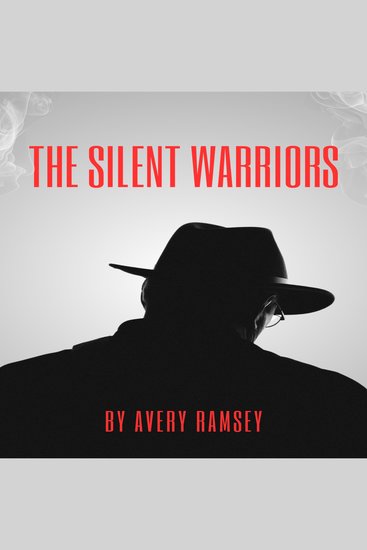
  • The Silent Warriors - How Spies and Saboteurs Won History’s Hidden Battles - cover

    The Silent Warriors - How Spies...

    Avery Ramsey

    • 0
    • 0
    • 0
    History is not just made on battlefields—it is written in whispers, coded messages, and the silent betrayals of spies. From World War II resistance fighters to Cold War double agents, the greatest conflicts of the modern era were fought not only with guns and tanks, but with secrets, deception, and intelligence warfare. 
    The Silent Warriors takes you deep into the world of espionage, covert missions, and psychological warfare, uncovering the real-life stories of the spies, saboteurs, and secret operatives who changed history—often without the world ever knowing their names. 
    Inside This Thrilling Book, You’ll Discover: 
    •	The Unbreakable Code of the Windtalkers – How Native American soldiers helped secure victory in WWII with a language no enemy could decipher. 
    •	Virginia Hall: The Woman the Nazis Feared Most – The incredible story of an American spy with a wooden leg who built one of the most dangerous resistance networks in occupied France. 
    •	Aldrich Ames: The CIA Officer Who Sold His Soul – How one man’s greed led to the deaths of countless U.S. operatives and nearly collapsed American intelligence during the Cold War. 
    •	The Ultimate Double Agent, James Armistead Lafayette – The enslaved man who infiltrated the British army and helped George Washington win the Revolutionary War. 
    •	The Secret Propaganda War – How the CIA and KGB waged a silent battle to control the media, literature, and even art to shape global perception. 
    •	Modern Espionage Exposed – How spies like Anna Chapman and Russian deep-cover agents have adapted espionage for the 21st century. 
    If you love true espionage, untold history, and the thrill of secrets finally revealed, The Silent Warriors is your ultimate guide to the spies, lies, and secret battles that shaped the world. 
    Perfect for fans of real-life spy stories, military history, and intelligence warfare.
    Voir livre
  • The Lands in Between - Russia vs the West and the New Politics of Hybrid War - cover

    The Lands in Between - Russia vs...

    Mitchell A. Orenstein

    • 0
    • 0
    • 0
    Russia's stealth invasion of Ukraine and its assault on the US elections in 2016 forced a reluctant West to grapple with the effects of hybrid war. While most citizens in the West are new to the problems of election hacking, state-sponsored disinformation campaigns, influence operations by foreign security services, and frozen conflicts, citizens of the frontline states between Russia and the European Union have been dealing with these issues for years. 


    The Lands in Between contends that these "lands in between" hold powerful lessons for Western countries. For Western politics is becoming increasingly similar to the lands in between, where hybrid warfare has polarized parties and voters into two camps: those who support a Western vision of liberal democracy and those who support a Russian vision of nationalist authoritarianism. Paradoxically, while politics increasingly boils down to a zero sum "civilizational choice" between Russia and the West, those who rise to the pinnacle of the political system in the lands in between are often non-ideological power brokers who have found a way to profit from both sides, taking rewards from both Russia and the West. Increasingly, the political pathologies of these small, vulnerable, and backwards states in Europe are our problems too. In this deepening conflict, we are all lands in between.
    Voir livre
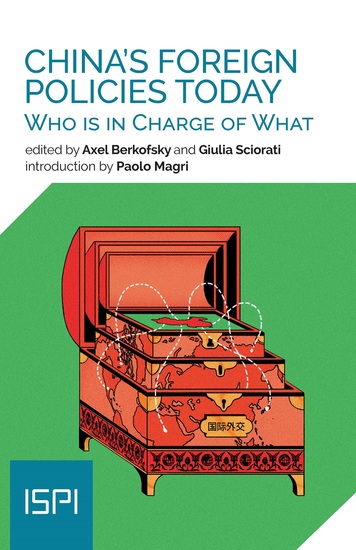
  • China's Foreign Policies Today - Who is in Charge of What - cover

    China's Foreign Policies Today -...

    Axel Berkofsky, Giulia Sciorati

    • 0
    • 0
    • 0
    Since Xi Jinping took power in 2012, China's foreign policy has significantly shifted from a defensive to an assertive approach. For decades, Beijing worked to integrate into the liberal international order, presenting itself as a peacefully rising power. By contrast, however, under Xi's leadership, the country is attempting to create a global system that is more favourable to its own interests.
    The Report examines China's current foreign policy approach, and the drivers behind the country's shift away from tradition. What are the main features of China's foreign policy today? How are decisions being taken, and to what extent do interest groups continue to have a say in decision-making after the recent power centralisation?
    Voir livre
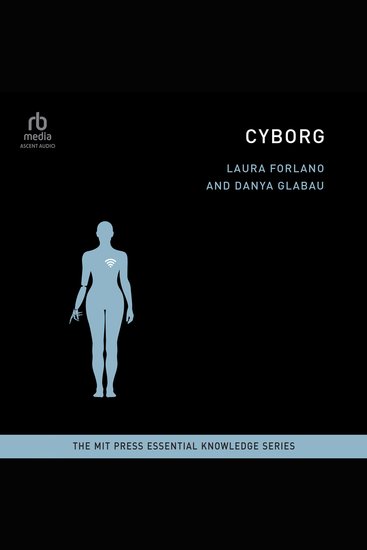
  • Cyborg - The MIT Press Essential Knowledge series) - cover

    Cyborg - The MIT Press Essential...

    Laura Forlano, Danya Glabau

    • 0
    • 0
    • 0
    This introduction to cyborg theory provides a critical vantage point for analyzing the claims around emerging technologies like automation, robots, and AI. Cyborg analyzes and reframes popular and scholarly conversations about cyborgs from the perspective of feminist cyborg theory. Drawing on their combined decades of training, teaching, and research in the social sciences, design, and engineering education, Laura Forlano and Danya Glabau introduce an approach called critical cyborg literacy. Critical cyborg literacy foregrounds power dynamics and pays attention to the ways that social and cultural factors such as gender, race, and disability shape how technology is imagined, developed, used, and resisted. 


    Forlano and Glabau offer critical cyborg literacy as a way of thinking through questions about the relationship between humanity and technology. Cyborg examines whether modern technologies make us all cyborgs—if we consider, for instance, the fact that we use daily technologies at work, have technologies embedded into our bodies in health care applications, or use technology to critically explore possibilities as artists, designers, activists, and creators. Lastly, Cyborg offers perspectives from critical race, feminist, and disability thinkers to help chart a path forward for cyborg theory in the twenty-first century.
    Voir livre
  • Moscow Rules - What Drives Russia to Confront the West - cover

    Moscow Rules - What Drives...

    Keir Giles

    • 0
    • 0
    • 0
    From Moscow, the world looks different. It is through understanding how Russia sees the world—and its place in it—that the West can best meet the Russian challenge. 


    Russia and the West are like neighbors who never seem able to understand each other. A major reason, this book argues, is that Western leaders tend to think that Russia should act as a "rational" Western nation—even though Russian leaders for centuries have thought and acted based on their country's different history and traditions. Russia, through Western eyes, is unpredictable and irrational, when in fact its leaders almost always act in their own predictable and rational ways. For Western leaders to try to engage with Russia without attempting to understand how Russians look at the world is a recipe for repeated disappointment and crises. 


    Keir Giles, a senior expert on Russia at Britain's prestigious Chatham House, describes how Russian leaders have used consistent doctrinal and strategic approaches to the rest of the world. These approaches may seem alien in the West, but understanding them is essential for successful engagement with Moscow. Giles argues that understanding how Moscow's leaders think—not just Putin but his predecessors and eventual successors—will help counterparts in the West develop a less crisis-prone and more productive relationship with Russia.
    Voir livre