Rejoignez-nous pour un voyage dans le monde des livres!
Ajouter ce livre à l'électronique
Grey
Ecrivez un nouveau commentaire Default profile 50px
Grey
Abonnez-vous pour lire le livre complet ou lisez les premières pages gratuitement!
All characters reduced
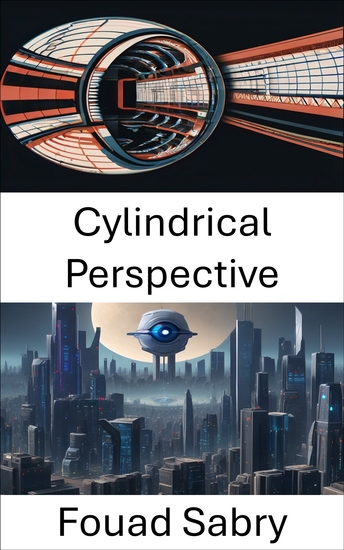
Cylindrical Perspective - Cylindrical Perspective: Exploring Visual Perception in Computer Vision - cover

Cylindrical Perspective - Cylindrical Perspective: Exploring Visual Perception in Computer Vision

Fouad Sabry

Maison d'édition: One Billion Knowledgeable

  • 0
  • 0
  • 0

Synopsis

What is Cylindrical Perspective
 
Cylindrical perspective is a form of distortion caused by fisheye and panoramic lenses which reproduce straight horizontal lines above and below the lens axis level as curved while reproducing straight horizontal lines on lens axis level as straight. This is also a common feature of wide-angle anamorphic lenses of less than 40mm focal length in cinematography, as well as the basis for creating the 146-degree peripheral vision of Cinerama when projected into a matching, cylindrically curved screen.
 
How you will benefit
 
(I) Insights, and validations about the following topics:
 
Chapter 1: Cylindrical perspective
 
Chapter 2: Optical aberration
 
Chapter 3: Map projection
 
Chapter 4: Panoramic photography
 
Chapter 5: Distortion (optics)
 
Chapter 6: Image stitching
 
Chapter 7: Cylindrical lens
 
Chapter 8: Image rectification
 
Chapter 9: Keystone effect
 
Chapter 10: Vertical and horizontal
 
(II) Answering the public top questions about cylindrical perspective.
 
(III) Real world examples for the usage of cylindrical perspective in many fields.
 
Who this book is for
 
Professionals, undergraduate and graduate students, enthusiasts, hobbyists, and those who want to go beyond basic knowledge or information for any kind of Cylindrical Perspective.
Disponible depuis: 13/05/2024.
Longueur d'impression: 139 pages.


D'autres livres qui pourraient vous intéresser

  • Data Lakes - A Comprehensive Guide to Design Implementation and Optimization - cover

    Data Lakes - A Comprehensive...

    Brian Paul

    • 0
    • 0
    • 0
    In the era of big data, organizations are turning to data lakes as a powerful solution to store, manage, and derive valuable insights from vast and diverse datasets. "Data Lakes" is your essential guide to understanding, implementing, and optimizing data lakes for success in the complex landscape of data architecture. 
    "Data Lakes" is your indispensable companion on the quest to harness the transformative power of data lakes, offering practical insights, expert guidance, and a roadmap to success in the dynamic world of data management and analytics. Whether you're a seasoned data professional or just starting your data journey, this book empowers you to navigate the depths of data lakes with confidence and proficiency. 
     
    Voir livre
  • Aviation for Beginners - cover

    Aviation for Beginners

    Facundo Conforti

    • 0
    • 0
    • 0
    This audiobook is narrated by an AI Voice.   
    This work has been developed to bring the main aeronautical content to aviation enthusiasts, students and future pilots and to anyone passionate about the aeronautical field who wants to learn a little more about this fascinating world of civil aviation. 
    	We will learn the main theoretical concepts of aviation. A summary of each aeronautical area, explained in a simple and pleasant way to read, but at the same time, developing the most relevant content in a professional and highly educational way. 
    	What are the airport runways like? Why does an airplane fly? How do the clouds form? What are the different parts of an airplane? How do the aircraft's instruments work? All these questions and many more, will be answered in this entertaining mandatory aeronautical manual for all those who take their first steps in aviation, or are about to do so. 
    	The Aeronautical Library has more than 60 books published, which makes it the largest Spanish Aeronautical Library in the world!
    Voir livre
  • Life Is Golden - What I’ve Learned from the World’s Most Adventurous Dogs - cover

    Life Is Golden - What I’ve...

    Andrew Muse

    • 0
    • 0
    • 0
    In this adorable book all about the famous golden retriever that won over the Internet, Kicker and his human, Andrew, take readers on exciting adventures all across the world. And they’re sharing their story, for the first time all in one format, with the world. Life is Golden champions bravery, wanderlust, and compassion by inspiring readers.
    Voir livre
  • You are what you eat - cover

    You are what you eat

    Brittany Forrester

    • 0
    • 0
    • 0
    For decades, the medical profession has advocated for nutritional management as a treatment strategy for various illnesses, including diabetes, heart disease, high blood pressure, and excessive cholesterol. There are currently no such recommendations for brain aging and dementia.Nutrition was only recently accorded scientific-field status. Eating is a valid technique for defending oneself against brain aging and disorders such as Alzheimer's. Scientists have gradually realized the vital link between the foods we eat and our mental health. This insight has spawned a rapidly rising body of studies indicating that we may be eating our way to dementia.What has gone unreported until now is that, of all the organs in our bodies, the brain is the one most easily harmed by a poor diet. Everything in the brain, from its architecture to its ability to perform, begs for optimal nutrition. Many of us are ignorant that the only way to fuel the brain is through our food. The meals we eat are broken down into nutrients, absorbed into the bloodstream, and transported to the brain to replenish depleted stores, stimulate cellular responses, and, most critically, be incorporated into brain tissue.We are what we eat!
    Voir livre
  • Moral Philosophy - Navigating Right and Wrong - cover

    Moral Philosophy - Navigating...

    Hector Davidson

    • 0
    • 0
    • 0
    Moral philosophy, or ethics, is the branch of philosophy that examines concepts of right and wrong, virtue and vice, justice and injustice. It seeks to understand the foundations of moral principles, how they are applied in human life, and whether moral truths are objective or subjective. From ancient civilizations to modern societies, moral philosophy has played a crucial role in shaping human thought, behavior, and institutions. 
    One of the fundamental questions in moral philosophy is whether morality is a product of reason, emotion, or social convention. Some philosophers argue that moral principles stem from rational deliberation, while others suggest that morality is deeply tied to human emotions, such as compassion and guilt. Social constructivists, on the other hand, emphasize that moral norms evolve through cultural traditions, religious beliefs, and historical contexts. 
    The study of moral philosophy is often divided into three main branches. Meta-ethics explores the nature and meaning of moral language, questioning whether moral statements express objective truths or subjective opinions. Normative ethics examines different ethical theories that propose principles for moral conduct, such as consequentialism, deontology, and virtue ethics. Applied ethics focuses on practical moral issues, including debates on human rights, justice, medical ethics, and environmental concerns.
    Voir livre
  • Stars and the Shadow Realm - The Role of Dark Space in Cosmic Evolution - cover

    Stars and the Shadow Realm - The...

    Dirk Fallon

    • 0
    • 0
    • 0
    The cosmos, an endless expanse of stars, planets, and unknown realms, is far more complex than it appears. Humanity has long gazed at the night sky, wondering about the vastness of space and the mysteries it holds. From ancient civilizations to modern scientific advancements, we have strived to understand the fundamental nature of the universe. Yet, the more we learn, the more we realize how little we truly know. The universe is constantly evolving, and its story is a tale of creation, destruction, and the delicate balance that sustains it all. 
    The birth of stars marks the beginning of cosmic evolution. Stars form from vast clouds of gas and dust, which collapse under their own gravity, eventually igniting nuclear fusion in their cores. This process is the foundation of stellar life, and it is responsible for the creation of all the elements we find on Earth. Stars shine brightly, providing energy and light to their surrounding environments, but their life cycles are fleeting. Over millions or even billions of years, stars undergo dramatic changes, from the fusion of lighter elements to the eventual formation of heavier ones. These transformations have profound implications for the surrounding space and the evolution of galaxies. 
    The concept of dark space is equally crucial to understanding the cosmos. Dark space, often associated with dark matter and dark energy, is an invisible component of the universe that does not emit or interact with electromagnetic radiation. While we cannot directly observe dark space, scientists have inferred its existence by studying the gravitational effects it has on visible matter. It is believed that dark space plays a vital role in the overall structure and expansion of the universe. In many ways, it serves as a backdrop to the more visible phenomena we observe, yet its influence is undeniable. Dark space not only shapes the formation of galaxies but also dictates their movement and evolution over time.
    Voir livre