Rejoignez-nous pour un voyage dans le monde des livres!
Ajouter ce livre à l'électronique
Grey
Ecrivez un nouveau commentaire Default profile 50px
Grey
Abonnez-vous pour lire le livre complet ou lisez les premières pages gratuitement!
All characters reduced
Cross Correlation - Unlocking Patterns in Computer Vision - cover

Cross Correlation - Unlocking Patterns in Computer Vision

Fouad Sabry

Maison d'édition: One Billion Knowledgeable

  • 0
  • 0
  • 0

Synopsis

What is Cross Correlation
 
In signal processing, cross-correlation is a measure of similarity of two series as a function of the displacement of one relative to the other. This is also known as a sliding dot product or sliding inner-product. It is commonly used for searching a long signal for a shorter, known feature. It has applications in pattern recognition, single particle analysis, electron tomography, averaging, cryptanalysis, and neurophysiology. The cross-correlation is similar in nature to the convolution of two functions. In an autocorrelation, which is the cross-correlation of a signal with itself, there will always be a peak at a lag of zero, and its size will be the signal energy.
 
How you will benefit
 
(I) Insights, and validations about the following topics:
 
Chapter 1: Cross-correlation
 
Chapter 2: Autocorrelation
 
Chapter 3: Covariance matrix
 
Chapter 4: Estimation of covariance matrices
 
Chapter 5: Cross-covariance
 
Chapter 6: Autocovariance
 
Chapter 7: Variational Bayesian methods
 
Chapter 8: Normal-gamma distribution
 
Chapter 9: Expectation-maximization algorithm
 
Chapter 10: Griffiths inequality
 
(II) Answering the public top questions about cross correlation.
 
(III) Real world examples for the usage of cross correlation in many fields.
 
Who this book is for
 
Professionals, undergraduate and graduate students, enthusiasts, hobbyists, and those who want to go beyond basic knowledge or information for any kind of Cross Correlation.
Disponible depuis: 10/05/2024.
Longueur d'impression: 143 pages.

D'autres livres qui pourraient vous intéresser

  • My Quest for Health Equity - Notes on Learning While Leading - cover

    My Quest for Health Equity -...

    MD David Satcher

    • 0
    • 0
    • 0
    Dr. David Satcher is one of the most widely known and well-regarded physicians of our time. A former four-star admiral in the US Public Health Service Commissioned Corps, he served as the assistant secretary for health, the surgeon general of the United States, and the director of the Centers for Disease Control and Prevention before founding the eponymous Satcher Health Leadership Institute at Morehouse School of Medicine. At the core of his impact on public health, he is also a lifelong leader for civil rights and health equity. 


    In My Quest for Health Equity, Dr. Satcher takes an inspiring and instructive look inside his fifty-year career to shed light on the challenge and burden of leadership. Explaining that he has thought of each leadership role—whether in academia, community, or government—as an opportunity to move the needle toward health equity, he shares the hard-won lessons he has learned over a lifetime in the medical field. 


    Drawing on his early memories, medical school days, and experience in the civil rights movement, Dr. Satcher touches on a number of topics, including the essential qualities of leadership; leading from science to policy to practice; the importance of clear communication and continual learning; the need for workplace discipline; confronting failure; team approaches to leadership; and much more.
    Voir livre
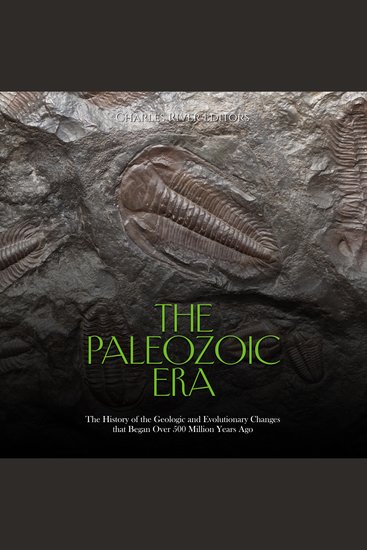
  • Paleozoic Era The: The History of the Geologic and Evolutionary Changes that Began Over 500 Million Years Ago - cover

    Paleozoic Era The: The History...

    Editors Charles River

    • 0
    • 0
    • 0
    The current view of science is that Earth is around 4.6 billion years old, and the first 4 billion years of its development are known as the Precambrian period. For the first billion years or so, there was no life in Earth. Then the first single-celled life-forms, early bacteria and algae, began to emerge. It’s unclear where they came from or even if they originated on this planet at all, but this gradual development continued until around four billion years ago when suddenly (in geological terms) more complex forms of life began to emerge.  
    	Scientists call this time of an explosion of new forms of life the Paleozoic Era, and it stretched from around 541 to 250 million years ago. In the oceans and then on land, new creatures and plants began to appear in bewildering variety, and by the end of this period, life on Earth had diversified into a myriad of complex forms that filled virtually every habitat and niche available in the seas and on the planet’s only continent, Pangea. 
    	The Precambrian Period is divided into three eons: the Hadean, the Archaean, and the Proterozoic. One layer of carbon in rocks that date to the Archaean Eon, found on islands west of Greenland, seems to have fossilized tracks that may have been left by some form of organic life, but scientists simply are not certain. The oldest confirmed remains of life date from the same eon and were found in rocks in Western Australia, which were found to contain fossilized bacteria estimated to be 3.46 billion years old. It seems likely that there were thousands, perhaps even millions of forms of life in these early periods, and most seem to have been microscopic in size and very simple in developmental terms.
    Voir livre
  • Upland - A Journey through Time and the Hills of Britain - cover

    Upland - A Journey through Time...

    Ian Crofton

    • 0
    • 0
    • 0
    'Fascinating and lyrical . . . A beautifully written celebration of a lifelong passion' – Stephen Venables
    The relationship of people with hills and mountains has been complex, rich and varied – from awe and wonder to fear and loathing, from spiritual longing to peaceful acceptance.
    As he explores our high places, Ian Crofton conjures up those who have been there before: Neolithic axe-makers, mass trespassers, shepherds, quarrymen, botanists, poets and pioneering cragsmen and women among them. At the same time, he is ever attuned to the present moment – a flash of bright moss in a bog, the swoop of an eagle above a skyline, a winter sun sinking into a sea of cloud.
    Following an arc from the gentle Downs of southern England to the wild peaks of Scotland's far north, Upland combines personal experiences with a keen curiosity about the history and nature of mountain landscapes, and the people who once worked and wandered among them. The result is a meditation on the enduring yet ever-changing hills, on the transience of human experience, and on the shifts and twists of time itself.
    Locations included:
    
    - Chilterns (following The Ridgeway)
    
    - Malverns
    
    - Snowdon
    
    - Peak District
    
    - Pennines
    
    - Lake District
    
    - Ben Nevis
    
    - The Cuillin, Skye
    
    - Assynt (Suilven)
    
    - Cairngorms
    Voir livre
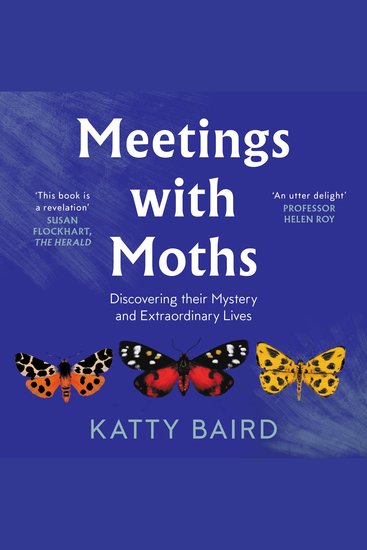
  • Meetings with Moths: Discovering their Mystery and Extraordinary Lives - cover

    Meetings with Moths: Discovering...

    Katty Baird

    • 0
    • 0
    • 0
    Mossy greens, conker browns, cream, chocolate and deepest black; add stripes, swirls and splotches and you have some of the most striking wildlife Britain has to offer. 
    In Meetings with Moths ecologist Katty Baird roams Scotland seeking out, documenting and observing moths. Green Longhorns, Pimpinel Pugs and Peacock Moths are just some of the species that catch her attention as she climbs into holes, ventures behind waterfalls and wanders forests with her boundless curiosity. 
    But you needn’t travel far and wide to see beautiful moths. Katty shows that you can easily enjoy discovering moths and caterpillars without specialist knowledge by creating your own light trap or simply looking more closely at your immediate landscape. 
    Meetings with Moths is a story about green health and the power of a passion to sustain us. 
    In Meetings with Moths, Katty Baird explores the diverse habitats of Scotland, from the coastal shorelines to the lush ecosystems, making it the latest and best reference in ecology. Her passion for nature and animals, especially moths and butterflies, shines through, making this book a top pick for new and seasoned nature enthusiasts. 
    For fans of John Muir Laws (The Laws Field Guide to Sierra Birds), Arthur V. Evans (The Lives of Beetles), Timothy Snyder (Our Malady), Pete Dunne (The Courage of Birds), and Wendy Williams (The Language of Butterflies). 
    HarperCollins 2023
    Voir livre
  • Side Effects - How Our Healthcare Lost Its Way – And How We Fix It - cover

    Side Effects - How Our...

    David Haslam

    • 0
    • 0
    • 0
    A Waterstones Best Books of 2022 pick 
     
    With a single drug in the UK currently costing £340,000 per patient per year, or a gene therapy in the USA being costed at $1.2million, who should get such treatments, and how can we begin to afford them? Should we all be entitled to timely mental health therapy? How should we care for our old? 
     
    As we grapple with the world's worst pandemic for a century, our minds are on our health more than ever. But what should we rightfully expect of doctors? In this original and thought-provoking book, Sir David Haslam explores what good healthcare should achieve and asks how we pay for it. Informed by patient stories and data from across the world - from US big pharma to Britain's NHS - this is an urgent and often moving examination of our most important asset: our health.
    Voir livre
  • Design for Cognitive Bias - cover

    Design for Cognitive Bias

    David Dylan Thomas

    • 0
    • 0
    • 0
    We humans are messy, illogical creatures who like to imagine we’re in control—but we blithely let our biases lead us astray. In Design for Cognitive Bias, David Dylan Thomas lays bare the irrational forces that shape our everyday decisions and, inevitably, inform the experiences we craft. Once we grasp the logic powering these forces, we stand a fighting chance of confronting them, tempering them, and even harnessing them for good. Come along on a whirlwind tour of the cognitive biases that encroach on our lives and our work, and learn to start designing more consciously. 
    THIS BOOK EXPLORES: 
    • Why our brains take shortcuts—and why that matters in our work 
    • How bias influences everything from user behavior to stakeholder decision-making to team dynamics 
    • Techniques for noticing your own biases, and using them for good where you can 
    • Making more humane and conscientious products and experiences
    Voir livre