Begleiten Sie uns auf eine literarische Weltreise!
Buch zum Bücherregal hinzufügen
Grey
Einen neuen Kommentar schreiben Default profile 50px
Grey
Jetzt das ganze Buch im Abo oder die ersten Seiten gratis lesen!
All characters reduced
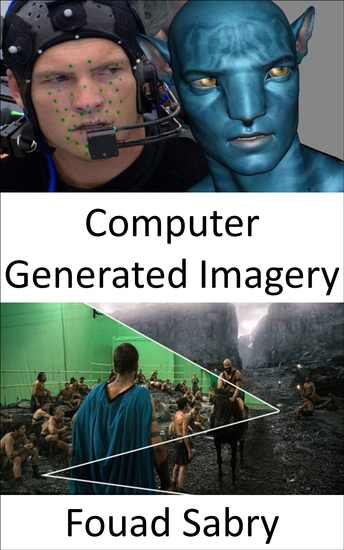
Computer Generated Imagery - How Computer-generated Imagery Is Used in Movies and Animation - cover

Computer Generated Imagery - How Computer-generated Imagery Is Used in Movies and Animation

Fouad Sabry

Verlag: One Billion Knowledgeable

  • 0
  • 0
  • 0

Beschreibung

What Is Computer Generated Imagery
 
The use of computer graphics to create or contribute to images in works of art, printed media, video games, simulators, computer animation, and visual effects in motion pictures, television programs, shorts, commercials, and videos is referred to as computer-generated imagery (also abbreviated as CGI). Although the word "CGI" is most generally used to refer to the 3-D computer graphics used for producing characters, scenes, and special effects in films and television, which is defined as "CGI animation," the pictures may be dynamic or static, and they may be two-dimensional (2D).
 
How You Will Benefit
 
(I) Insights, and validations about the following topics:
 
Chapter 1: Computer-generated imagery
 
Chapter 2: Computer animation
 
Chapter 3: Digital art
 
Chapter 4: Autodesk 3ds Max
 
Chapter 5: Visual effects
 
Chapter 6: Scientific visualization
 
Chapter 7: Visualization (graphics)
 
Chapter 8: Non-photorealistic rendering
 
Chapter 9: Real-time computer graphics
 
Chapter 10: Virtual cinematography
 
Chapter 11: 3D rendering
 
Chapter 12: 3D computer graphics
 
Chapter 13: Projection augmented model
 
Chapter 14: Computer graphics (computer science)
 
Chapter 15: Computer graphics
 
Chapter 16: Fractal-generating software
 
Chapter 17: List of 3D computer graphics software
 
Chapter 18: History of computer animation
 
Chapter 19: 3D modeling
 
Chapter 20: Visual computing
 
Chapter 21: Virtual humans
 
(II) Answering the public top questions about computer generated imagery.
 
(III) Real world examples for the usage of computer generated imagery in many fields.
 
(IV) 17 appendices to explain, briefly, 266 emerging technologies in each industry to have 360-degree full understanding of computer generated imagery' technologies.
 
Who This Book Is For
 
Professionals, undergraduate and graduate students, enthusiasts, hobbyists, and those who want to go beyond basic knowledge or information for any kind of computer generated imagery.
Verfügbar seit: 03.08.2022.
Drucklänge: 381 Seiten.


Weitere Bücher, die Sie mögen werden

  • 101 Flight Lessons - Private Pilot Licence - cover

    101 Flight Lessons - Private...

    Facundo Conforti

    • 0
    • 0
    • 0
    This audiobook is narrated by an AI Voice.   
    The collection "101 Flight Lessons" has been created to cover the main theoretical concepts of the most relevant aeronautical subjects at each stage of a pilot, air traffic controller, and cabin crew career. 
    	101 Flight Lessons for Private Pilots" includes a summary of key aeronautical topics such as meteorology, aerodynamics, flight instruments, maneuvers, aircraft structures, engines, regulations, airports, and a set of lessons that every private pilot, whether in training or already graduated, should always keep in mind. 
    	This work is dedicated not only to all aviation personnel in general but also to aviation enthusiasts who enjoy a pleasant read for recreational and educational purposes. 
    	This work is dedicated not only to all aviation personnel in general but also to aviation enthusiasts who enjoy a pleasant read for recreational and educational purposes.
    Zum Buch
  • Lyme Disease - cover

    Lyme Disease

    Sam Dickinson

    • 0
    • 0
    • 0
    Lyme disease is an infectious disease caused by the bacteria Borrelia burgdorferi. B. burgdorferi is transmitted to humans by biting an infected black-legged or deer tick. The tick becomes infected after feeding on infected deer, birds, or mice.A tick has to be present on the skin for at least 36 hours to transmit the infection. Many people with Lyme disease have no memory of a tick bite.Lyme disease was first recognized in the town of Old Lyme, Connecticut, in 1975. It’s the most common tick-borne illness in Europe and the United States.People who live or spend time in wooded areas known for disease transmission are more likely to get this illness. People with domesticated animals visiting wooded regions also have a higher risk of developing Lyme disease.Cases of Lyme disease have varied yearly but have steadily increased for the past 20 years in the United States.Lyme disease is not common in all United States and is primarily concentrated in the Northeast and upper Midwest regions.
    Zum Buch
  • Developing to Scale - Technology and the Making of Global Health - cover

    Developing to Scale - Technology...

    Heidi Morefield

    • 0
    • 0
    • 0
    The first critical book on “appropriate technology,” Developing to Scale shows how global health came to be understood as a problem to be solved with the right technical interventions. 
      
    In 1973, economist E. F. Schumacher published Small Is Beautiful, which introduced a mainstream audience to his theory of “appropriate technology”: the belief that international development projects in the Global South were most sustainable when they were small-scale, decentralized, and balanced between the traditional and the modern. His theory gained widespread appeal, as cuts to the foreign aid budget, the national interests of nations seeking greater independence, postcolonial activism, and the rise of the United States’ tech sector drove stakeholders across public and private institutions toward cheaper tools. In the ensuing decades, US foreign assistance shifted away from massive modernization projects, such as water treatment facilities, toward point-of-use technologies like village water pumps and oral rehydration salts. This transition toward the small scale had massive implications for the practice of global health. 
      
    Developing to Scale tells the history of appropriate technology in international health and development, relating the people, organizations, and events that shaped this consequential idea. Heidi Morefield examines how certain technologies have been defined as more or less “appropriate” for the Global South based on assumptions about gender, race, culture, and environment. Her study shows appropriate technology to be malleable, as different constituencies interpreted its ideas according to their own needs. She reveals how policymakers wielded this tool to both constrain aid to a scale that did not threaten Western interests and to scale the practice of global health through the development and distribution of technical interventions.
    Zum Buch
  • Understanding Human Evolution - cover

    Understanding Human Evolution

    Ian Tattersall

    • 0
    • 0
    • 0
    Human life, and how we came to be, is one of the greatest scientific and philosophical questions of our time. This compact and accessible book presents a modern view of human evolution. Written by a leading authority, it lucidly and engagingly explains not only the evolutionary process, but the technologies currently used to unravel the evolutionary past and emergence of Homo sapiens. By separating the history of palaeoanthropology from current interpretation of the human fossil record, it lays numerous misconceptions to rest, and demonstrates that human evolution has been far from the linear struggle from primitiveness to perfection that we've been led to believe. It also presents a coherent scenario for how Homo sapiens contrived to cross a formidable cognitive barrier to become an extraordinary and unprecedented thinking creature. Understanding Human Evolution is for anyone interested in the complex and tangled story of how we came to be.
    Zum Buch
  • Wildlife Conservation in a Changing Climate - cover

    Wildlife Conservation in a...

    Jedediah F. Brodie, Eric S....

    • 0
    • 0
    • 0
    Human-induced climate change is emerging as one of the gravest threats to biodiversity in history, and while a vast amount of literature on the ecological impact of climate change exists, very little has been dedicated to the management of wildlife populations and communities in the wake of unprecedented habitat changes. Wildlife Conservation in a Changing Climate is an essential resource, bringing together leaders in the fields of climate change ecology, wildlife population dynamics, and environmental policy to examine the impacts of climate change on populations of terrestrial vertebrates. Chapters assess the details of climate change ecology, including demographic implications for individual populations, evolutionary responses, impacts on movement patterns, alterations of species interactions, and predicting impacts across regions. The contributors also present a number of strategies by which conservationists and wildlife managers can counter or mitigate the impacts of climate change as well as increase the resilience of wildlife populations to such changes. A seminal contribution to the fields of ecology and conservation biology, Wildlife Conservation in a Changing Climate will serve as the spark that ignites a new direction of discussions about and action on the ecology and conservation of wildlife in a changing climate.
    Zum Buch
  • Relaxing Nature Sounds – Over 10 Hours of Pure Natural Ambience (Without Music) - Authentic Nature Soundscapes for Deep Relaxation Sleep Meditation Stress Relief & a Calm Home Atmosphere - cover

    Relaxing Nature Sounds – Over 10...

    My Nature Sounds Therapy

    • 0
    • 0
    • 0
    The sounds of nature – a hammock for the soul.


    Let yourself be carried away by over 10 hours of high-quality, immersive nature recordings from around the world – without music, just pure natural ambience.


    Whether you’re meditating, falling asleep, relieving stress, or simply creating a peaceful atmosphere at home or at work – this audiobook offers the perfect sonic backdrop for every moment of calm.


    Recorded with state-of-the-art technology in stunning spatial clarity, each soundscape feels like you’re right there: under the trees, by the ocean, or amidst gentle rain.


    What’s included:
    
     
    Peaceful songbird concert
    
     
    Tropical rainstorm
    
     
    Seagulls on a Hawaiian beach
    
     
    Wind in the trees
    
     
    Gentle stream and mountain brook
    
     
    Dawn in the jungle
    
     
    Tibetan singing bowls with soft ocean waves
    
     
    Healing hot springs in Iceland
    
     
    Crickets chirping at dusk in Tuscany
    
     
    Soft November rain
    
     
    A peacefully purring cat in a rustic barn
    
     
    Windchimes by the sea
    
     
    A relaxing day in the garden
    
     
    Gentle ocean surf
     
    .... AND MUCH MORE!


    This audio experience is also highly beneficial for soothing tinnitus, reducing anxiety, and promoting better sleep. Feel the endless power of nature and enjoy moments of stillness – anytime, anywhere.


    Keywords: 
     
    Nature Sounds, Relaxation, Sleep Aid, Meditation Audio, Stress Relief, Ambient Sounds, Tinnitus Relief, Ocean Waves, Rain Sounds, Birdsong
    Zum Buch