Begleiten Sie uns auf eine literarische Weltreise!
Buch zum Bücherregal hinzufügen
Grey
Einen neuen Kommentar schreiben Default profile 50px
Grey
Jetzt das ganze Buch im Abo oder die ersten Seiten gratis lesen!
All characters reduced
Carbon Nanotube - Advancing Molecular Motion through Nanoscale Structures - cover

Carbon Nanotube - Advancing Molecular Motion through Nanoscale Structures

Fouad Sabry

Verlag: One Billion Knowledgeable

  • 0
  • 0
  • 0

Beschreibung

Explore the fascinating world of carbon nanotubes in Carbon Nanotube, a vital work in the Nanomotor series. This book takes a deep dive into the science and applications of carbon nanotubes, covering a wide range of topics from synthesis to toxicity, and from medicine to photovoltaics. Whether you're a professional in the field, an undergraduate or graduate student, or simply an enthusiast, this book is designed to enhance your understanding of the revolutionary potential of these nanomaterials.
 
Chapters Brief Overview:
 
1: Carbon nanotube: An introduction to the fundamental structure and properties of carbon nanotubes.
 
2: Carbon nanotube supported catalyst: Discusses how carbon nanotubes are used to support catalysts for various chemical reactions.
 
3: Carbon nanotube chemistry: Examines the chemical properties and functionalization techniques for carbon nanotubes.
 
4: Chemiresistor: Investigates the use of carbon nanotubes in chemiresistor applications, detecting changes in gas concentrations.
 
5: Toxicology of carbon nanomaterials: Reviews the potential environmental and health risks associated with carbon nanotubes.
 
6: Synthesis of carbon nanotubes: A comprehensive look at the various methods used for synthesizing carbon nanotubes.
 
7: Carbon nanotubes in interconnects: Explores the role of carbon nanotubes in electrical interconnects for nanoelectronics.
 
8: Carbon nanotube fieldeffect transistor: Delves into the application of carbon nanotubes in fieldeffect transistors for highperformance devices.
 
9: Carbon nanobud: Introduces the concept of carbon nanobuds and their potential applications in nanotechnology.
 
10: Carbon nanotubes in medicine: Highlights the use of carbon nanotubes in medical applications, including drug delivery and diagnostics.
 
11: NanoIntegris: Focuses on the company NanoIntegris and their innovations in carbon nanotube production.
 
12: Graphene: Examines the relationship between graphene and carbon nanotubes, and their combined potential.
 
13: Optical properties of carbon nanotubes: Discusses how the optical properties of carbon nanotubes make them useful in various applications.
 
14: Carbon nanotubes for water transport: Investigates the use of carbon nanotubes in improving water filtration and transport technologies.
 
15: Transparent conducting film: Looks at the application of carbon nanotubes in transparent conductive films for electronics and solar cells.
 
16: Alex Zettl: Honors the contributions of Alex Zettl, a leading scientist in the study of carbon nanotubes.
 
17: Carbon nanotubes in photovoltaics: Explores how carbon nanotubes are integrated into photovoltaic systems for enhanced solar energy collection.
 
18: Graphene helix: Discusses the unique structures and properties of the graphene helix in the context of carbon nanotubes.
 
19: Vertically aligned carbon nanotube arrays: Examines the development and application of vertically aligned carbon nanotubes in various technologies.
 
20: Potential applications of carbon nanotubes: Investigates the future possibilities of carbon nanotubes in various industries, including electronics, energy, and more.
 
21: Ultimate tensile strength: Reviews the remarkable tensile strength of carbon nanotubes and their potential for highperformance materials.
 
This book provides invaluable insights into the innovative world of carbon nanotubes. If you're looking to stay at the forefront of nanotechnology research or deepen your knowledge of this revolutionary material, Carbon Nanotube is an essential read. Unlock the potential of one of the most exciting scientific discoveries of the modern era, and see how it could shape the future.
Verfügbar seit: 20.03.2025.
Drucklänge: 354 Seiten.


Weitere Bücher, die Sie mögen werden

  • How to Be Fine - What We Learned by Living by the Rules of 50 Self-Help Books - cover

    How to Be Fine - What We Learned...

    Jolenta Greenberg, Kristen Meinzer

    • 0
    • 0
    • 0
    A humorous and insightful look into what advice works, what doesn’t, and what it means to transform yourself, by the co-hosts of the popular By the Book podcast. 
    In each episode of their podcast By the Book, Jolenta Greenberg and Kristen Meinzer take a deep dive into a different self-help book, following its specific instructions, rules, and advice to the letter. From diet and productivity to decorating to social interactions, they try it all, record themselves along the way, then share what they’ve learned with their devoted and growing audience of fans who tune in. 
    Before they began their podcast, Jolenta wanted to believe the promises of self-help books, while Kristen was very much the skeptic. They embraced their differences of opinion, hoping they’d be good for laughs and downloads. But in the years since launching the By the Book, they’ve come to realize their show is about much more than humor. In fact, reading and following each book’s advice has actually changed and improved their lives. Thanks to the show, Kristen penned the Amish romance novel she’d always joked about writing, traveled back to her past lives, and she broached some difficult conversations with her husband about their marriage. Jolenta finally memorized her husband’s phone number, began tracking her finances, and fell in love with cutting clutter.  
    In How to Be Fine, Jolenta and Kristen synthesize the lessons and insights they’ve learned and share their experiences with everyone. How to Be Fine is a thoughtful look at the books and practices that have worked, real talk on those that didn’t, and a list of philosophies they want to see explored in-depth. The topics they cover include: 
    Getting off your device 
    Engaging in positive self-talk 
    Downsizing 
    Admitting you're a liar 
    Meditation 
    Going outside 
    Getting in touch with your emotions 
    Seeing a therapist 
    Part memoir, part prescriptive handbook, this honest, funny, and heartfelt guide is like a warm soul-baring conversation with your closest and smartest friends. 
    Supplemental enhancement PDF accompanies the audiobook.
    Zum Buch
  • Agentic AI for Entrepreneurs - Build Multi-Agent Workflows Without Code - cover

    Agentic AI for Entrepreneurs -...

    Tom Anderson

    • 0
    • 0
    • 0
    This audiobook is narrated by an AI Voice.  
    While most entrepreneurs are still asking ChatGPT to write emails, a small group of founders are using autonomous AI agents to run entire workflows—responding to customers overnight, preparing research briefings, and processing documents—without hiring more people or writing code. 
    Agentic AI for Entrepreneurs is your practical guide to building no-code AI agents and multi-agent workflows that work like autonomous teammates. You'll transform from prompting chatbots to deploying AI systems that plan, execute, and improve your business processes 24/7. 
    What You'll Master: 
    • Build Multi-Agent Systems using platforms like LangGraph, CrewAI, AutoGen, Relevance AI, and n8n—no programming required 
    • Deploy Customer Service Agents that handle 80% of inquiries while maintaining your brand voice and escalating complex issues appropriately 
    • Create Research and Intelligence Agents that monitor competitors, track industry trends, and deliver automated briefings 
    • Automate Business Operations, including expense processing, document routing, resume screening, and approval workflows 
    • Master Agent Prompt Engineering techniques that ensure reliability, security, and alignment with your business goals 
    • Connect Agents to Your Tools through APIs, databases, and integrations with existing business systems 
    Why This Book Is Different: 
    This isn't theoretical AI content. Every pattern, workflow, and example comes from real business implementations. You'll learn from practitioners who've solved the problems you're facing—with detailed case studies showing measurable results like 20+ hours saved monthly and 40% faster customer onboarding. 
    The comprehensive framework comparison helps you choose between platforms based on your specific needs. Step-by-step implementation roadmaps take you from concept to production deployment in 30-90 days.
    Zum Buch
  • Mirror Matrix - The Missing Dimensions of Reality - cover

    Mirror Matrix - The Missing...

    Ylia Callan

    • 0
    • 0
    • 0
    This audiobook is narrated by an AI Voice.  What if reality is missing nothing - except the way we look at it? 
     
    Mirror Matrix: The Missing Dimensions of Reality presents a grounded but far-reaching way of understanding the universe as an information system shaped by reflection, interference and feedback. 
     
    Rather than treating light as a passive messenger, this book shows how reality itself is structured by how information reflects and recombines. Through the four fundamental dimensions of light - intensity, frequency, polarisation and phase - finite signals generate an effectively inexhaustible range of patterns. Infinity emerges not from the size of the universe, but from the richness of interaction. 
     
    Moving from physics to perception, from living systems to culture and meaning, Mirror Matrix reveals a consistent logic at work: patterns that align with their environment persist, while others fade. Observation becomes participation. Meaning becomes stabilised pattern. Responsibility becomes unavoidable in a world of accelerating reflection. 
     
    This book explores questions that sit at the boundary of science and philosophy: 
     
    Why does order exist instead of noise? 
     
    How can finite systems produce overwhelming complexity? 
     
    Why do some patterns - atoms organisms, ideas - persist while others disappear? 
     
    What does it mean to act inside a world shaped by feedback and amplification? 
     
    Written in an accessible, down-to-earth tone, Mirror Matrix does not propose a new belief system or speculative cosmology. It offers a missing lens - one that connects light, life, thought and culture through the same underlying process. 
     
    The mirrors are already in place. 
     
    The patterns are already forming. 
     
    What remains open is how deliberately we choose to participate in the dimensions we’ve been missing.
    Zum Buch
  • How to Make Money in High School and College - Best Money Making Methods as a Teen and Student Building Your Own Apps Selling E-books and More Easy Side Job Ideas - cover

    How to Make Money in High School...

    Clement Harrison

    • 0
    • 0
    • 0
    In How to Make Money in High School, you will discover:How you can earn passive income while still attending school30 diverse money-making ideas that you can start right awayThe unglamorous jobs that can actually make you hundreds of dollars in tipsHow to make $1,000 extra cash over a weekend with this fun scavenging racketThe #1 thing you need to avoid getting screwed over by a clientHow to use your side hustle as a jump-off point to a lucrative careerWhy some jobs are worth taking on, even if the pay may not so enticing 
    And much more.
    Zum Buch
  • Why Not Better and Cheaper? - Healthcare and Innovation - cover

    Why Not Better and Cheaper? -...

    James B. Rebitzer, Robert S....

    • 0
    • 0
    • 0
    An engaging account of innovation in healthcare and why the results fall short for patients and society. 


    The evolution of the cell phones we carry in our pockets demonstrates that quality can increase while prices fall. Why doesn't healthcare also get better and cheaper? 


    In Why Not Better and Cheaper?, James B. Rebitzer and Robert S. Rebitzer offer an answer to this question. Bringing together research on incentives, social norms, and market competition, they argue that the healthcare system generates the wrong kinds of innovation. It is too easy to profit from low-value innovations and too hard to profit from innovations that reduce the costs of care. The result is a healthcare system that is profusely innovative yet remarkably ineffective in discovering ways to deliver increased value at lower cost. 


    Why Not Better and Cheaper? sheds new light on the trajectory of innovation in healthcare, and how to point innovation in a better direction.
    Zum Buch
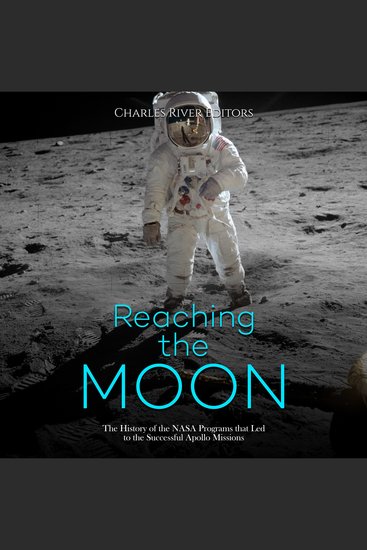
  • Reaching the Moon: The History of the NASA Programs that Led to the Successful Apollo Missions - cover

    Reaching the Moon: The History...

    Editors Charles River

    • 0
    • 0
    • 0
    The Apollo Program is the most famous and celebrated in American history, but the first successful landing of men on the Moon during Apollo 11 had complicated roots dating back over a decade, and it also involved one of NASA’s most infamous tragedies. From 1959-1963, the United States worked toward putting satellites and humans into orbit via the Mercury program, but Eisenhower’s administration was already designing plans for the Apollo program by 1960, a year before the first Russian orbited the Earth and two years before John Glenn became the first American to orbit the Earth. 
    At the same time, America would begin missions to the Moon as early as 1958. On March 27, 1958, Secretary of Defense Neil McElroy announced a lunar project for the International Geophysical Year, consisting of three Air Force launches followed by two Army launches of a JPL-designed lunar probe. ARPA directed the Air Force to launch its probes "as soon as possible consistent with the requirement that a minimal amount of useful data concerning the Moon be obtained." 
    Throughout the 1960s, NASA would spend tens of billions on missions to the Moon, the most expensive peacetime program in American history to that point, and Apollo was only made possible by the tests conducted through earlier missions, including the historic Ranger Program. Conceived as an early part of the attempt to land a man on the Moon, Ranger was designed to photograph the lunar surface in preparation for future landings. Until Ranger, images of the Moon were only available through Earth-based telescopes, which lacked the detail necessary to determine safe sites for landing a spacecraft. Ranger aimed to fill in that gap of knowledge, and like many of NASA’s missions during the 1960s, the program exemplified both the successes and the failures of the agency’s early years.
    Zum Buch