Begleiten Sie uns auf eine literarische Weltreise!
Buch zum Bücherregal hinzufügen
Grey
Einen neuen Kommentar schreiben Default profile 50px
Grey
Jetzt das ganze Buch im Abo oder die ersten Seiten gratis lesen!
All characters reduced
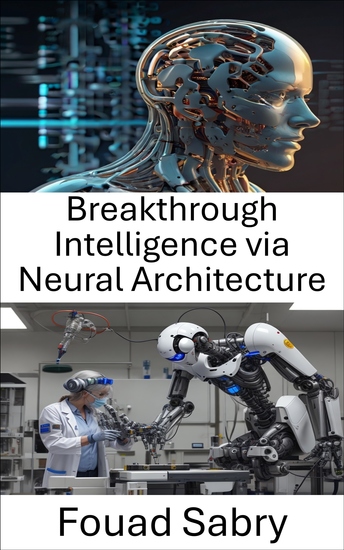
Breakthrough Intelligence via Neural Architecture - Advancing Robotics through Neural Networks and Adaptive Learning - cover

Breakthrough Intelligence via Neural Architecture - Advancing Robotics through Neural Networks and Adaptive Learning

Fouad Sabry

Verlag: One Billion Knowledgeable

  • 0
  • 0
  • 0

Beschreibung

In today’s world, robotics and artificial intelligence (AI) are shaping industries and redefining human potential. "Breakthrough Intelligence via Neural Architecture" delves deep into how AI and robotics are progressing, offering insights that are indispensable for professionals, students, and enthusiasts in the field of Robotics Science. Whether you’re a seasoned researcher, an undergraduate student, or a hobbyist, this book provides a comprehensive understanding of the technological revolution reshaping our future. The benefit of understanding these systems is immeasurable in today’s fastpaced technological environment.
 
Chapters Brief Overview:
 
1: BINA48: Explore the advancements of BINA48, a humanoid robot, and its connections to AI consciousness.
 
2: Android (robot): A deep dive into the development and capabilities of Android robots, shaping humanrobot interaction.
 
3: Technological singularity: Investigate the concept of the technological singularity, where AI surpasses human intelligence.
 
4: Giulio Prisco: Understand the contributions of Giulio Prisco in transhumanism and AI ethics, highlighting human potential.
 
5: Martine Rothblatt: Learn about Martine Rothblatt’s pioneering work in creating AIbased minds and digital immortality.
 
6: Ben Goertzel: Discover Ben Goertzel’s work on AGI (Artificial General Intelligence) and his vision for intelligent machines.
 
7: Ethics of artificial intelligence: Analyze the critical ethical concerns surrounding AI, from privacy to decisionmaking autonomy.
 
8: Terasem Movement: Delve into the Terasem Movement’s exploration of mind uploading and its role in the future of AI.
 
9: Digital immortality: Examine the concept of digital immortality and how AI can preserve human consciousness beyond life.
 
10: Toby Walsh: Discover the views of Toby Walsh on AI safety, policy, and the challenges we face in integrating AI ethically.
 
11: Massimiliano Versace: Uncover the groundbreaking work of Massimiliano Versace in neural networks and their applications.
 
12: Martin Ford (author): Learn from Martin Ford’s perspectives on automation, AI’s effect on employment, and societal shifts.
 
13: Robotic process automation: Explore how robotic process automation is transforming industries, from finance to healthcare.
 
14: Sanbot (robot): Understand the innovative features and applications of the Sanbot robot in business and service.
 
15: Kate Devlin: Discover the work of Kate Devlin in humanrobot relationships and how robots can affect social dynamics.
 
16: Sophia (robot): Learn about Sophia, the famous humanoid robot, and its impact on AI research and human interaction.
 
17: Hanson Robotics: Gain insights into Hanson Robotics’ contributions to creating lifelike robots and advancing AI systems.
 
18: AiDa: Explore AiDa, the world’s first robot artist, and its role in blurring the lines between AI and creativity.
 
19: Stephanie Dinkins: Delve into the works of Stephanie Dinkins in creating inclusive AI and its intersection with social justice.
 
20: Wendell Wallach: Understand Wendell Wallach’s theories on AI governance and the ethical framework needed for AI systems.
 
21: Daniel R. Small: Conclude with Daniel R. Small’s exploration of intelligent systems and their future implications in society.
 
Through these topics, the book offers a thorough examination of how AI and robotics are converging with human life. By exploring the work of thought leaders and the ethical dilemmas surrounding this field, readers will gain not just technical insights but also a philosophical perspective on the future of humanity. For anyone involved in robotics or artificial intelligence, this book is an essential resource.
Verfügbar seit: 25.01.2025.
Drucklänge: 210 Seiten.
Weitere Bücher, die Sie mögen werden

  • Who Owns The Moon? - In Defence of Humanity's Common Interests in Space - cover

    Who Owns The Moon? - In Defence...

    A. C. Grayling

    • 0
    • 0
    • 0
    Silicon for microchips; manganese for batteries; titanium for missiles. 
     
    The moon contains a wealth of natural resources. So, as the Earth’s supplies have begun to dwindle, it is no surprise that the world’s superpowers and wealthiest corporations have turned their eyes to the stars. As this new Space Race begins, A.C. Grayling asks: who, if anyone, owns the moon? Or Mars? Or other bodies in near space? And what do those superpowers and corporations owe to Planet Earth and its inhabitants as a whole? 
     
    From feudal common land, through the rules of the sea, to the vast, nationless expanse of Antarctica, Grayling explores the history of the places which no one, and therefore everyone, owns. Examining the many ways this so-called terra nullius has fallen victim to ‘the tragedy of the commons’ – the tendency for communal resources to be exploited by a few individuals for personal gain at the expense of everyone else – Who Owns the Moon? puts forward a compelling argument for a bold new global consensus, one which recognises and defends the rights of everyone who lives on this planet.
    Zum Buch
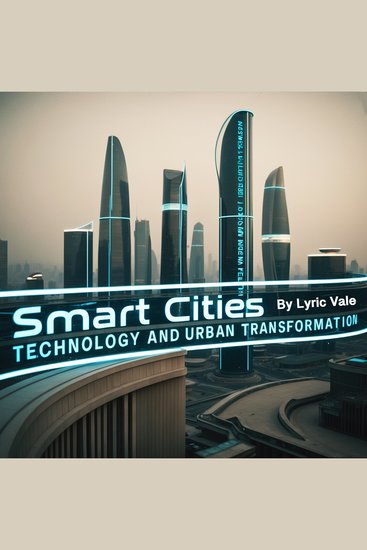
  • Smart Cities - Technology and Urban transformation - cover

    Smart Cities - Technology and...

    Lyric Vale

    • 0
    • 0
    • 0
    In recent years, the concept of smart cities has gained significant attention as urban areas face unprecedented growth and the challenges that come with it. As populations swell and technological advancements accelerate, cities around the world are exploring ways to harness the power of innovation to improve the quality of life for their residents. Smart cities represent a dynamic transformation where technology is seamlessly integrated into urban infrastructure, services, and governance. These cities use data, sensors, and interconnected systems to optimize functions such as traffic flow, energy consumption, healthcare, and public safety, creating more efficient, sustainable, and livable urban environments. 
    The rise of smart cities is driven by the need to address a host of urban issues that have become increasingly difficult to manage through traditional methods. Rapid urbanization has strained resources, from transportation networks to healthcare services, resulting in overcrowded cities and stretched public services. At the same time, the digital revolution has made it possible to rethink how cities are designed and operated, offering unprecedented opportunities for innovation. In smart cities, data is collected from a vast array of sensors and devices embedded throughout the urban landscape, enabling real-time monitoring and management of everything from traffic congestion to energy use. 
    The development of smart cities is also closely tied to sustainability. With growing concerns about climate change and the depletion of natural resources, urban planners are turning to smart technologies to reduce environmental impact. For instance, energy-efficient buildings, waste management systems, and smart grids can significantly lower a city's carbon footprint. Moreover, renewable energy sources, such as solar and wind power, are increasingly being integrated into urban infrastructure, creating more sustainable energy systems.
    Zum Buch
  • Future of Space Exploration The: Humanity’s Next Great Frontier - cover

    Future of Space Exploration The:...

    Sybex Books

    • 0
    • 0
    • 0
    The Future of Space Exploration: Humanity’s Next Great Frontier delves into one of the most thrilling and transformative pursuits of our time: humanity’s journey beyond Earth. This thought-provoking book explores how space exploration has evolved from the first tentative steps of the Apollo era to the cutting-edge advancements of today, and how these developments are paving the way for an interstellar future. 
    From the challenges of building self-sustaining colonies on Mars to the groundbreaking technologies enabling deep-space travel, the book uncovers the ingenuity, courage, and determination driving our species toward the stars. It examines the roles of private companies like SpaceX and Blue Origin alongside international collaborations like the Artemis Program, illustrating how diverse partnerships are shaping the future of space. 
    Drawing on real-world innovations, ethical considerations, and the philosophical implications of becoming a multi-planetary species, this book offers a compelling vision of what lies ahead for humanity. Whether it's mining asteroids, exploring the moons of Jupiter and Saturn, or pondering the potential for extraterrestrial life, The Future of Space Exploration provides an in-depth look at the challenges and triumphs awaiting us on the next great frontier. 
    Engaging and forward-looking, this book is perfect for space enthusiasts, science and technology buffs, and anyone curious about the role of space exploration in shaping our collective destiny.
    Zum Buch
  • Starved for Light - The Long Shadow of Rickets and Vitamin D Deficiency - cover

    Starved for Light - The Long...

    Christian Warren

    • 0
    • 0
    • 0
    A wide-ranging history of rickets tracks the disease’s emergence, evolution, and eventual treatment—and exposes the backstory behind contemporary worries about vitamin D deficiency. Rickets, a childhood disorder that causes soft and misshapen bones, transformed from an ancient but infrequent threat to a common scourge during the Industrial Revolution. Factories, mills, and urban growth transformed the landscape. Malnutrition and insufficient exposure to sunlight led to severe cases of rickets across Europe and the United States, affecting children in a variety of settings: dim British cities and American slave labor camps, moneyed households and impoverished ones. By the late 1800s, it was one of the most common pediatric diseases, seemingly an intractable consequence of modern life. Starved for Light offers the first comprehensive history of this disorder. Tracing the efforts to understand, prevent, and treat rickets—first with the traditional remedy of cod liver oil, then with the application of a breakthrough corrective, industrially produced vitamin D supplements—Christian Warren places the disease at the center of a riveting medical history, one alert to the ways society shapes our views on illness. 
     
    
    Sweeping and engaging, Starved for Light illuminates the social conditions underpinning our cures and our choices, helping us to see history’s echoes in contemporary prescriptions.
    Zum Buch
  • Neuropsychology - cover

    Neuropsychology

    Miguel Vaquero

    • 0
    • 0
    • 0
    This book contains two topics, which are the following:1 - Memory Improvement: The ability for the brain to encode, store, and recall information is known as memory. Experience serves as a roadmap for future action.Memory includes both consciously recalled facts and experienced details as well as deeply embedded knowledge that pops up without thought or even awareness. It serves as both a temporary information storage space and a more lasting record of what has been learned.2 - The study of the anatomy and operation of the nervous system and the brain is known as neuroscience. To map the brain mechanistically, neuroscientists draw on cellular and molecular biology, anatomy and physiology, human behavior and cognition, and other fields.Each neuron, or brain cell, in an adult human has an estimated 100 billion connections to other neurons. The mapping of all the cell-to-cell communication networks—the brain circuits that process all ideas, feelings, and behaviors—remains one of the major difficulties of contemporary neuroscience. The resulting image that gradually forms is referred described as "the connectome." All learning is based on the brain's capacity to build new neural circuits and connections, or neuroplasticity.
    Zum Buch
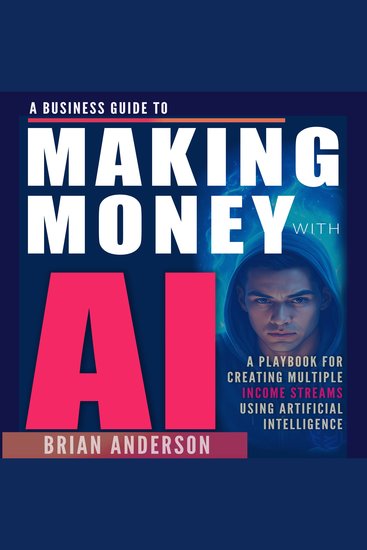
  • A Business Guide To Making Money With AI - A Playbook For Creating Multiple Income Streams Using Artificial Intelligence - cover

    A Business Guide To Making Money...

    Brian Anderson

    • 0
    • 0
    • 0
    This audiobook is narrated by an AI Voice.   
    🎧 A Business Guide to Making Money with AI 
    Generate Real Revenue in Just 90 Days — No Tech Background Needed 
    The greatest revenue opportunity of our time is already here — and you're not too late. 
    While most are still experimenting with AI, a growing group of everyday entrepreneurs are using tools like ChatGPT, Claude, Gemini, and Grok to build real businesses, generate consistent revenue, and unlock financial freedom. 
    In this high-impact audiobook, tech veteran Brian Anderson reveals the exact 90-day playbook that's launching a new wave of AI-powered income. Whether you're a solo creator, small business owner, or just curious about monetizing AI, this guide walks you through real-world strategies that are working right now. 
    The paperback and hardcover editions of "A Business Guide To Making Money With AI" are available on Amazon.com! 
    No hype. No fluff. Just proven methods used by today’s fastest-moving AI entrepreneurs. 
    🎯 What You’ll Learn: 
    How to launch AI-powered services and products in 90 days or less 
    12 complete business systems: from content empires to app automation 
    Step-by-step guides for using ChatGPT, Claude, Gemini, and more 
    Legal tips to protect your assets in the AI economy 
    Action templates for building, tracking, and scaling your success 
    This audiobook is your blueprint for mastering AI and turning it into a revenue engine — without needing to code or hire a developer. 
    📈 The $15.7 trillion AI boom is happening now. 
    💰 The entrepreneurs making money with AI aren’t waiting — and neither should you. 
    🎧 Start listening now and become the next AI success story.
    Zum Buch