Rejoignez-nous pour un voyage dans le monde des livres!
Ajouter ce livre à l'électronique
Grey
Ecrivez un nouveau commentaire Default profile 50px
Grey
Abonnez-vous pour lire le livre complet ou lisez les premières pages gratuitement!
All characters reduced
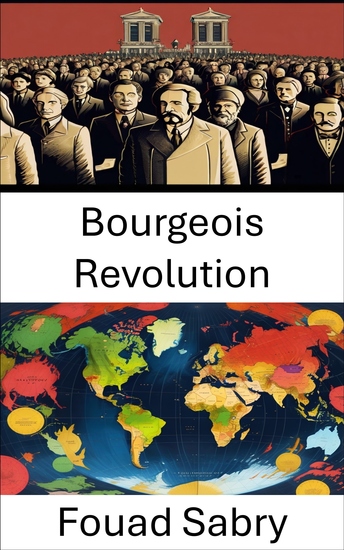
Bourgeois Revolution - The Transformation of Class Dynamics and Power Structures - cover

Bourgeois Revolution - The Transformation of Class Dynamics and Power Structures

Fouad Sabry

Maison d'édition: One Billion Knowledgeable

  • 0
  • 0
  • 0

Synopsis

Unlock the power of understanding with "Bourgeois Revolution," a key work in the "Political Science" series. This book offers a deep analysis of how the bourgeoisie has shaped modern political and economic systems. Through examining major revolutions and the continuing influence of bourgeois interests, the book provides insights into the evolution of governance and capitalism. Essential for professionals, students, and enthusiasts, this work illuminates the intricate dynamics of socio-political change, offering readers valuable perspectives on historical and modern developments.
 
1: Bourgeois Revolution - Explore the rise of the bourgeoisie and its impact on society.
 
2: English Revolution - Discover how the English Revolution advanced bourgeois power.
 
3: Eighteenth Brumaire of Louis Bonaparte - Analyze Marx’s view of Napoleon III's rise and bourgeois interests.
 
4: Marxism - Dive into Marxism’s critique of the bourgeoisie's role in history.
 
5: Marxian Class Theory - Understand class struggle through Marxian theory.
 
6: Bourgeois Socialism - Explore bourgeois socialism and its effects on social reform.
 
7: Dictatorship of the Proletariat - Examine Marxist opposition to bourgeois dominance.
 
8: Historical Materialism - Learn how material conditions shape bourgeois power.
 
9: Karl Marx - Explore Marx’s critique of bourgeois society and his revolutionary thought.
 
10: Friedrich Engels - Discover Engels' contributions to Marxist theory on bourgeois revolution.
 
11: The Communist Manifesto - Analyze the call for the overthrow of bourgeois society.
 
12: Economic Determinism - Explore how bourgeois economic interests shape society.
 
13: Classical Marxism - Examine classical Marxism’s view of bourgeois society.
 
14: Marxist Literary Criticism - Understand how literature reflects bourgeois ideology.
 
15: Revolutionary Socialism - Explore revolutionary socialism’s critique of bourgeois structures.
 
16: Socialism in One Country - Investigate the impact of socialism on bourgeois revolution.
 
17: Orthodox Marxism - Delve into Orthodox Marxism’s stance on bourgeois revolution.
 
18: Socialist State - Examine socialist states and their efforts to surpass bourgeois systems.
 
19: Utopian Socialism - Discover Utopian socialism’s critique of bourgeois shortcomings.
 
20: Karl Kautsky - Explore Kautsky’s views on the bourgeois role in revolutionary change.
 
21: Permanent Revolution - Analyze the theory of permanent revolution and its challenge to bourgeois power.
 
By providing an in-depth analysis of these topics, "Bourgeois Revolution" equips readers with essential knowledge on the political and economic forces that shape society. This insightful work offers a critical exploration of socio-political evolution, making it a must-read for those looking to understand the intricacies of bourgeois influence and revolutionary change.
Disponible depuis: 10/10/2024.
Longueur d'impression: 247 pages.

D'autres livres qui pourraient vous intéresser

  • Barack Obama - Conservative Pragmatist Progressive - cover

    Barack Obama - Conservative...

    Burton I. Kaufman

    • 0
    • 0
    • 0
    Following his election, President Obama's supporters and detractors anticipated radical reform. As the first African American to serve as president, he reached the White House on a campaign promise of change. But, as Burton Kaufman explores in this insightful biography, Obama showed clear patterns of classical conservativism of an ideological sort and basic policy-making pragmatism. His commitment to usher in a multiracial, multiethnic, and multicultural society was fundamentally connected to opening up, but not radically altering, the existing free enterprise system. 


    The Affordable Care Act was a distillation of President Obama's complex motivations for policy. More conservative than radical, the ACA fitted the expansion of health insurance into the existing system. Similarly, in foreign policy, Obama eschewed the use of force to affect regime change. Yet he kept boots on the ground in the Middle East and supported ballot-box revolts geared toward achieving in foreign countries the same principles of liberalism, free enterprise, and competition that existed in the United States. 


    In estimating the course and impact of Obama's full political life, Kaufman makes clear that both the desire for and fear of change in the American polity affected the popular perception but not the course of action of the forty-fourth US president.
    Voir livre
  • Political Economy - cover

    Political Economy

    John Ruskin

    • 0
    • 0
    • 0
    John Ruskin was a Victorian-era writer, art critic, and social thinker who wrote extensively on political economy. He was critical of the industrialization and capitalism that were taking hold in Britain during his time, and he believed that these developments were causing great harm to both the natural environment and human society. 
    Ruskin believed that the capitalist system was inherently flawed because it focused solely on maximizing profits and disregarded the well-being of workers, the environment, and society as a whole. He argued that the pursuit of wealth at all costs led to the exploitation of labor, the destruction of natural resources, and the degradation of art and culture. 
    In response to these problems, Ruskin advocated for a different economic system that was more in tune with the needs of people and the environment. He believed that the economy should be organized around the principles of social justice, sustainability, and community. 
    Ruskin's ideas were influential in the development of the Arts and Crafts movement, which sought to promote traditional crafts and design in opposition to the mass-produced goods of industrial capitalism. His critique of the capitalist system also influenced later socialist and environmental movements.
    Voir livre
  • The Illicit Global Economy - What Everyone Needs To Know(r) - cover

    The Illicit Global Economy -...

    Peter Andreas

    • 0
    • 0
    • 0
    The illicit global economy encompasses cross-border flows of goods, people, money, and information unauthorized by either the sending or receiving country. Typically, this means flows that are prohibited, regulated, stolen, or counterfeit. Some of these flows are obscure or mostly a law enforcement nuisance, but others receive enormous policy and media attention. Still others have severe environmental impacts and security implications. Collectively, these flows reflect the illicit side of the global economy.The Illicit Global Economy: What Everyone Needs to Know® answers the key questions about how illicit global markets are structured and operate, how they intersect with state institutions and practices, how they interact with the legal economy, and how they shape and are shaped by domestic and international politics. This pithy yet authoritative primer helps listeners make sense of a crucial part of the global economy that is too often either neglected or distorted. In this regard, an underlying theme in the book is the need for a more historically informed critical perspective that challenges the many myths and misconceptions about the illicit global economy that are all-too-prevalent in contemporary media accounts, Hollywood depictions, popular books, and policy debates.
    Voir livre
  • Because I Have To - The Path to Survival The Uyghur Struggle - cover

    Because I Have To - The Path to...

    Jewher Ilham

    • 0
    • 0
    • 0
    When Jewher Ilham's father, Ilham Tohti, an internationally known advocate for peaceful dialogue between his Uyghur people and Han Chinese, was detained at the Beijing airport in February 2013 on charges of "separatism," and later sentenced to life in prison, Jewher was forced to begin a new life apart from her family in a new country. There, she found her voice as an advocate for her father, and for Uyghur people being forced into concentration camps by the Chinese government. 


    In Because I Have To: The Path To Survival, The Uyghur Struggle, Jewher shares an intimate account of how she maintained the strength and courage to fight for her father, the sometimes emotional toll it took on her, and the inspiration and loss of her mentor. With the inclusion of testimonials of Uyghur camp survivors and others affected by the crackdown on Uyghurs in China, Because I Have To:The Path to Survival, The Uyghur Struggle tells the story of one person, and of an entire culture under threat.
    Voir livre
  • Liar's Circus - A Strange and Terrifying Journey into the Upside-Down World of Trump’s MAGA Rallies - cover

    Liar's Circus - A Strange and...

    Anonyme

    • 0
    • 0
    • 0
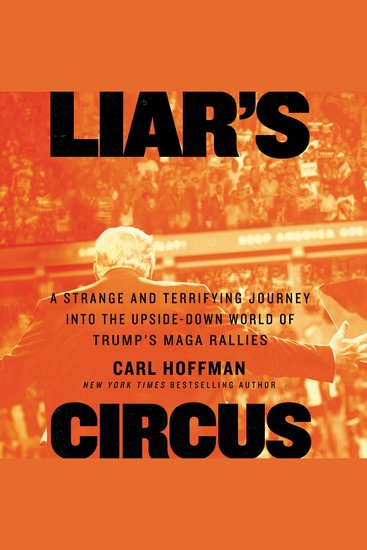
    ""A brilliant, riveting, funny, terrifying journey into the beating heart of Trumpland."" —Liza Mundy, author of Code Girls 
    In this daring work of immersive journalism, based on hundreds of hours of reporting, Carl Hoffman journeys deep inside Donald Trump’s rallies, seeking to understand the strange and powerful tribe that forms the president’s base.  
    Hoffman, who has written about the most dangerous and remote corners of the world, pierced this alternate society, welcomed in and initiated into its rites and upside-down beliefs, and finally ushered to its inner sanctum. Equally freewheeling and profound, Liar’s Circus tracks the MAGA faithful across five thousand miles of the American heartland during a crucial arc of the Trump presidency stretching from the impeachment saga to the dawn of the coronavirus pandemic that ended the rallies as we know it. 
    Trump’s rallies are a singular and defining force in American history—a kind of Rosetta stone to understanding the Age of Trump. Yet while much remarked upon, they are, in fact, little examined, with the focus almost always on Trump’s latest outrageous statement. But who are the tens of thousands of people who fill these arenas? What do they see in Trump? And what curious alchemy—between president and adoring crowd—happens there that might explain Trump’s rise and powerful hold over both his base and the GOP? 
    To those on the left, the rallies are a Black Mass of American politics at which Trump plays high priest, recklessly summoning the darkest forces within the nation. To the MAGA faithful, the rallies are a form of pilgrimage, a joyous ceremony that like all rituals binds people together and makes them feel a part of something bigger than themselves. Both sides would acknowledge that this traveling roadshow is the pressurized, combustible core of Trump’s political power, a meeting of the faithful where Trump is unshackled and his rhetoric reaches its most extreme, with downstream consequences for the rest of the nation. 
    To date, no reporter has sought to understand the rallies as a sociological phenomenon examined from the bottom up. Hoffman has done just this. He has stood in line for more than 170 hours with Trump's most ardent superfans and joined them at the very front row; he has traveled from Minnesota to Texas, Louisiana, Mississippi, and New Hampshire immersing himself in their culture.   
    Liar’s Circus is a revelatory portrait of Trump’s America, from one of our most intrepid journalists. 
    Voir livre
  • Populism and Democracy - How Populist Movements Challenge Established Political Norms - cover

    Populism and Democracy - How...

    Arlo Holders

    • 0
    • 0
    • 0
    Populism, as a political phenomenon, has seen a significant resurgence in recent decades, challenging both traditional political structures and the established norms of democratic governance. It is a term often used to describe political movements or leaders who claim to represent "the people" against a corrupt or out-of-touch elite. The central tenet of populism lies in its rhetoric, which typically divides society into two antagonistic groups: the virtuous, ordinary people and the corrupt, self-serving elite. These populist movements tap into widespread dissatisfaction with the status quo, offering simple, direct solutions to complex political and economic issues. The appeal of populism is particularly potent in times of economic instability, social division, or perceived political disillusionment, providing a voice to those who feel marginalized or neglected by traditional political parties. 
    Democracy, on the other hand, is founded on principles of inclusivity, pluralism, and the protection of rights. The democratic system is built upon checks and balances, where power is distributed across various institutions to prevent any one entity from gaining too much control. The rule of law and respect for civil liberties are central to the functioning of democratic societies. While democracy inherently embraces political diversity and disagreement, it relies on established norms and values, such as the protection of minority rights, the independence of the judiciary, and the free exchange of ideas.
    Voir livre