Rejoignez-nous pour un voyage dans le monde des livres!
Ajouter ce livre à l'électronique
Grey
Ecrivez un nouveau commentaire Default profile 50px
Grey
Abonnez-vous pour lire le livre complet ou lisez les premières pages gratuitement!
All characters reduced
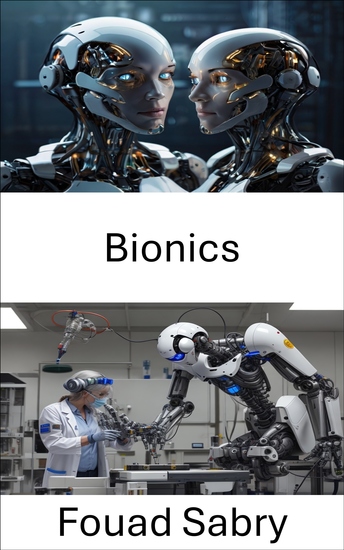
Bionics - Enhancing Nature Through Engineering - cover

Bionics - Enhancing Nature Through Engineering

Fouad Sabry

Maison d'édition: One Billion Knowledgeable

  • 0
  • 0
  • 0

Synopsis

1: Bionics: Explores the core concepts, blending biology and robotics for groundbreaking results.
 
2: Biomedical engineering: Examines the medical applications of bionic systems for human benefit.
 
3: Biomimetics: Discusses technology inspired by biological systems to solve complex problems.
 
4: Bioinspired computing: Analyzes computing techniques rooted in natural processes.
 
5: Janine Benyus: Profiles the biomimicry pioneer and her influence on bionic applications.
 
6: Biorobotics: Reviews robots mimicking biological functions for enhanced adaptability.
 
7: Neuroprosthetics: Explores advancements in robotic prosthetics for neural integration.
 
8: Rahul Sarpeshkar: Highlights this key figure's contributions to bionics and bioengineering.
 
9: Biological engineering: Examines the crossover of biology and engineering in robotics.
 
10: Biomaterial: Investigates materials derived from or inspired by biology.
 
11: Biomimetic material: Focuses on materials designed to mimic biological properties.
 
12: Cyborg: Looks at the merging of human biology with robotics for enhanced abilities.
 
13: Bionic (disambiguation): Clarifies the terminology and scope of "bionic" in various fields.
 
14: Biomimicry Institute: Covers the organization's impact on bioinspired technologies.
 
15: Werner Nachtigall: Honors the researcher's foundational work in biomimetics.
 
16: Bioinspired robotics: Discusses robots inspired by biological movements and adaptations.
 
17: Biomimetic architecture: Reviews architecture influenced by natural forms and systems.
 
18: Bioinspiration: Highlights diverse applications of biologyinspired design in technology.
 
19: Bioinspired photonics: Explores photonics inspired by biological visual systems.
 
20: Biochemical engineering: Discusses biochemical processes applied in robotic functions.
 
21: Biocompatibility: Addresses how bionics can harmonize with human biology safely.
Disponible depuis: 09/12/2024.
Longueur d'impression: 257 pages.


D'autres livres qui pourraient vous intéresser

  • Swing Trading for Beginners - cover

    Swing Trading for Beginners

    Ryan Martinez

    • 0
    • 0
    • 0
    #1 Book on Swing TradingHow successful you are at swing trading does not depend on the number of hours you put into it, but rather your overall skills and discipline as a trader. This book shall help you get started on the right track and then progress into the more advanced level later on.Each chapter contains a thorough discussion of the general principles of swing trading so that you will have a solid foundation where you could build and develop your trading strategies and plan.Topics that are covered in this book are as follow:Creating a trading plan that worksHelpful tips for beginner tradersList of critical mistakes to avoid in swing tradingHighly recommended trading tools, platforms, and other resourcesFiguring out the right trading approach, style, and strategyUnderstanding and analyzing stock chartsApplying technical indicators on market analysisStrategies for trend trading and trading rangesManaging risks on an individual security and portfolio levelsEvaluating trades as a means of further improving as a swing traderSwing trading can be a profitable and rewarding endeavor if you know what you are doing. Let’s get you closer towards that ideal by going over each chapter and paying attention to the lessons that you may extract from real-world examples given across different chapters of this book.
    Voir livre
  • Bacteria - A Very Short Introduction - cover

    Bacteria - A Very Short...

    Sebastian Amyes

    • 0
    • 0
    • 0
    Bacteria form a fundamental branch of life. They are the oldest forms of life and the most prolific of all living organisms, inhabiting every part of the Earth's surface, its ocean depths, and even such inhospitable places as boiling hot springs. In this Very Short Introduction, bacteriologist Sebastian Amyes explores the nature of bacteria, their origin and evolution, bacteria in the environment, and bacteria and disease. Amyes discusses some of the major infections caused by bacteria-bacteria causes pneumonia, diphtheria, cholera, and many other diseases-and shows how these pathogens avoid the defenses of the human body. But the book looks at all aspects of bacteria, not just the negative side, stressing the key benefits of bacteria, which have been harnessed to preserve food, dispose of waste and to provide compost for horticulture. Indeed, life for man and for many animals would be impossible without bacteria. Amyes also offers a glance into the future, describing how bacteria might be manipulated to perform tasks that they previous were unable to perform and discussing the recent construction of a completely synthetic bacterial cell.
    Voir livre
  • Saying NO to a Farm-Free Future - The Case For an Ecological Food System and Against Manufactured Foods - cover

    Saying NO to a Farm-Free Future...

    Chris Smaje

    • 0
    • 0
    • 0
    A defense of agroecological, small-scale farming and a robust critique of an industrialized future.  
    As a breakdown of the climate, state power and globalized markets pushes us toward an epochal transition, Chris Smaje offers us a hopeful vision of a relocalized, self-sufficient world.—David Bollier  
    One of the few voices to challenge The Guardian's George Monbiot on the future of food and farming (and the restoration of nature) is academic, farmer and author of A Small Farm Future Chris Smaje. In Saying NO to a Farm-Free Future, Smaje presents his defense of small-scale farming and a robust critique of Monbiot’s vision for an urban and industrialized future.  
    Responding to Monbiot’s portrayal of an urban, high-energy, industrially manufactured food future as the answer to our current crises, and its unchallenged acceptance within the environmental discourse, Smaje was compelled to challenge Monbiot’s evidence and conclusions. At the same time, Smaje presents his powerful counterargument – a low-carbon agrarian localism that puts power in the hands of local communities, not high-tech corporates.  
    In the ongoing fight for our food future, this book will help you to understand the difference between a congenial, ecological living and a dystopian, factory-centered existence. A must-read!
    Voir livre
  • The Second Brain - AI and the Human Right to Intelligence - cover

    The Second Brain - AI and the...

    G S Steele

    • 0
    • 0
    • 0
    Discover The Second Brain: AI and the Human Right to Intelligence, a groundbreaking audiobook by author and narrator G S Steele, published by Audiobook Publishing Services. In a world where artificial intelligence (AI) is transforming every aspect of life, this thought-provoking work argues that access to AI should be a fundamental human right. 
    As the divide between those who control advanced technology and those left behind grows, The Second Brain exposes the risks of AI monopolization, warning against its potential to become a tool of exploitation rather than empowerment. Drawing on historical examples of technological inequality, G S Steele reveals how societies have long been divided by access to knowledge and power. 
    With AI now acting as a "second brain," capable of enhancing human intelligence beyond natural limits, the stakes have never been higher. This visionary audiobook explores how equitable access to AI could liberate individuals, offering a pathway to global intelligence that transcends economic, social, and political barriers. 
    Narrated by the author himself, G S Steele, this compelling audiobook challenges listeners to envision a future where intelligence is not a privilege of the elite but a right for all. The Second Brain is a call to action, providing a bold framework for harnessing AI's potential to uplift humanity and create a just, equitable future. 
    Perfect for fans of AI ethics, technology, and social justice, this audiobook is a must-listen for anyone passionate about the future of intelligence and equality. Published by Audiobook Publishing Services, The Second Brain is your guide to understanding why the right to intelligence is essential for a fair and empowered world.
    Voir livre
  • We Can't Run Away From This - Racing to improve running’s footprint in our climate emergency - cover

    We Can't Run Away From This -...

    Damian Hall

    • 0
    • 0
    • 0
    What if running in beautiful places was paradoxically contributing to the destruction of those precious environments and causing irreversible global harm to people and animals too?
     
    In We Can’t Run Away From This, ultrarunner Damian Hall examines the impact of running in our climate and ecological emergency. Packed with insights from experts, it is an enlightening read which will prompt us all to really think about our kit, food and travel, and to identify simple changes we can make to our running and wider lives. But Damian also asks if concentrating on our individual footprints (pun unintended) is really the answer.
     
    We can’t run away from this any more, and this book will give every runner ideas about how to live and exercise more sustainably.
    Voir livre
  • The Expression of the Emotions in Man and Animals - cover

    The Expression of the Emotions...

    Charles Darwin

    • 0
    • 0
    • 0
    "The Expression of the Emotions in Man and Animals" is a seminal work by Charles Darwin, first published in 1872. In this book, Darwin explores the ways in which humans and animals express their emotions through facial expressions, body language, and vocalizations. He delves into the evolutionary origins of these expressions, suggesting that they have adaptive significance and are rooted in our shared ancestry with other species.
    Voir livre