Begleiten Sie uns auf eine literarische Weltreise!
Buch zum Bücherregal hinzufügen
Grey
Einen neuen Kommentar schreiben Default profile 50px
Grey
Jetzt das ganze Buch im Abo oder die ersten Seiten gratis lesen!
All characters reduced
Artillery - Mastering Firepower in Modern Warfare - cover

Artillery - Mastering Firepower in Modern Warfare

Fouad Sabry

Verlag: One Billion Knowledgeable

  • 0
  • 0
  • 0

Beschreibung

What is Artillery
 
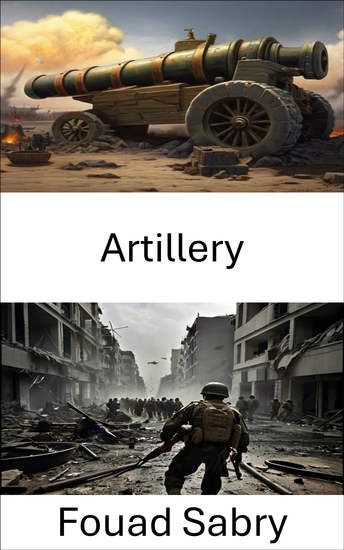
Artillery refers to ranged weapons designed to launch munitions far beyond the range and power of infantry firearms. Historically, artillery development began with the creation of siege engines aimed at breaching defensive walls and fortifications. These early devices were heavy and relatively immobile. Over time, advancements in technology led to the development of lighter and more mobile field artillery cannons, enhancing their utility on the battlefield. Modern artillery includes highly mobile self-propelled artillery vehicles, which provide a significant portion of an army's firepower due to their versatility and mobility.
 
How You Will Benefit
 
(I) Insights and Validations on the Following Topics:
 
Chapter 1: Artillery
 
- Overview of artillery, its historical evolution, and modern applications.
 
Chapter 2: Howitzer
 
- Detailed information on howitzers, their design, and their role in modern and historical contexts.
 
Chapter 3: Self-propelled Artillery
 
- Insights into the development, functionality, and strategic advantages of self-propelled artillery.
 
Chapter 4: M110 Howitzer
 
- An in-depth look at the M110 howitzer, including specifications, usage, and historical significance.
 
Chapter 5: Nuclear Artillery
 
- Exploration of the development and deployment of nuclear artillery weapons.
 
Chapter 6: Recoilless Rifle
 
- Examination of recoilless rifles, their mechanism, and their tactical use in military operations.
 
Chapter 7: Mortar (Weapon)
 
- Comprehensive coverage of mortars, including their design, types, and use in various military scenarios.
 
Chapter 8: Shell (Projectile)
 
- Information on artillery shells, including their design, types, and impact on warfare.
 
Chapter 9: QF 18-Pounder Gun
 
- Detailed history and technical specifications of the QF 18-pounder gun, a significant piece of field artillery.
 
Chapter 10: Field Artillery
 
- Overview of field artillery, its evolution, and its role in modern military strategy.
 
(II) Answering the Public's Top Questions about Artillery
 
- Common inquiries about artillery, ranging from technical specifications to historical use and modern advancements, will be addressed comprehensively.
 
Who This Book Is For
 
- Professionals: Military professionals and defense industry experts seeking in-depth knowledge of artillery.
 
- Undergraduate and Graduate Students: Students studying military history, defense technology, or related fields.
 
- Enthusiasts and Hobbyists: Individuals with a keen interest in military technology and history.
 
- General Readers: Those looking to expand their understanding of artillery beyond basic knowledge.
 
This book serves as a detailed guide for anyone interested in the complexities and advancements in artillery technology and its strategic applications throughout history.
Verfügbar seit: 18.06.2024.
Drucklänge: 180 Seiten.


Weitere Bücher, die Sie mögen werden

  • Story Structure: Step-by-Step | Essential Story Building Story Development and Suspense Writing Tricks Any Writer Can Learn - cover

    Story Structure: Step-by-Step |...

    Sandy Marsh

    • 0
    • 0
    • 0
    Shape Your Story Like a Pro 
    If you have a phenomenal story to tell but find you can’t quite make it flow or form in a natural, yet moving way, Story Structure will transform your approach to writing and make your novel a compelling and addictive read. 
    Crammed full of tricks and tips to help both beginner and advanced authors complete their books in an enticing way. 
    Get Your Acts Together! 
    Each chapter is dedicated to one aspect of story structures, and begins with a 9-Step Process to dividing up your tale; which includes: 
    STEP ONE: The First Act – Introducing characters & what is at stake 
    STEP TWO: The First Major Plot Point – How to leave readers wanting more 
    STEP FIVE: Second Half of the Second Act – The need to support the protagonist 
    STEP SEVEN: Third Act – Protagonist is forced to face the enemy before being readyMarsh uses examples to drive home how developing a strong story structure is important to help maintain focus, enrich plot ideas and provide a bird’s-eye view of whether your novel is working. 
    Tips from Experienced Authors 
    The final chapter gives a look behind-the-scenes at the thinking of real authors and their recommendations regarding whether to adopt traditional structures for your genre or research new ones, how and when to modify a structure template, and the ways to hide structure in your writing. Story Structure is an indispensable guide for serious authors wanting write professionally. 
    Order Now!
    Zum Buch
  • Giant Killers War Heroes and Special Forces Legends - cover

    Giant Killers War Heroes and...

    David A. Yuzuk

    • 0
    • 0
    • 0
    What causes a soldier to make the split second to decision to jump on a grenade and sacrifice his life to save his men? 


    What drives a man to go from homeless to the recipient of the military's highest commendation, The Medal of Honor? 


    How does a prisoner of war survive years of unspeakable torture and deprivation and yet never give up hope? 


    A vivid collection of stories spanning multiple wars and military branches chosen by military enthusiasts from around the world. These compelling accounts of heroism and sacrifice depict the raw and brutal realities of war, without a shred of sentimentality or false patriotism. 


    Included are some names you might already know, like Pappy, Mad-Dog, Bong, Benavidez, and Hathcock, along with others you should know, like Pitsenbarger and Poolaw. 


    Veteran police detective and bestselling author, David A. Yuzuk, brings you this gripping collection of spectacular battle stories and trial-by-fire lessons of honor and duty from WWII to Iraq, all in one action-packed volume.
    Zum Buch
  • New World Order The: The History of the World’s Most Notorious Global Conspiracy Theory - cover

    New World Order The: The History...

    Editors Charles River

    • 0
    • 0
    • 0
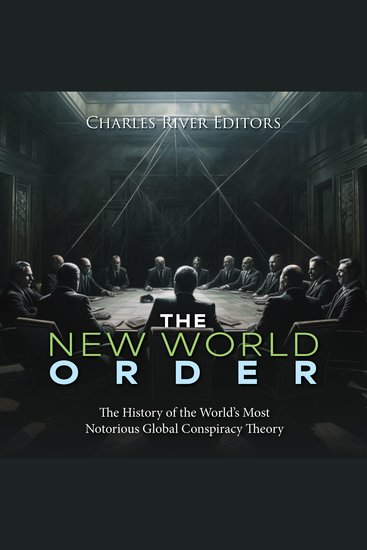
    Conspiracy theories, and particularly the belief that elements of the world are secretly controlled by individuals or groups, have been around for as long as people have lived in groups. Perhaps that’s inevitable - after all, those who are excluded from power are very likely to be inclined to see their position not as an outcome of their own choices or situation but because of the secret machinations of shadowy groups. One of the most widely discussed conspiracy theories concerns what has become known as the New World Order, a secret cabal that is said to have ambitions to become a form of World Government. 
    Part of the problem with trying to look objectively at any conspiracy theory and at the notion of the New World Order in particular is that some secret conspiracies do exist, and history tells us that these are often specifically intended to acquire power and wealth. But some conspiracy theories embrace extreme ideas such as the notion that the world is secretly ruled by reptilian creatures from another dimension, that certain minority groups have outsized power, and other farfetched concepts that have no basis in reality. Naturally, conspiracy theories work in part because it is now quite difficult to distinguish between what may be real conspiracies and downright bizarre notions. 
    Virtually universal access to the Internet in the 21st century has led to the widespread dissemination of strange theories that would previously have been known by only a handful of people. Some of the most widely discussed of these understandably seem crazy to many people. What does this say about the world in which we live? And where exactly did people get the idea that the planet is actually ruled by a secret cabal? In reality, the New World Order conspiracy has its roots in a much longer and more complex history than many people might immediately expect.
    Zum Buch
  • Awakening to Justice - Faithful Voices from the Abolitionist Past - cover

    Awakening to Justice - Faithful...

    Estrelda Y. Alexander,...

    • 0
    • 0
    • 0
    "O where are the sympathies of Christians for the slave and where are their exertions for their liberation? . . . It seems as if the church were asleep."
    David Ingraham, 1839
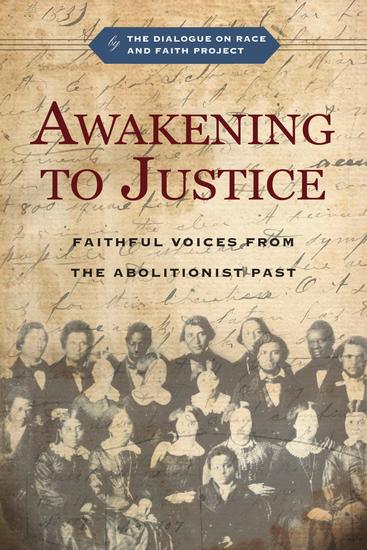
    In 2015, the historian Chris Momany helped discover a manuscript that had been forgotten in a storage closet at Adrian College in Michigan. He identified it as the journal of a nineteenth-century Christian abolitionist and missionary, David Ingraham. As Momany and a fellow historian Doug Strong pored over the diary, they realized that studying this document could open new conversations for twenty-first-century Christians to address the reality of racism today. They invited a multiracial team of fourteen scholars to join in, thus launching the Dialogue on Race and Faith Project.
    Awakening to Justice presents the groundbreaking work of these scholars. In addition to reflecting on Ingraham's journal, chapters also explore the life and writings of two of Ingraham's Black colleagues, James Bradley and Nancy Prince. Appendixes feature writings by all three abolitionists so readers can engage the primary sources directly.
    Through considering connections between the revivalist, holiness, and abolitionist movements; the experiences of enslaved and freed people; abolitionists' spiritual practices; various tactics used by abolitionists; and other themes, the authors offer insight and hope for Christians concerned about racial justice. They highlight how Christians associated with Charles Finney's style of revivalism formed intentional, countercultural communities such as Oberlin College to be exemplars of interracial cooperation and equality.
    Christians have all too often compromised with racism throughout history, but that's not the whole story. Hearing the prophetic witness of revivalist social justice efforts in the nineteenth century can provide a fresh approach to today's conversations about race and faith in the church.
    Zum Buch
  • Pointers from Ramesh Balsekar: Dealing With Life Situations With Equanimity And Peace of Mind - cover

    Pointers from Ramesh Balsekar:...

    Gautam Sachdeva

    • 0
    • 0
    • 0
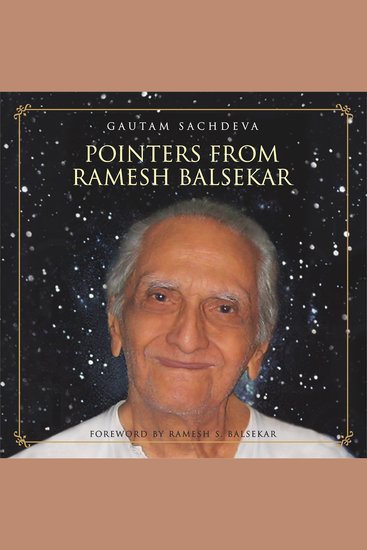
    Gautam Sachdeva first visited the Advaita sage Ramesh Balsekar in February 2000, and has been attending his talks ever since. Over a period of eight years, he also found himself taking on the role of a publisher, working intimately with Ramesh in the process of publishing some of his books. In May 2007, Gautam wrote an article in Life Positive, India’s leading spiritual magazine, as a tribute to Ramesh on his 90th birthday. With the heartwarming response from readers to this article, and Ramesh’s suggestion to make it into a booklet, he then put down what he considered the core of the teaching as presented by Ramesh – to seekers from all over the world – in his morning talks. Most of Ramesh’s books have been published from his original hand-written notes, or are transcripts of dialogues with seekers. This book is a summation of the core concepts in the “spoken word” of Ramesh, as if he were walking the seeker through his entire teaching in one morning talk. This is what Pointers from Ramesh Balsekar is about – pointers to dealing with life’s situations, its pleasures and pains, with equanimity and peace of mind – from one of the world’s leading Advaita sages.
    Zum Buch
  • The Queens Who Fought Rome - cover

    The Queens Who Fought Rome

    Editors Charles River

    • 0
    • 0
    • 0
    During one of the most turbulent periods in the history of Rome, men like Julius Caesar, Mark Antony, and Octavian participated in two civil wars that would spell the end of the Roman Republic and determine who would become the Roman emperor. In the middle of it all was history’s most famous woman, the Egyptian pharaoh Cleopatra (69-30 B.C.), who famously seduced both Caesar and Antony and thereby positioned herself as one of the most influential people in a world of powerful men. Cleopatra was a legendary figure even to contemporary Romans and the ancient world, as Plutarch’s quote suggests, and she was a controversial figure who was equally reviled and praised through the years, depicted as a benevolent ruler and an evil seductress, sometimes at the same time.  
    One of the reasons Hadrian's Wall existed was to protect against enemies, and given what happened in the mid-1st century CE, the Romans’ fears was understandable. Indeed, Londinium had become the largest city in Britannia shortly before being burned down in a native revolt led by an infamous Celtic Iceni queen named Boudica. With a name meaning “Victory,” Boudica was a charismatic woman who commanded nearly 100,000 Celts and led them on a campaign to expel the Roman overlords from Britain around the year 61 CE. Often called the “Celtic Queen,” she wore a warrior’s necklace around her delicate neck and rode upon a sturdy steed.  
    One of the most significant women in late antiquity was Zenobia, who for just a few short years in the late 3rd century CE ruled the wealthy merchant city of Palmyra. During her time as ruler, Zenobia extended Palmyra’s boundaries from its very circumscribed location in the Syrian desert to that of a full-fledged empire that included most of the Levant, Egypt, and part of Anatolia. Despite living in a man’s world, Zenobia was able to come to power and eventually challenge the Roman Emperor Aurelian (r. 270-275).
    Zum Buch