Rejoignez-nous pour un voyage dans le monde des livres!
Ajouter ce livre à l'électronique
Grey
Ecrivez un nouveau commentaire Default profile 50px
Grey
Abonnez-vous pour lire le livre complet ou lisez les premières pages gratuitement!
All characters reduced
Trust Through Communication - cover

Trust Through Communication

Forest Greenpath

Traducteur A AI

Maison d'édition: Publifye

  • 0
  • 0
  • 0

Synopsis

Trust Through Communication explores the vital link between how we communicate and whether we are perceived as trustworthy. It delves into the subtle ways our language, both verbal and nonverbal cues, influences others' perceptions of our credibility. The book draws on linguistics and social interaction studies to reveal how communication styles impact confidence and rapport, which are essential for strong interpersonal relationships. It argues that trust isn't just about individual character but is actively constructed through communication. 

 
The book examines specific linguistic features, such as hedges or intensifiers, and their impact on trustworthiness. It also emphasizes the significance of active listening and empathy in building rapport. Findings from experimental studies and real-world conversations support these analyses. 

 
The book progresses from establishing theoretical foundations to examining verbal and nonverbal cues, culminating in practical strategies for improving communication in personal and professional settings. This makes it a valuable resource for anyone seeking to improve their understanding of social interactions and build stronger, more trusting relationships.
Disponible depuis: 21/02/2025.
Longueur d'impression: 76 pages.


D'autres livres qui pourraient vous intéresser

  • World War II in 1943: The History of the Pivotal Year that Saw the Allies Begin to Push Back the Axis Powers - cover

    World War II in 1943: The...

    Charles River Editors

    • 0
    • 0
    • 0
    Entering 1943, the Allies looked to press their advantage in the Pacific and Western Europe. The United States was firmly pushing the Japanese back across the Pacific, while the Americans and British plotted a major invasion somewhere in Western Europe to relieve the pressure on the Soviets. By the time the Allies conducted that invasion, the Soviets had lifted the siege of Stalingrad.  
    	Even before the British and Americans were able to make major strategic decisions in 1943, a massive German surrender at Stalingrad in February marked the beginning of the end for Hitler’s armies in Russia. From that point forward, the Red Army started to steadily push the Nazis backward toward Germany. Yet it would still take the Red Army almost an entire two years to push the Germans all the way out of Russia. In July, just a few months after the surrender at Stalingrad, the Allies conducted what at the time was the largest amphibious invasion in history, coordinating the landing of two whole armies on Sicily, over a front more than 100 miles long. Within weeks of the beginning of the Allied campaign in Italy, Italy’s government wasted no time negotiating peace with the Allies and quickly quit the war.  
    	Though Italy was no longer fighting for the Axis, German forces continued to occupy and control Italy in 1943. The Germans attempted to resist the Allies’ invasion on Sicily but were badly outmanned and outgunned, leading to a German evacuation of the island within a month. The Allies would land on the mainland of Italy in September and continue to campaign against the Germans there. 
    	With Allied forces firmly established in Italy, the British and Americans began to plot a much more massive invasion to liberate Western Europe from the Nazis. 
    Voir livre
  • Healing Your Inner Child Workbook The: Recovery From Your Childhood Trauma & Anxious Attachment Style Set Boundaries + Stop Overthinking & Anxiety In Relationships - cover

    Healing Your Inner Child...

    Natalie M. Brooks

    • 0
    • 0
    • 0
    If You've Always Wanted To Reconnect With Your Inner Child, Break Free From The Chains Of Childhood Trauma And Anxious Attachment, And Finally Start Healing Then Keep Reading… 
    This book contains the exact steps that took me from drowning in the aftermath of childhood trauma and anxious attachment to reclaiming my inner child, setting boundaries, and achieving emotional healing. 
    The biggest difference between those two time periods?  
    The profound healing and transformative methods encapsulated in this audiobook. 
    The problem is—most individuals, grappling with childhood trauma and attachment issues, don't know how to navigate the path to healing and establish healthy boundaries. 
    You see, you deserve to feel whole again, feel loved, and be able to love in a healthy, secure way.  
    Inside you will find:The 7 Essential Ways To Reconnect With Your Inner Child And Heal From Childhood TraumaThe 4 Key Insights To Establishing And Maintaining Healthy Emotional Boundaries5 Coping Mechanisms You Are Likely Utilising To Manage Your Wounds & Function In The World5 Harmful Myths Surrounding Childhood Trauma And Anxious Attachment That You Need To DispelTime And Energy-Saving Techniques With Just One Simple Change In Your LifestyleA Transformative Trick Used By Renowned Therapists To Heal Your Inner ChildThe Biggest Mistake People Make In Their Journey To Healing From Childhood TraumaThe Top 3 Recommended Resources To Support You On Your Path To Emotional Healing And Healthy Relationships 
    And SO Much More!  
    If You Want To Reclaim Your Inner Child, Break Free From The Chains Of Childhood Trauma, And Cultivate Resilient Emotional Boundaries Then Scroll Up And Click "Buy This Book" Today. 
    Voir livre
  • The Connected College - Leadership Strategies for Student Success - cover

    The Connected College -...

    Elliot Felix

    • 0
    • 0
    • 0
    "One of the ten best higher education books of 2025.” – Forbes 
    In this educational leadership book, consultant and speaker Elliot Felix challenges college and university administration to focus and differentiate their institution, break down silos, and work better together to enable college student success. 
    "An indispensable management guide for university leaders who want to better support their students through cutting-edge best practices." —Timothy Renick, Executive Director, National Institute for Student Success at Georgia State University 
    Too many of today's colleges and universities are defined by their separations: teaching and research, student affairs and academic affairs, courses and careers, academia and industry, online and on-campus. The list goes on. 
    But demographic shifts, technological breakthroughs, economic upheaval, and new ways of learning and working mean that higher education must change. Instead of separations, we need connected colleges where all students feel a sense of belonging, courses lead to rewarding careers, students have the support to succeed, and faculty, staff, and administration work together to make this happen. 
    In this strategic planning book for higher education leaders, you will learn to get comfortable with disrupting higher education. Bust silos internally. Forge partnerships externally. Make bold decisions. See differentiation as destiny, not demographics. Get as good at sunsetting programs and services as you are at starting them. 
    Drawing from Elliot Felix's background in design innovation and experience working with more than one hundred colleges and universities, this management and leadership book for college administrators will challenge leaders with breakthrough ideas, inspiring success stories, and practical tactics. 
    The Connected College is your encouraging, evidence-based playbook for busting silos so they can succeed.
    Voir livre
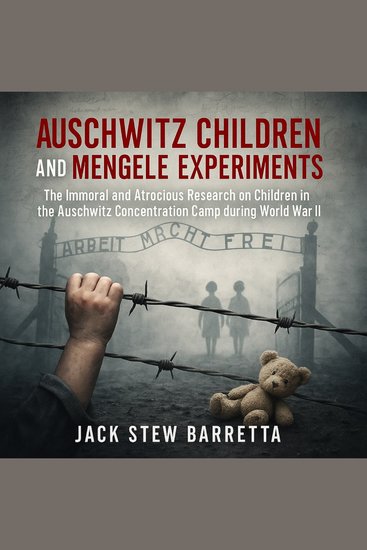
  • Auschwitz Children And Mengele Experiments - The Immoral and Atrocious Research on Children in the Auschwitz Concentration Camp during World War II - cover

    Auschwitz Children And Mengele...

    Jack Stew Barretta

    • 0
    • 0
    • 0
    This audiobook is narrated by an AI Voice.  
    Many doctors in Germany were convinced that they were the chosen people to create a healthy, racially pure Volkskörper (body of people) and by doing so, establish a racial utopia. As strong supporters of National Socialism, they welcomed the founding of the Third Reich. After Hitler acceded to power, German physicians joined the SS in particular. During the twelve years of the Nazi era, seven percent of German doctors became members of the SS. The average membership of the population was only 0.6 percent. Moreover, doctors were also overrepresented as a profession, with teachers consisting of less than half a percent and musicians only three percent. Only lawyers had a larger share in the SS than doctors. 
    The average income of German doctors increased extremely after 1933, even exceeding the income of lawyers. The Nazi doctors of the human experiments also joined the SS in large numbers. German doctors were far more reluctant to join the NSDAP than the SS. Before 1933, only seven percent of all German doctors joined the NSDAP (Nazi party). They joined the party when it seemed opportune to do so, in 1933, and particularly in 1937. In 1933, physicians made up almost a quarter of all academic professionals in the NSDAP. Most doctors joined the NSDAP in 1937, with a membership rate of 43 percent of the total profession. German physicians sat on the fence during the first years of the Nazi era, insecure about the effects of the new regime on their profession. By 1937, the Third Reich had won the trust of several reasons. The NSDAP had solved the economic crisis and had reorganized the medical profession. Moreover, the regime had solved “the Jewish question” in the medical sector.
    Voir livre
  • Fall of Rome and Constantinople The: The History of the Attacks that Destroyed the Western Roman Empire and Byzantine Empire - cover

    Fall of Rome and Constantinople...

    Charles River Editors

    • 0
    • 0
    • 0
    For the people of the ancient Mediterranean and beyond, the city of Rome had been a symbol of power for centuries, and entering the early 5th century CE, the Eternal City hadn’t been taken by an enemy force since the Gauls had done it about 800 years earlier, an unheard of period of tranquility in a world wracked with almost constant warfare. 
    	Thus, when the Visigoths, whom the Romans considered uncultured and inferior, took the city of Rome and sacked it in 410, the world was stunned. It made theologians of the newly Christianized empire question God’s plan on Earth, and it encouraged many leading Romans to look east to Constantinople for their future. Indeed, the Western Roman Empire would completely collapse in the late 5th century, less than 70 years after the Visigoths sacked Rome, and just how it went from being a superpower to a poorly led, weak, and vulnerable shadow of its former self has preoccupied historians for centuries.  
    To this day, it remains difficult to trace just when the decline began, but it’s fair to say that the sack of Rome was the result of a number of factors that had been coalescing for many years. 	In the end, the fall of the Roman Empire was not a tale of cataclysmic events that shattered the sprawling power, but the culmination of centuries of internal dissent and decay, combined with growing external threats that led to gradual decline and eventually to the empire’s final destruction.  
    	In terms of geopolitics, perhaps the most seminal event of the Middle Ages was the successful Ottoman siege of Constantinople in 1453. The city had been an imperial capital as far back as the 4th century, when Constantine the Great shifted the power center of the Roman Empire there, effectively establishing two almost equally powerful halves of antiquity’s greatest empire. Constantinople would continue to serve as the capital of the Byzantine Empire even after the Western half of the Roman Empire collapsed.
    Voir livre
  • Slave Breeding - Sex Violence and Memory in African American History - cover

    Slave Breeding - Sex Violence...

    Gregory D. Smithers

    • 0
    • 0
    • 0
    For over two centuries, the topic of slave breeding has occupied a controversial place in the master narrative of American history. From nineteenth-century abolitionists to twentieth-century filmmakers and artists, Americans have debated whether slave owners deliberately and coercively manipulated the sexual practices and marital status of enslaved African Americans to reproduce new generations of slaves for profit. 


    In this bold and provocative book, historian Gregory Smithers investigates how African Americans have narrated, remembered, and represented slave-breeding practices. He argues that while social and economic historians have downplayed the significance of slave breeding, African Americans have refused to forget the violence and sexual coercion associated with the plantation South. By placing African American histories and memories of slave breeding within the larger context of America's history of racial and gender discrimination, Smithers sheds much-needed light on African American collective memory, racialized perceptions of fragile black families, and the long history of racially motivated violence against men, women, and children of color.
    Voir livre