Join us on a literary world trip!
Add this book to bookshelf
Grey
Write a new comment Default profile 50px
Grey
Subscribe to read the full book or read the first pages for free!
All characters reduced
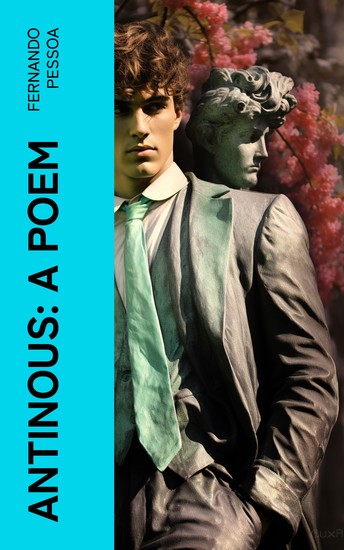
Antinous: A Poem (Annotated) - Enriched Edition A Modernist Elegy of Imperial Grief Queer Desire and Classical Beauty in Ancient Rome - cover

Antinous: A Poem (Annotated) - Enriched Edition A Modernist Elegy of Imperial Grief Queer Desire and Classical Beauty in Ancient Rome

Fernando Pessoa

Publisher: e-artnow

  • 0
  • 0
  • 0

Summary

Fernando Pessoa's Antinous: A Poem is a lush, formally controlled elegy imagining Emperor Hadrian's grief for his drowned beloved, Antinous. Written in English and steeped in classical subject matter, the poem draws on Paterian aestheticism, fin-de-siècle decadence, and Symbolist intensity, transforming imperial mourning into a meditation on beauty, desire, mortality, and the uneasy consecration of erotic loss. Its elevated diction and sculptural imagery evoke antiquity while revealing a distinctly modern consciousness. Pessoa, the great Portuguese modernist, was shaped by an English education in Durban and by a lifelong habit of writing across languages, masks, and literary personae. Though best known for his heteronyms and for The Book of Disquiet, his English poems show his early ambition to enter an international literary tradition. Antinous reflects his fascination with divided identity, forbidden feeling, and the theatrical possibilities of voice. This poem is recommended to readers interested in modernism's dialogue with antiquity, queer literary history, and the decadent tradition of exquisite artifice. It is a compact but resonant work, rewarding close reading for its emotional pressure, musical rhetoric, and profound sense of beauty made inseparable from loss.

This enriched edition has been carefully crafted to add value to your reading experience.
- A succinct Introduction situates the work's timeless appeal and themes.
- The Synopsis outlines the central plot, highlighting key developments without spoiling critical twists.
- A detailed Historical Context immerses you in the era's events and influences that shaped the writing.
- An Author Biography reveals milestones in the author's life, illuminating the personal insights behind the text.
- A thorough Analysis dissects symbols, motifs, and character arcs to unearth underlying meanings.
- Reflection questions prompt you to engage personally with the work's messages, connecting them to modern life.
- Hand‐picked Memorable Quotes shine a spotlight on moments of literary brilliance.
- Interactive footnotes clarify unusual references, historical allusions, and archaic phrases for an effortless, more informed read.
Available since: 11/24/2023.
Print length: 106 pages.

Other books that might interest you

  • Poems of Parenting - cover

    Poems of Parenting

    Loryn Brantz

    • 0
    • 0
    • 0
    A must-have book for all parents, this collection of tender, funny, radically honest poems about parenthood, based on a series of popular Instagram posts, is the perfect baby shower or Mother’s Day gift. Read by the author! 
    Modern parenthood can feel indescribable. This poignant collection of poetry and art chronicles the ups and downs of a rollercoaster ride that every parent will recognize. Capturing the joys and frustrations that come with each fleetingly precious (or interminable) stage of development, Poems of Parenting will be a balm to the soul of weary parents. 
    From fresh baby snuggles to terrible tantrums, and everything in-between, artist Loryn Brantz has touched on something unique and universal in her debut poetry collection based on her popular Instagram series. Poems of Parenting is the perfect companion on any parent’s journey through the uncertain terrain of raising cherished children in extraordinary times.
    Show book
  • I'm Sorry Here's a Plasma Rifle - A Collection of Short Stories Poems and Pastry Recipes - cover

    I'm Sorry Here's a Plasma Rifle...

    Aaron N. Hall

    • 0
    • 0
    • 0
    Sent back from the year 2124, I’m Sorry, Here’s a Plasma Rifle is the last known work of author Aaron N. Hall before his tragic jet ski accident with a shipping container of rubber ducks. 
     
    It contains seven short stories, eighteen poems, and four pastry recipes that highlight his affection for fantasy, science fiction, and the endearingly odd. 
     
    The current edition has been republished including the notes of Dr. Arthur B. Salazar, who sent the book from the future before being cryogenically frozen and launched into space prior to Earth’s decay. 
     
    Listen, enjoy, then say hello to the void.
    Show book
  • Orange - Elfchen Poems - cover

    Orange - Elfchen Poems

    Pushpa R Menon

    • 0
    • 0
    • 0
    Orange is a curated collection of poems written in the Elfchen form — a poetic form of five lines with a 1-2-3-4-1-word count structure. It was born from a desire to say less, but feel more, and began as a quiet and joy-filled exercise in observing the world. ‘Elfchen’ in German means diminutive of eleven. With its strict five-line and minimal word count of eleven, it offered both a challenge and a quiet joy. It taught me to trim language down to its essence, to listen to the spaces between words, and to notice the poetry hiding in the ordinary. The poems explore the way certain words lean into each other, everyday objects, emotions, and metaphors. They include themes of nature, survival, silence, conflict and liberation. Devices like personification and contrast are used to provoke emotional and philosophical engagement. The intersection of word and image offers room for contemplation. This poetic form lends itself to brevity, clarity, and restraint. The illustration that is paired with each poem is designed to enhance the meditative quality of the book. Each image becomes a metaphor, each poem a mirror to hold up a thought, memory, or mood.
    Show book
  • A Clergyman's Daughter - cover

    A Clergyman's Daughter

    George Orwell

    • 0
    • 0
    • 0
    A Clergyman's Daughter is a 1935 novel by English author George Orwell. It tells the story of Dorothy Hare, the clergyman's daughter of the title, whose life is turned upside down when she suffers an attack of amnesia. It is Orwell's most formally experimental novel, featuring a chapter written entirely in dramatic form, but he was never satisfied with it and he left instructions that after his death it was not to be reprinted. Despite these instructions, Orwell did consent to the printing of cheap editions "of any book which may bring in a few pounds for my heirs" following his death. 
      
    George Orwell, was an English novelist, essayist, journalist and critic. His work is characterized by lucid prose, biting social criticism, total opposition to totalitarianism, and outspoken support of democratic socialism. 
      
    Orwell produced literary criticism and poetry, fiction and polemical journalism. He is known for the allegorical novella Animal Farm (1945) and the dystopian novel Nineteen EightyFour (1949). His nonfiction works, including The Road to Wigan Pier (1937), documenting his experience of workingclass life in the north of England, and Homage to Catalonia (1938), an account of his experiences soldiering for the Republican faction of the Spanish Civil War (1936–1939), are as critically respected as his essays on politics and literature, language and culture. In 2008, The Times ranked George Orwell second among "The 50 greatest British writers since 1945". 
     
    Show book
  • The Tragedy of Coriolanus - cover

    The Tragedy of Coriolanus

    William Shakespeare

    • 0
    • 0
    • 0
    Coriolanus is a tragedy by William Shakespeare, believed to have been written between 1605 and 1608. The play is based on the life of the legendary Roman leader Caius Marcius Coriolanus. The tragedy is one of the last two tragedies written by Shakespeare, along with Antony and Cleopatra.
    Coriolanus is the name given to a Roman general after his military success against various uprisings challenging the government of Rome. Following this success, Coriolanus becomes active in politics and seeks political leadership. His temperament is unsuited for popular leadership and he is quickly deposed, whereupon he aligns himself to set matters straight according to his own will. The alliances he forges along the way result in his ultimate downfall.
    The play opens in Rome shortly after the expulsion of the Tarquin kings. There are riots in progress, after stores of grain were withheld from ordinary citizens. The rioters are particularly angry at Caius Marcius, a brilliant Roman general whom they blame for the loss of their grain. The rioters encounter a patrician named Menenius Agrippa, as well as Caius Marcius himself. Menenius tries to calm the rioters, while Marcius is openly contemptuous, and says that the plebeians were not worthy of the grain because of their lack of military service. Two of the tribunes of Rome, Brutus and Sicinius, privately denounce Marcius. He leaves Rome after news arrives that a Volscian army is in the field.
    Among the most significant works William Shakespeare: Hamlet, Othello, King Lear, Macbeth, Orpheus, Romeo and Juliet, Julius Caesar, Troilus and Cressida, The Tempest, Venus and Adonis, Antony and Cleopatra, Measure for Measure, The Winter's Tale and many more.
    Show book
  • Dear Dante - Poems - cover

    Dear Dante - Poems

    Angela Alaimo O'Donnell

    • 0
    • 0
    • 0
    An imagined conversation with Dante Alighieri written in response to the 700th anniversary of Dante's death by fellow Catholic poet, lover and master of the sonnet, Angela Alaimo O'Donnell.


    In the summer of 2021, Angela Alaimo O'Donnell honored the 700th anniversary of Dante's death, by embarking on a three-month pilgrimage through the 100 cantos of The Divine Comedy, reading one canto per day. This new collection, Dear Dante, is her response to Dante's epic poem: 39 poems (13 for each of the 3 canticles), plus an additional 3 to serve as prologue and epilogue, all written in the poetic forms Dante loved best: the sonnet and the form he invented, terza rima.


    In O'Donnell's words: "Dear Dante is a species of accompaniment, an act of homage, and a long love letter to Dante. It might also be read as a series of meditations that attest to how dear Dante is to us. The Commedia is our inheritance, a gift granted to readers by our brother poet 700 years ago. These poems are an admittedly small expression of gratitude for that grand and graced gift. Grazie Mille, Maestro."


    Show book