

¡Acompáñanos a viajar por el mundo de los libros!
Añadir este libro a la estantería
Grey
Escribe un nuevo comentario Default profile 50px
Grey
Suscríbete para leer el libro completo o lee las primeras páginas gratis.
All characters reduced
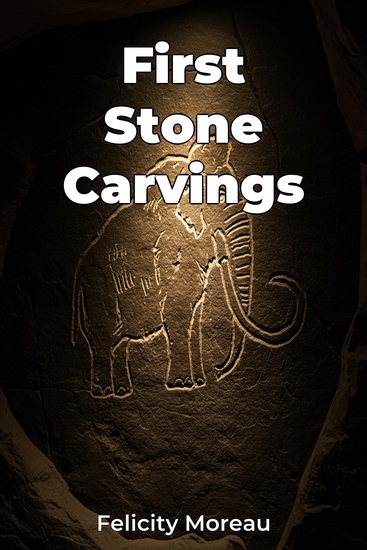
First Stone Carvings - cover

First Stone Carvings

Felicity Moreau

Traductor A AI

Editorial: Publifye

  • 0
  • 0
  • 0

Sinopsis

First Stone Carvings explores the dawn of human artistic expression by examining the earliest deliberate marks and figures etched into stone. These prehistoric carvings acted as fundamental forms of communication and ritual practice, offering insights into the cognitive capabilities of early humans. The book argues that these carvings represent a critical juncture in human cognitive development, reflecting the emergence of abstract thought.

 
The book begins by introducing the methods for analyzing Paleolithic art, such as dating carvings and identifying tools used. It then investigates specific examples of carvings categorized by region and subject matter, analyzing their potential meaning and context. Cognitive archaeology is integrated with art historical analysis, emphasizing the cognitive processes that underpin the creation and interpretation of these carvings.

 
Concluding with a synthesis of the findings, the book proposes a framework for understanding the role of stone carvings in the evolution of human culture and cognition. This study provides a comprehensive overview, connecting to various fields like anthropology and art history, making it valuable to academics and general readers interested in the origins of human creativity.
Disponible desde: 26/02/2025.
Longitud de impresión: 60 páginas.

Otros libros que te pueden interesar

  • Drawing Florals in 5 Easy Steps - Create Flowers Leaves and Elegant Shapes One Step at a Time - cover

    Drawing Florals in 5 Easy Steps...

    Marty Woods

    • 0
    • 0
    • 0
    The perfect primer for anyone – no matter their age or artistic abilities – to learn how to draw flowers! Featuring easy-to-follow tutorials on doodling and drawing 99 flowers, 21 leaves, and 10 doodle elements, all in five simple steps, this beginner-friendly instructional guide will also show you how to combine what you've learned to create gorgeous works of art for larger drawing projects. With its easy step-building approach, hundreds of motifs to draw and combine, and a helpful overview on tools and techniques, Drawing Florals in 5 Easy Steps is a must-have guide for aspiring artists of all ages to learn the basics of floral drawing! Artist, doodler, and coloring book author Marty Woods was voted the 2016 Top Doodler in Malaysia. An official Faber-Castell art workshop instructor, Marty has also collaborated with Disney Malaysia, Faber-Castell, Nespresso, and several other international companies.
    Ver libro
  • Rashtrakuta Empire - Military Prowess and Architectural Marvels - cover

    Rashtrakuta Empire - Military...

    Rolf Hedger

    • 0
    • 0
    • 0
    The Rashtrakutas were one of the most powerful dynasties in Indian history, ruling vast territories across the Deccan and beyond. Their origins, however, remain a subject of debate among historians due to conflicting inscriptions and interpretations. Some sources trace their roots to the Kannada-speaking regions, while others suggest connections to northern India. Despite the uncertainty, it is widely accepted that the Rashtrakutas emerged as a prominent force in the Deccan by the 8th century. 
    The dynasty first gained prominence under the rule of Dantidurga, who established Rashtrakuta authority by overthrowing the Chalukyas of Badami. However, evidence suggests that the Rashtrakutas had been a significant regional power even before his reign. The earliest references to the name "Rashtrakuta" appear in inscriptions from the 6th and 7th centuries, indicating that they were already influential feudatories before rising to imperial status. Some scholars believe they originally served as administrators or military governors under the Chalukyas before asserting their independence. 
    The question of the dynasty’s ethnic and linguistic identity has long been debated. Some sources claim that they were of Kannada origin, citing inscriptions and literary works composed in the Kannada language under their patronage. Others argue that they may have had northern Indian roots, pointing to their interactions with Rajput and Gurjara clans. Regardless of their precise origins, the Rashtrakutas embraced the cultural diversity of the Deccan, ruling over a population that spoke multiple languages, including Kannada, Sanskrit, and Marathi.
    Ver libro
  • Muisca Confederation - The Land of El Dorado and the Riches of the Andes - cover

    Muisca Confederation - The Land...

    Rolf Hedger

    • 0
    • 0
    • 0
    The Muisca Confederation was one of the most sophisticated political entities in pre-Columbian South America, emerging in the highlands of present-day Colombia. The origins of this powerful society can be traced back to the earliest inhabitants of the Eastern Cordillera of the Andes, a region characterized by fertile valleys, cool mountain climates, and abundant natural resources. Over time, these early settlers developed complex social structures, agricultural techniques, and political institutions that would form the foundation of the Muisca Confederation.  
    The first groups to settle in the high-altitude plateaus of the Andean region arrived thousands of years ago, likely migrating from Central America or other parts of South America. These early inhabitants lived in small, semi-nomadic communities, relying on hunting, fishing, and rudimentary farming. As they adapted to their environment, they developed advanced agricultural methods, cultivating maize, potatoes, quinoa, and other crops suited to the high-altitude terrain. The fertile lands and steady supply of food allowed for population growth, leading to the establishment of permanent settlements. 
    As Muisca society evolved, it became increasingly hierarchical, with distinct roles emerging among its members. The transition from small, scattered villages to organized chiefdoms marked a significant turning point in their history. Power began to concentrate in the hands of local leaders, or caciques, who governed their respective communities. Over time, these leaders expanded their influence, forming alliances and asserting control over larger territories. The most powerful of these rulers eventually became the Zipa of Bacatá and the Zaque of Hunza, the two principal leaders who governed the northern and southern regions of the Muisca Confederation.
    Ver libro
  • I'm Not Your Muse - Uncovering the Overshadowed Brilliance of Women Artists & Visionaries - cover

    I'm Not Your Muse - Uncovering...

    Lori Zimmer

    • 0
    • 0
    • 0
    An illuminating exploration of 31 incredible women—across art, architecture, dance, literature, and more—whose culture-defining contributions have, until now, been overshadowed by their role as "muses" to history's better-known men.  What does it mean to be someone's "muse"? Historically, to be called a “muse” among artistic circles has been marketed as a flattering title. It is a commendation that most often refers to a woman whose vivacity and beauty are the source of inspiration for a (usually) male artist or creator. Perhaps her inspiring presence is even credited in the story of his success. But the very concept of a muse underestimates these women and their abilities. At its root, muse is a support role, the title a consolation prize that claims to recognize a woman’s greatness—but only in her support of another.I'm Not Your Muse reclaims the narrative of 31 of these extraordinary women, from "The Mother of the Movies" Alice Guy-Blaché to Modernist designer Eileen Gray, prima ballerina Maria Tallchief, storied Harlem Renaissance editor Jessie Redmon Fauset, and many more. Each of these women advanced the narrative of culture and society, pushing the boundaries of visual arts, dance and movement, commercial architecture, music, journalism, and the performing arts. Whether by historical accident or cruel design, their contributions have historically been overshadowed by those of their male counterparts, and often collaborators. In this briskly written, incisively researched compendium, author and researcher Lori Zimmer repositions these women as the main characters of their own lives. Each profile is accented with original illustrations—including jaunty portraits in playfully constructed frames—by artist Maria Krasinski. Together, they highlight the contemporary accomplishments and historical legacies of a wide-ranging group of revolutionary women. Featured women include:  Louise Blanchard Bethune  Claude Cahun and Marcel Moore  Minnette de Silva  Clara Driscoll  Jessie Redmon Fauset  Loie Fuller  Martha Gellhorn    Eileen Gray  Belle da Costa Greene  Alice Guy-Blaché  Miss La La  Edmonia Lewis  Neysa McMein  Hildreth Meière  Lucia Moholy  May and Jane Morris    Na Hye-Sŏk  Fernande Olivier  Pan Yuliang    Ethel Reed    Clara Rockmore    Ada Bricktop Smith  Maria Tallchief  Alice B. Toklas  Suzanne Valadon    Baroness Elsa von Freytag-Loringhoven  Leonora Carrington  Remedios Varo  Kati Horna
    Ver libro
  • Greatest Drama Shows Volume 4 - Ten Classic Shows from the Golden Era of Radio - cover

    Greatest Drama Shows Volume 4 -...

    Various Various

    • 0
    • 0
    • 0
    OASIS AUDIO CLASSIC RADIO SHOWCASE SERIES   Oasis Audio has gone into the vaults and dusted off the very earliest form of audio book, old time radio shows, for our listeners. Introduced episode by episode by Jim Engel, old time radio authority and board member of the Museum of Broadcast Communications in Chicago, this series of classic radio shows is sure to have something for everyone. Celebrity casts and top-notch writers made the 1920s through the early 1950s, the golden era of radio. The series features seven exciting themes with 100 episodes in each. That is 700 classic radio programs in all.   Greatest Drama Shows   Cling to the edge of your seat for the Adventures of Sherlock Holmes, The Green Hornet, The Third Man. Hear classic stores brought to radio by celebrity casts such as Brave New World with William Conrad, The Pickwick Papers starring Orson Welles, and so many more. 100 great Drama classics in ten volumes. Volume 4 David Harding Counterspy 4-4-50 Magic Murder with Don MacLaughlinDavid Harding Counterspy 4-11-50 Mile High Murder with Don MacLaughlinDimension X 4-22-50 Report on The Barnhouse Effect with Santos OrtegaDimension X 9-15-50 Hello Tomorrow with Nancy OlsonDr. Christian 1-16-38 The Flood with Jean HersholtDr. Christian 1-23-38 The Brent Family with Jean HersholtEscape 5-16-48 The Match with Frank LovejoyEscape 12-20-49 Figure A Dame with Frank LovejoyEscape 11-5-50 Earth Abides Pt. 1 with John DehnerEscapes 11-12-50 Earth Abides Pt. 2 with John Dehner
    Ver libro
  • Kingdom of Kongo - Christianity Trade and the Kingdom That Resisted Colonization - cover

    Kingdom of Kongo - Christianity...

    Rolf Hedger

    • 0
    • 0
    • 0
    The Kingdom of Kongo emerged as one of the most powerful and centralized states in Central Africa. Its origins can be traced back to the early Bantu migrations, which spread agriculture, ironworking, and complex social structures across the region. By the 14th century, various smaller chiefdoms in present-day Angola and the Democratic Republic of Congo began to coalesce under a single authority, forming what would become the Kingdom of Kongo. 
    The region’s fertile lands and access to major rivers facilitated both agriculture and trade. Kongo’s early economy relied on the cultivation of crops such as millet, sorghum, and bananas, as well as the production of iron tools and weapons. The abundance of natural resources allowed the ruling elite to accumulate wealth and expand their influence. As trade networks developed, Kongo became a center of commerce, linking the interior regions of Central Africa with coastal markets. 
    Kongo's social and political organization was highly structured. At the top of the hierarchy was the king, known as the Manikongo, who ruled from the capital, Mbanza Kongo. The Manikongo exercised authority over provincial rulers, who governed different regions of the kingdom. This system allowed for centralized administration while also granting local leaders autonomy in managing their territories. The kingdom was further divided into districts and villages, with a bureaucratic structure that ensured tax collection, military organization, and judicial functions.
    Ver libro
