Rejoignez-nous pour un voyage dans le monde des livres!
Ajouter ce livre à l'électronique
Grey
Ecrivez un nouveau commentaire Default profile 50px
Grey
Abonnez-vous pour lire le livre complet ou lisez les premières pages gratuitement!
All characters reduced
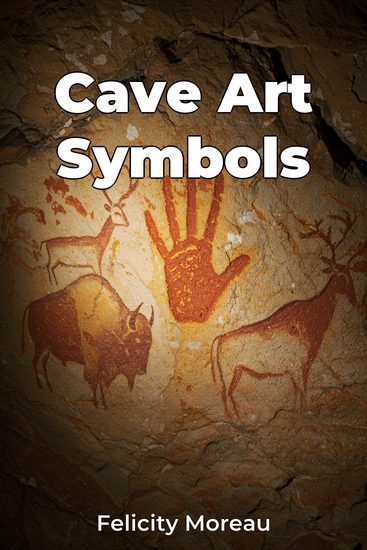
Cave Art Symbols - cover

Cave Art Symbols

Felicity Moreau

Traducteur A AI

Maison d'édition: Publifye

  • 0
  • 0
  • 0

Synopsis

Cave Art Symbols decodes the captivating world of prehistoric art, exploring how early humans used cave paintings and petroglyphs to communicate, record events, and transmit cultural myths. This exploration into ancient art provides a window into the cognitive abilities, social structures, and spiritual beliefs of our ancestors. Intriguingly, recurring symbols appear across geographically diverse sites, suggesting a shared understanding or symbolic language among early human populations. The book argues that cave art represents a sophisticated form of visual communication, reflecting intentional and structured thought processes, rather than random artistic expression.

 
The book adopts a multidisciplinary approach, drawing from archaeology, anthropology, art history, and cognitive science to analyze cave art. It begins by introducing foundational concepts, such as dating methods and preservation techniques, before systematically examining recurring symbols and motifs. Later chapters reconstruct potential narratives depicted in the art, offering interpretations of hunting scenes and ritualistic practices.

 
Ultimately, Cave Art Symbols offers a fascinating glimpse into the minds of early humans, challenging conventional understandings of their communication and artistic expression.
Disponible depuis: 29/03/2025.
Longueur d'impression: 58 pages.

D'autres livres qui pourraient vous intéresser

  • #MeToo in the Corporate World - Power Privilege and the Path Forward - cover

    #MeToo in the Corporate World -...

    Anonyme

    • 0
    • 0
    • 0
    Economist and award-winning author Sylvia Ann Hewlett blends vivid stories with powerful new data in assessing the impact of the #MeToo movement in corporate America and provides concrete action to help executives and companies create more inclusive and safe work environments for women, people of color, and LGBTQ employees.  
     
    While the #MeToo movement has exposed the enormous harm done by sexual misconduct in the workplace, the movement’s full promise has not been fulfilled, Sylvia Ann Hewlett argues. Showcasing new data on the incidence of sexual harassment and assault at work, she reveals how the movement has focused almost exclusively on white women and failed to support other vulnerable groups who are also targets of abuse. Black men, gay men and women, and Latinas experience particularly high rates of sexual harassment and assault.  
    In addition to exploring the movement’s limitations, Hewlett examines the collateral damage inflicted by #MeToo. She looks at hits to the bottom line (lawsuits and settlements, tarnished brands, and stock devaluations) and hits to the talent pipeline. In particular she shows how male leaders, fearful of gossip and legal action, are increasingly skittish about sponsoring young women, no matter how high performing they are. This makes it much more likely that women will stall out mid-career and will deprive companies of diversity in the C-Suite and “gender smarts” around decision-making tables. Digging deep into examples that range from Fox News, Nike, and Google to CBS, Michigan State University, and the Catholic Church, Hewlett lays bare the financial losses associated with sexual misconduct scandals. No wonder corporate chief risk officers newly have #MeToo in their line of sight!  
    A third of this book is devoted to solutions and Hewlett offers a three-pronged strategy, combining legal remedies with individual and corporate action steps that can be used to protect employees and businesses they work for. Drawing from companies as different as IBM and IPG she discusses “experiments at the edge” as well as more evolved initiatives that can help any corporation create a more equitable and safer environment. 
    Supplemental enhancement PDF accompanies the audiobook.
    Voir livre
  • Eye for Genius An: James Brand Pinker and Henry James - cover

    Eye for Genius An: James Brand...

    Kerry Sutherland

    • 0
    • 0
    • 0
    A middle aged author declining in popularity. An up and coming literary agent with an eye for genius. A partnership that would forge a prodigious legacy in American literature.  
    Henry James was a middle-aged author who had established himself on a transatlantic scale when he employed James Brand Pinker as his literary agent in 1898. The changing preferences of a growing audience of readers along with James’s self-defeating practice of shifting from publisher to publisher, rather than adhering to the trade courtesy of remaining loyal to one house, were making the author’s efforts to keep his work in print increasingly difficult; bringing Pinker, who managed the literary business of over 100 authors including Stephen Crane, H.G. Wells, Joseph Conrad, and Jack London, into the picture made it possible for James to maintain a presence before the reading public to an extent that would have been impossible without the agent’s assistance. 
    Pinker’s involvement was vital to the continuance of James’s career, as his later works and the New York Edition proved difficult material to place. The agent’s role as the mediator of conflict between the commercial writer and literary artist, positions that James had difficulty reconciling, had considerable influence on the shape of James’s later career and thus the way in which the author is remembered; James’s legacy is therefore clearly tied to Pinker’s efforts. 
    Using correspondence between Pinker, James, and the primary publishers of James’s material from 1898 until Pinker’s death in 1922, along with secondary works addressing the agent’s endeavors during this period, this volume demonstrates the link between Pinker’s work and James’s continued presence in print, both during the author’s lifetime and after his death.
    Voir livre
  • Plato's Greater Hippias - cover

    Plato's Greater Hippias

    Plato

    • 0
    • 0
    • 0
    Hippias of Elis travels throughout the Greek world practicing and teaching the art of making beautiful speeches. On a rare visit to Athens, he meets Socrates who questions him about the nature of his art. Socrates is especially curious about how Hippias would define beauty. They agree that “beauty makes all beautiful things beautiful,” but when Socrates presses him to say precisely what he means, Hippias is unable to deliver such a definition.
     
    The more Socrates probes, the more absurd the responses from Hippias become. This is one of Plato’s best comedies and one of his finest efforts at posing the philosophical problem of the difference between particular things and universal qualities.
    Voir livre
  • Unlocking Genius: Simple Secrets to Embrace Every Mind’s Potential - "Elevate your learning! Dive into captivating audio insights to unlock every mind's genius potential" - cover

    Unlocking Genius: Simple Secrets...

    Lysander Ainslow

    • 0
    • 0
    • 0
    Unlocking Genius: Simple Secrets to Embrace Every Mind’s Potential 
    ⭐⭐ Simplified Guide & Explanations Included ⭐⭐ 
    Are you eager to advance in your career and enhance your knowledge to uncover hidden talents and unleash extraordinary capabilities within? 
    In search of an all-encompassing guide that provides everything you need to unlock your mind’s potential? 
    Your quest ends here! 
    This guide is your ultimate resource for enhancing your understanding, honing your skills, and engaging in practical exercises. With this tool, you’re set for success. 
    Updated to reflect the latest insights into unlocking genius. 
    Key Features of This Enhanced Guide: 
    - In-depth insights about unlocking genius and embracing your mind’s capacity 
    - Thorough explanations on discovering hidden talents 
    - Effective strategies for maximizing your potential and tackling challenges 
    What sets our guide apart is its extensive coverage—vital for your success. Concepts are explored in detail, ensuring you grasp them fully. 
    Please note that this guide operates independently and is not affiliated with any official entities; it is crafted solely for your enrichment. 
    Designed with a clear structure and accessible language, our guide promises a seamless flow between topics. Say goodbye to convoluted jargon and welcome clear, precise, and technically accurate content. 
    So, why delay? Click the BUY NOW button to secure your guide and start your journey to unlocking your genius today! 
    Unlock your potential and embrace the extraordinary capabilities within you!
    Voir livre
  • Phoenicians - History of the Ancient Civilization of Phoenicia - cover

    Phoenicians - History of the...

    Kelly Mass

    • 0
    • 0
    • 0
    The term "Phoenicians" describes the people living in Phoenicia, a sometimes-forgotten civilization that was age-old and remarkable. Let's check out the tradition, the history, and the specifics of Phoenicia. 
    Phoenicia was a thalassocratic (a state with mostly maritime worlds) society that thrived in the eastern Mediterranean's Levant area, mainly in modern-day Lebanon. It was fixated the coast of Lebanon, with some seaside parts of modern-day Syria and Galilee included for good procedure, varying as far north as Arwad and as far south as Acre and perhaps Gaza. Phoenician civilization stretched the Mediterranean from Cyprus to the Iberian Peninsula between 1100 and 200 BC. 
    The Phoenicians were a Semitic-speaking people who appeared in the Levant roughly 3000 BC and spoke a Semitic language. 
    In this book, you will learn more about this ancient civilization.
    Voir livre
  • Feminist Philosophy - A Very Short Introduction - cover

    Feminist Philosophy - A Very...

    Katharine Jenkins

    • 0
    • 0
    • 0
    Katharine Jenkins offers an introduction to feminist philosophy, giving the listener an idea of what it is, why it is important, and how to think about it. She explores key topics such as gender oppression, beauty, objectification, and sexuality. Moreover, she considers questions about the relation between the personal and the political, what it is to be a woman, whether there is a distinctive kind of women's knowledge, and what feminist philosophy can bring to our understanding of such aspects of our world as justice, work, and the environment. Feminist Philosophy takes a richly intersectional approach, recognizing the combined impact of such factors as race and class as well as gender.
    Voir livre