Begleiten Sie uns auf eine literarische Weltreise!
Buch zum Bücherregal hinzufügen
Grey
Einen neuen Kommentar schreiben Default profile 50px
Grey
Jetzt das ganze Buch im Abo oder die ersten Seiten gratis lesen!
All characters reduced
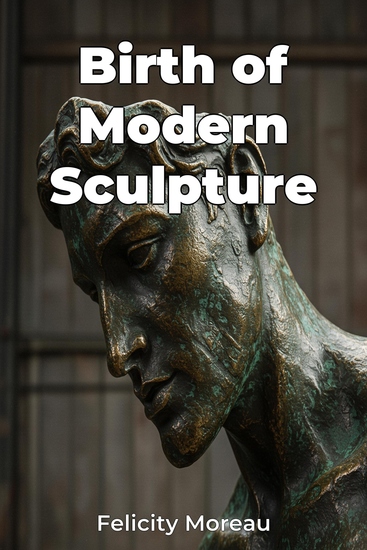
Birth of Modern Sculpture - cover

Birth of Modern Sculpture

Felicity Moreau

Übersetzer A AI

Verlag: Publifye

  • 0
  • 0
  • 0

Beschreibung

"Birth of Modern Sculpture" delves into the revolutionary period when artists redefined sculpture, breaking from classical traditions to embrace innovation. The book explores this transformation, highlighting how sculptors responded to societal shifts and technological advancements, leading to the birth of entirely new forms of artistic expression. Notably, the rise of steel production and welding provided unprecedented possibilities, and the decline of traditional patronage challenged established norms. The book examines the rejection of academic conventions, the embrace of new materials, and the exploration of abstraction. Beginning with 19th-century traditions, it progresses through the influence of early modern sculptors like Auguste Rodin and avant-garde movements such as Cubism and Futurism. Ultimately, the book analyzes the rise of constructivism and non-representational forms, revealing how sculptors moved beyond mere imitation. This exploration provides a comprehensive overview of a pivotal period in art history, offering new insights into the forces that shaped modern sculpture.
Verfügbar seit: 26.02.2025.
Drucklänge: 56 Seiten.

Weitere Bücher, die Sie mögen werden

  • Cali Expanded City-Region: A Metropolitan Territory - cover

    Cali Expanded City-Region: A...

    Autores Varios

    • 0
    • 0
    • 0
    The analytical approaches to studying the region are diverse and evolve as research products appear, as a result of modern systems for collecting, processing and integrating information from the various disciplines. Studies based on political and administrative boundaries, very common in the nineteenth century, move towards the positivist approaches of the twentieth century based on the distribution and organization of demographic and economic factors. Afterwards, the population and its social conditions in terms of infrastructure, economic level and social status are the main object of studies on the regions. The conceptualization of these approaches to study the region enters into crisis with the most recent trends of globalization on industrial and urban geographies (Veltz, 1996; 2008), more visible since the eighties in the last century. The city expands until it overflows into areas without political administrative jurisdiction, giving rise to an urban-rural territorial continuum due to population flows seeking residence, employment, or flows of goods and services. In addition, new territorial identities are built because of ethnic-racial and cultural diversity, and companies are offered new territories to relocate in the midst of this territorial continuum. The rural space is transformed into a new structure and dynamic of economic, social and urban occupation, without necessarily disappearing territories of peasant character in the margins of the region, though they are more articulated to the urban dynamics of the region.
    Zum Buch
  • Joker and Witch - cover

    Joker and Witch

    Poorvi Gupta

    • 0
    • 0
    • 0
    Sold three lakh units in last 12 months, says Joker & Witch Co-founder Maya Varma.
    Zum Buch
  • Muromachi Period - Ashikaga Shoguns and the Rise of Feudal Japan - cover

    Muromachi Period - Ashikaga...

    Rolf Hedger

    • 0
    • 0
    • 0
    The Muromachi Period, spanning from 1336 to 1573, marked a significant turning point in Japanese history, characterized by the rise of the Ashikaga Shogunate and the gradual shift toward decentralized feudal rule. This period emerged following the fall of the Kamakura Shogunate, as Ashikaga Takauji established his military government in Kyoto. The political, social, and cultural transformations that unfolded during this time laid the foundation for the later Sengoku era, a period of constant warfare among regional warlords. 
    The decline of the Kamakura Shogunate stemmed from mounting dissatisfaction among the samurai class, who had grown discontent with the Hojo regents’ rule. The Mongol invasions of Japan in 1274 and 1281 had placed immense strain on the government, as victory brought no financial rewards for the warriors who had fought to defend the nation. With no lands to distribute as compensation, loyalty to the shogunate weakened, creating an opportunity for ambitious leaders to challenge its authority. Amid this unrest, Emperor Go-Daigo launched the Kenmu Restoration (1333–1336), an effort to reestablish imperial rule. However, his failure to recognize the interests of the samurai led to his downfall. 
    Ashikaga Takauji, originally a supporter of the emperor, turned against him and seized power, defeating both imperial and Kamakura loyalists. In 1336, Takauji established his own military government, known as the Muromachi Bakufu, in Kyoto. Unlike the Kamakura Shogunate, which ruled from a distant military capital, the Muromachi Shogunate was strategically located in the heart of Japan’s cultural and political sphere. Takauji’s rule was solidified in 1338 when he was officially
    Zum Buch
  • Palestine in a World on Fire - cover

    Palestine in a World on Fire

    Katherine Natanel, Ilan Pappe

    • 0
    • 0
    • 0
    As more and more people align themselves with the Palestinian people, Palestine in a World on Fire provides the global perspective and analysis needed to inform how we forge ahead on this path of newfound solidarity. Editors Ilan Pappé and Katherine Natanel have gathered a collection of interviews that are intimate, challenging, and rigorous—many of them conducted before October 7th but still startlingly prescient. The interviewees connect the struggle for Palestinian liberation to various liberatory movements around the world, simultaneously interrogating and recontextualizing their own positions given the ongoing aggression in Palestine. This incredible group includes Angela Y. Davis, Noam Chomsky, Judith Butler, Nadine El-Enany, Gabor Mate, Mustafa Barghouti, Yanis Varoufakis, Paul Gilroy, Elias Khoury, Gayatri Spivak, and Nadera Shalhoub-Kevorkian. 


    Palestine in a World on Fire highlights the centrality of Palestine in struggles shared across the world: capitalism, imperialism, misogyny, neocolonialism, racism, and more. Each conversation tackles urgent events and unfolding dynamics, and the scholar-activists interviewed here provide invaluable perspectives and insights, illuminating the richness and relevance of recent scholarship on Palestine.
    Zum Buch
  • The Modern Fire Officer - Communicate Motivate & Lead - cover

    The Modern Fire Officer -...

    Jared Vermeulen

    • 0
    • 0
    • 0
    BUILD COMPETENCY, LEAD CONFIDENTLY, OVERCOME ANYTHING. 
    The world has changed, the fire department has changed, and the firefighters you serve with have changed. Fire organizations offer more services to the public via a more diverse group of firefighters than ever before. Those that rely on you to serve and lead them deserve a Fire Officer who can effectively evolve to meet their specific and unique needs while keeping what has historically made the fire service great. 
    Station level officers can make or break an organization through the choices they make, the teams they build, and the service they ultimately provide to the public. The stark truth is there are no do overs. As an officer, how can you navigate this high-stakes game? 
    This book will help you to:Be fit to leadPlan for successDeal with adversity and crisisLearn to empower and trust your crewCreate a healthy environment for growth   
    Visit ModernFireOfficer.com for more.
    Zum Buch
  • Dheean Vala Ghar - cover

    Dheean Vala Ghar

    Prof Jagtar Singh

    • 0
    • 0
    • 0
    The author has included 15 stories in this book, which depict the ups and downs of social interactions and the tragedies faced by the oppressed and marginalized people in society. Additionally, the book attempts to highlight people's struggles by portraying simple and rural characters, capturing the essence of their pain. According to the author, some of the stories in this collection are based on real-life events
    Zum Buch