Rejoignez-nous pour un voyage dans le monde des livres!
Ajouter ce livre à l'électronique
Grey
Ecrivez un nouveau commentaire Default profile 50px
Grey
Abonnez-vous pour lire le livre complet ou lisez les premières pages gratuitement!
All characters reduced
Twilight Sky - cover

Twilight Sky

Felicia Dunbar

Traducteur A AI

Maison d'édition: Publifye

  • 0
  • 0
  • 0

Synopsis

"Twilight Sky" explores the captivating atmospheric phenomena of twilight, examining the transition between day and night through the lens of Earth science and astronomy. It delves into the science behind this daily spectacle, revealing how light scattering and refraction create the unique colors and visibility of celestial objects during civil, nautical, and astronomical twilight. Did you know that twilight has historically been crucial for maritime navigation and determining prayer times? The book demonstrates that understanding twilight offers practical benefits and insights into our planet's atmosphere.

 
The book progresses systematically, dedicating individual chapters to each of the three phases of twilight. These sections detail the solar altitude ranges, the visibility of celestial objects, and the related practical applications for each phase. It emphasizes both the qualitative experience of twilight and the quantitative data that defines it, setting it apart from other books.

 
Throughout "Twilight Sky", the book adopts a clear and accessible writing style, making complex scientific concepts understandable to a broad audience, touching upon the impact of geography, latitude and atmospheric conditions. The book culminates with a discussion on the effects of latitude, altitude, and atmospheric conditions on twilight duration and characteristics, with real-world examples of how twilight influences various human activities.
Disponible depuis: 19/02/2025.
Longueur d'impression: 58 pages.

D'autres livres qui pourraient vous intéresser

  • Destructive Artificial Intelligence - How Technology Can Be a Double-Edged Sword - cover

    Destructive Artificial...

    Marcus Klein

    • 0
    • 0
    • 0
    Artificial Intelligence (AI) has emerged as one of the most transformative forces of the 21st century, revolutionizing industries, economies, and even societies. Its capabilities have extended far beyond the realm of science fiction, introducing tools that can analyze vast amounts of data, predict outcomes, and perform tasks with unprecedented efficiency. Yet, as with any powerful technology, the rapid development of AI also raises profound ethical, social, and economic questions, creating a paradox that we must carefully navigate. 
      
    At its core, AI is a reflection of human ambition: the desire to push the boundaries of what is possible and to solve complex problems that were once beyond our reach. From self-driving cars to medical diagnosis systems, AI has the potential to greatly enhance human life. In healthcare, for example, AI is helping doctors diagnose diseases with greater accuracy, while in education, personalized learning systems are adapting to the needs of individual students. AI can streamline processes, optimize productivity, and unlock innovations that would have seemed impossible just decades ago. 
      
    However, as AI becomes more integrated into daily life, the darker aspects of its potential also come to the forefront. The very features that make AI so useful—its ability to process data at speeds far exceeding human capacity—also pose risks. One of the most pressing concerns is privacy. With AI's increasing ability to collect and analyze vast amounts of personal data, questions arise about who owns this data and how it is being used. From facial recognition technologies to predictive algorithms, AI systems can potentially infringe on our privacy and autonomy in ways that were previously unimaginable.
    Voir livre
  • Urban Land Markets - Dynamics and Impacts - cover

    Urban Land Markets - Dynamics...

    Lyric Vale

    • 0
    • 0
    • 0
    Urban land markets are crucial to the development and expansion of cities, influencing everything from economic activity to social interactions and environmental sustainability. These markets function as the mechanism through which land is bought, sold, and leased, determining how space within urban areas is utilized. Understanding urban land markets involves exploring how land use is shaped by the interplay of demand, supply, policies, and market dynamics. This chapter delves into the foundational concepts of urban land markets, their historical development, and their significance in modern urban planning. 
    The historical context of urban land markets is essential to understanding their current structure and function. In the early stages of urbanization, land was primarily a commodity for agriculture, with little concern for the complexities of modern urban needs. As cities began to grow during the industrial revolution, urban land markets evolved to accommodate increasing populations and the demand for residential, commercial, and industrial spaces. The shift from agricultural use to urban development created new challenges in managing land distribution and urban expansion. Over time, urban land markets have adapted to accommodate the changing needs of societies, from the rise of real estate development to the creation of zoning laws aimed at regulating land use. 
    Urban land markets play a significant role in shaping the growth of cities, impacting everything from infrastructure development to housing affordability. Land is a finite resource, and the decisions made within urban land markets can either promote or hinder the expansion of urban spaces. The dynamics of these markets are influenced by several factors, including population growth, economic conditions, government policies, and technological advancements.
    Voir livre
  • Incident Response Masterclass - Navigate and Resolve Cyber Threats with Digital Forensics Expertise - cover

    Incident Response Masterclass -...

    Virversity Online Courses

    • 0
    • 0
    • 0
    Embark on a transformative journey with the Incident Response Masterclass, crafted for professionals keen on mastering cybersecurity incident management. This course provides essential skills in preemptive defenses and adaptive response strategies to protect your organization from cyber threats.Master the Art of Cybersecurity Incident Response- Grasp incident response frameworks and cyber threats.- Formulate and implement effective response plans.- Cultivate skills in evidence collection, forensic analysis, and threat hunting.- Navigate legal and ethical considerations in cybersecurity.- Boost response efficacy through automation and advanced techniques.Comprehensive Guide to Effective Incident ManagementDelve into incident response fundamentals and frameworks to build resilient defense strategies. Learn to create efficient response plans and manage legal and ethical challenges confidently.Engage with modules on initial response measures and containment protocols to mitigate impacts. Master digital evidence handling, including forensic imaging and data preservation.Gain insights into digital forensics, network and memory forensics, and malware basics. Enhance skills with log analysis and event correlation to uncover threat tactics.Craft comprehensive incident reports for effective stakeholder communication. Navigate system restoration and continuous improvement, fortifying against future threats.Advanced modules cover automation for streamlined efforts and advanced threat hunting strategies, ensuring proactive detection.Upon completion, become a discerning cybersecurity expert ready to fortify your organization's defenses and manage incidents with precision. Transform your understanding and capabilities, becoming a pivotal asset in your organization's security posture.
    Voir livre
  • Marie Curie - History of the Pioneer Radioactivity Researcher - cover

    Marie Curie - History of the...

    Kelly Mass

    • 0
    • 0
    • 0
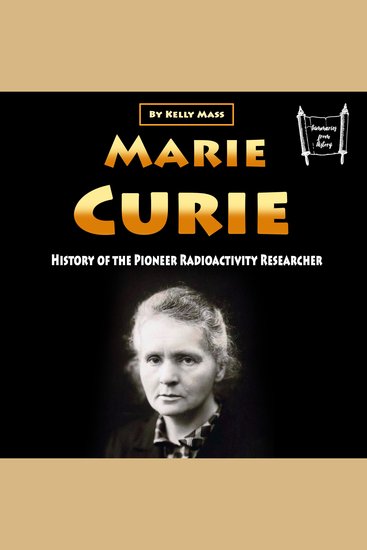
    Marie Salomea Skodowska Curie was a Polish-born, naturalized-French researcher and chemist who originated radioactivity research. She was the first woman to win the Nobel Prize, the first and only woman to win it two times, and the only individual to win the Nobel Prize in 2 different clinical classifications. 
    Her first Nobel Prize was co-won by her spouse, Pierre Curie, making them the first married set to win the reward and developing the Curie family tradition of 5 Nobel Prizes. She was the first woman to be selected as a teacher at the University of Paris in 1906. 
    Let’s take a look at what else she accomplished in her life.
    Voir livre
  • The New World on Mars - What We Can Create on the Red Planet - cover

    The New World on Mars - What We...

    Robert Zubrin

    • 0
    • 0
    • 0
    When Robert Zubrin published his classic book The Case for Mars a quarter century ago, setting foot on the Red Planet seemed a fantasy. Today, manned exploration is certain, and as Zubrin affirms in The New World on Mars, so too is colonization. 


    We will settle on Mars, and with our knowledge of the planet, analyzed in depth by Dr. Zubrin, we will utilize the resources and tackle the challenges that await us. What we will we build? Populous Martian city-states producing air, water, food, power, and more. Zubrin's Martian economy will pay for necessary imports and generate income from varied enterprises, such as real estate sales—homes that are airtight and protect against cosmic space radiation, with fish-farm aquariums positioned overhead, letting in sunlight and blocking cosmic rays while providing fascinating views. Zubrin even predicts the Red Planet customs, social relations, and government that will overcome traditional forms of oppression to draw Earth immigrants. 


    With all of this in place, Zubrin's Red Planet will become a pressure cooker for invention, benefiting humans on Earth, Mars, and beyond. We can create this magnificent future, making life better, less fatalistic. The New World on Mars proves that there is no point killing each other over provinces and limited resources when, together, we can create planets.
    Voir livre
  • Blockchain Revolution: Transforming the Digital Landscape - How Blockchain Technology is Redefining Trust Security and Efficiency in the Modern World - cover

    Blockchain Revolution:...

    Alexandra Mitchell

    • 0
    • 0
    • 0
    An in-depth manual for comprehending and managing the revolutionary effects of blockchain technology on our digital environment is "Blockchain Revolution: Transforming the Digital Landscape: How Blockchain Technology is Redefining Trust, Security, and Efficiency in the Modern World." This book, written by subject-matter specialists, explores blockchain technology's fundamental ideas, tenets, and uses while providing readers with an understandable and concise synopsis of its revolutionary possibilities. 
    The book's first section introduces readers to the fundamentals of blockchain technology, such as its consensus processes, decentralized architecture, and cryptographic security. It then examines the impact of blockchain on trust, security, and efficiency across a range of industries, including supply chain management, government services, healthcare, and banking. 
    Readers will learn about real-world use cases and success stories throughout the book that illustrate how blockchain technology can be applied practically to solve difficult issues and promote good change. Blockchain is transforming how we transact, engage, and build trust in the digital age by facilitating safe peer-to-peer transactions and improving transparency and accountability in government. 
    The book also examines the potential and difficulties of adopting blockchain technology, including security issues, scalability constraints, and regulatory considerations. "Blockchain Revolution" equips readers with the knowledge, skills, and recommended practices needed to overcome these obstacles and fully utilize blockchain technology to build a more transparent, resilient, and inclusive digital future.
    Voir livre