Begleiten Sie uns auf eine literarische Weltreise!
Buch zum Bücherregal hinzufügen
Grey
Einen neuen Kommentar schreiben Default profile 50px
Grey
Jetzt das ganze Buch im Abo oder die ersten Seiten gratis lesen!
All characters reduced
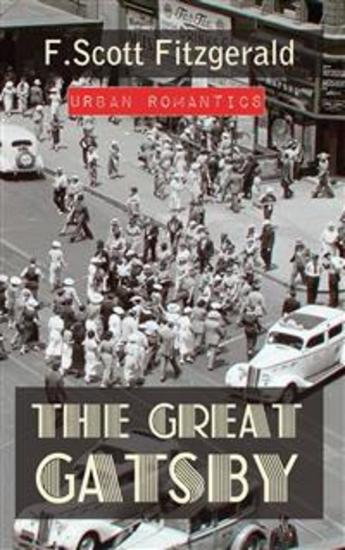
The Great Gatsby - cover

The Great Gatsby

F Scott itzgerald

Verlag: Interactive Media

  • 0
  • 0
  • 0

Beschreibung

Amidst prosperity of the 1920s in New York we see a portrait of the Jazz Age, with its decadence and excess. This novel is considered Fitzgerald 's best work and captures the spirit of the author's generation.  A love story and a cautionary tale about the American Dream ingrained in Gatsby's journey to happiness, this story presents a fine example of 20th century American writing.
Verfügbar seit: 09.02.2022.
Drucklänge: 134 Seiten.

Weitere Bücher, die Sie mögen werden

  • In Service To Sri Ram - The Sacred Hanuman Chalisa - cover

    In Service To Sri Ram - The...

    Radha Krsna Das

    • 0
    • 0
    • 0
    "I bow to the Hanuman who is swifter than the mind and wind. The sacred one who has controlled his senses, the one who is the epitome of learning and wisdom. Salutations to the son of the God of Air and chief of the Vanaras, I pray always to Lord Hanuman." 
     
    The Hanuman Chalisa is a Vedic devotional hymn (stotra) in praise of Hanuman authored by the poet sage Tulsi Das. The word "chālīsā" means the number forty in Sanskrit, as the Hanuman Chalisa has forty verses. Lord Hanuman is a great devotee of Sri Ram and one of the central characters in the epic, Ramayan. Hanuman is also an incarnation of Shiva. The qualities of Hanuman – his strength, courage, wisdom, celibacy, devotion to Lord Ram, and the many names by which he is known are all in the Hanuman Chalisa. Devotional recitation of this sacred prayer is done by millions every day. 
     
    Hanumanji is the greatest devotee of Sri Ram and an incarnation of the mighty Lord Shiva. He is therefore the epitome of ultimate devotion manifested with its full glory unchallenged in all times and places. By the power of his devotion to Sita Ram, he easily achieved supreme status as the perfect devotee and servitor. 
    Lord Hanuman is the eternal link between all devotees and Ram whom he serves, inspires, and protects. By honoring Hanuman one is blessed with all kinds of siddhis including power, valor, prosperity, and devotion.
    Zum Buch
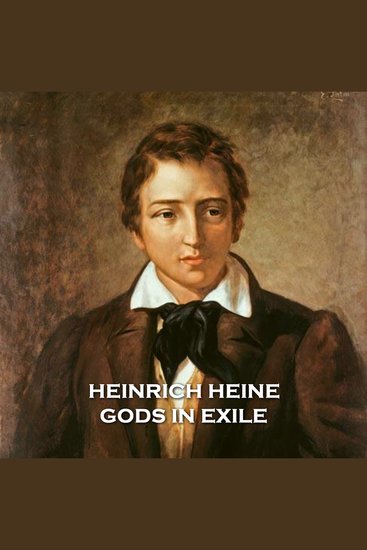
  • Gods in Exile - Heine pulls at many threads in this essay short story using the reincarnation of the famous Greek gods into medieval Christian Europe as his subject matter to do this - cover

    Gods in Exile - Heine pulls at...

    Heinrich Heine

    • 0
    • 0
    • 0
    Christian Johann Heinrich Heine was born in Düsseldorf, Germany on 13th December 1797 to assimilated Jewish parents. 
     
    Heine studied law at the universities of Bonn, Göttingen, and Berlin but his greater commitment was to studying poetry and literature.   
     
    He converted to Protestantism in order to obtain work as there were draconian anti-Jewish laws in force at the time.   
     
    He was part of the German Romantic movement but also responsible in part for ushering in the post-Romantic crisis and the presumed failure of art as unable to overcome or explain the growing traumas of modernity.  However, his literary reputation was cemented in the second half of the 1820’s with his poetry collection ‘The Book of Songs’ together with his collection of ‘Pictures of Travel’ stories that blended fact and fiction together into commercial and critical successes. 
     
    After the July 1830 Revolution in France, he went to live in Paris, where he remained until his death.  
     
    Here he wrote much in the way of essays discussing the political and cultural scene in France together with volumes of social criticism on Germany. 
     
    By 1835, his works had been banned by the German government.  His lifelong subsidised lifestyle ended in 1844 when his uncle died leaving him nothing.  He turned once more to lyric poetry and created perhaps his finest poetical works.  A trip to Germany resulted in the long satirical poem ‘Germany. A Winter's Tale’. His second volume of poetry, ‘New Poems’ in 1844, included poems that had originally appeared in Karl Marx’s newspaper ‘Forward’ and continued the satirical style he now preferred.   
     
    In May 1848, Heine, in poor health, fell and was paralyzed and confined to his bed.  He called it his ‘mattress-grave’ and only death would remove him from it.  He was also experiencing eye problems and suffering from chronic lead poisoning. 
     
    Heinrich Heine died on 17th February 1856.  He was 58.   
     
    ‘Gods in Exile’ is perhaps a prophetic piece on his own life.  The old gods are overthrown by the new novelty of Christianity.  What will be their role now?  Is there life after for them?
    Zum Buch
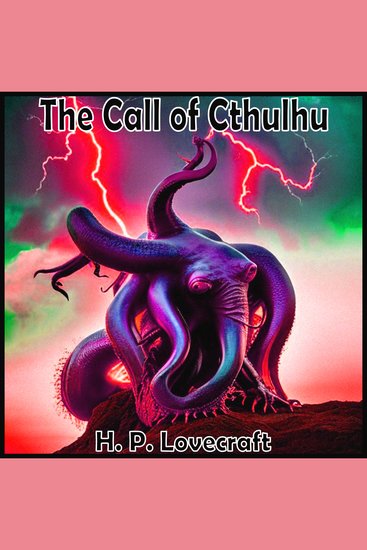
  • The Call of Cthulhu - cover

    The Call of Cthulhu

    H.P. Lovecraft

    • 0
    • 0
    • 0
    The Call of Cthulhu 
    H. P. Lovecraft 
     
    Adherents of this archaic, tentacled monstrosity persist, yearning for its reawakening and seeking revenge on a world populated by non-followers. In his narratives about Cthulhu, Lovecraft delves deeply into this ancient cult and provides insight into their methods of worship and the obscene rituals they perform. 
     
    Track List 
     
    01	The Horror in Clay	 
     
    02	The Tale of Inspector Legrasse.	 
     
    03	The Madness from the Sea.
    Zum Buch
  • Idyl of London An - From their pens to your ears genius in every story - cover

    Idyl of London An - From their...

    Beatrice Harrenden

    • 0
    • 0
    • 0
    The bookshelves of British literature are incredible collections that have gathered together centuries of very talented authors.  From these Isles their fame spread and whilst among their number many are now forgotten or neglected their talents endure.  Among them is Beatrice Harrenden.
    Zum Buch
  • Diary of a Lunatic - From their pens to your ears genius in every story - cover

    Diary of a Lunatic - From their...

    Leo Tolstoy

    • 0
    • 0
    • 0
    Leo Tolstoy was born in 1828 in the Russian province of Tula to a wealthy noble family. As a child, he had private tutors but he showed little interest in any formal education. When he went to the University of Kazan in 1843 to study oriental languages and law, he left without completing his courses.  Life now was relaxed and idle but with some writing also taking place.  Gambling debts forced an abrupt change of path and he joined the army to fight in the Crimean War.  He was commended for his bravery and promoted but was appalled at the brutality and loss of life.  He recorded these and other earlier experiences in his diaries which formed the basis of several of his works. 
    In 1852 ‘Childhood’ was published to immediate success and was followed by ‘Boyhood’ and ‘Youth’. 
    His experience in the army and the horrors he witnessed resulted in ‘The Cossacks’ in 1862 and the trilogy ‘Sevastopol Tales’. After the war he travelled around Europe, visiting London and Paris and meeting such luminaries as Victor Hugo and Charles Darwin.  
    It was now that Tolstoy began his masterpiece, ‘War and Peace’. Published in 1869 it was an epic work that changed literature. He quickly followed this with ‘Anna Karenina’.  
    These successes made Tolstoy rich and helped him accomplish many of his dreams but also brought problems as he grappled with his faith and the lot of the oppressed poor. These revolutionary views became so popular that the authorities now kept him under surveillance.  
    He led a life of asceticism and vegetarianism and put his socialist ideals into practice by establishing numerous schools for the poor and food programmes. He also believed in giving away his wealth, which caused much discord with his wife.  
    His writing continued to bring forth classics such as ‘The Death of Ivan Ilyich’ and many brilliant and incisive short stories such as ‘How Much Land Does A Man Need’.  
    In 1901 Tolstoy was excommunicated from the Church and controversially deselected for the Nobel Prize for Literature. 
    Whilst undertaking a pilgrimage by train in October 1910 with his daughter Aleksandra he caught pneumonia in the nearby town of Astapovo.  Leo Tolstoy died on November 9th, 1910, he was 82.
    Zum Buch
  • War and Peace (Book Seven: 1810-11) - cover

    War and Peace (Book Seven: 1810-11)

    Leo Tolstoy

    • 0
    • 0
    • 0
    War and Peace is a literary work mixed with chapters on history and philosophy by the Russian author Leo Tolstoy. It was first published serially, then published in its entirety in 1869. It is regarded as one of Tolstoy's finest literary achievements and remains an internationally praised classic of world literature.
    Book 7: 1810-11: The Bible legend tells us that the absence of labor idleness was a condition of the first man’s blessedness before the Fall. Fallen man has retained a love of idleness, but the curse weighs on the race not only because we have to seek our bread in the sweat of our brows, but because our moral nature is such that we cannot be both idle and at ease.
    Zum Buch