Begleiten Sie uns auf eine literarische Weltreise!
Buch zum Bücherregal hinzufügen
Grey
Einen neuen Kommentar schreiben Default profile 50px
Grey
Jetzt das ganze Buch im Abo oder die ersten Seiten gratis lesen!
All characters reduced
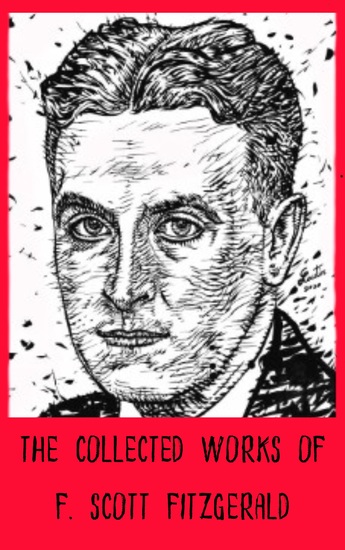
The Collected Works of F Scott Fitzgerald - Tales of Glamour Love and Tragic Splendor - cover

The Collected Works of F Scott Fitzgerald - Tales of Glamour Love and Tragic Splendor

F Scott itzgerald, Zenith Crescent Moon Press

Verlag: Zenith Crescent Moon Press

  • 0
  • 0
  • 0

Beschreibung

Step into the dazzling world of F. Scott Fitzgerald, a literary icon whose works capture the glittering highs and haunting lows of the Jazz Age. The Collected Works bring together his unforgettable novels and stories, perfect for anyone yearning for timeless themes of ambition, love, and the human condition 🌟
📚 This eBook includes

🌟 What readers are saying
"Fitzgerald's prose shines like diamonds, illuminating the depths of the human soul" – Literary Digest
"A collection of elegance and tragedy, Fitzgerald's works are simply mesmerizing"
🍸 Perfect for fans of classic literature, emotional storytelling, and a glimpse into the roaring 1920s. Let F. Scott Fitzgerald's legacy enchant you

Don't hesitate—embrace the brilliance of F. Scott Fitzgerald with this exclusive collection 📖✨. Click "Buy Now" to experience these timeless masterpieces
Verfügbar seit: 24.03.2025.
Drucklänge: 1456 Seiten.
Weitere Bücher, die Sie mögen werden

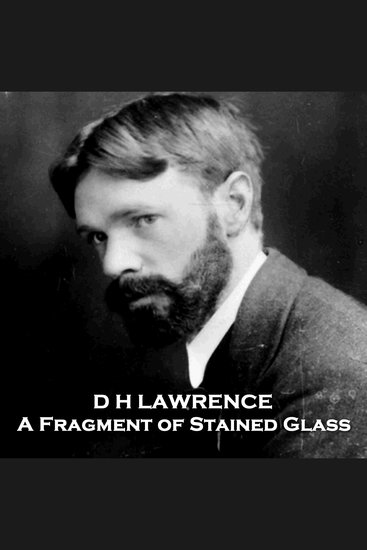
  • A Fragment of Stained Glass - From their pens to your ears genius in every story - cover

    A Fragment of Stained Glass -...

    D H Lawrence

    • 0
    • 0
    • 0
    David Herbert Lawrence was born on the 11th September 1885 in Eastwood, Nottinghamshire, a coal mining town where the reality of a harsh life was only useful as experiences for future literary works. 
    He was educated at Beauvale Board School and became the first local boy to receive a scholarship to attend Nottingham High School. After 3 years he became a junior clerk in Haywood’s surgical appliances factory. He was also attempting a literary career which, in the short term, led to a teacher training position in Eastwood and later a teaching qualification from University College, Nottingham.  
    Lawrence’s first efforts were poems, short stories and a draft of ‘The White Peacock’. Moving to London and a teaching position in Croydon his writing attracted the attention of Ford Madox Ford, editor of The English Review, and he commissioned him to write ‘Odour of Chrysanthemums’.  
    Wanting to write full-time he now began work on what would become ‘Sons and Lovers.   
    In 1912 he met the older and married mother-of-three Frieda Weekley. They eloped to Germany and here Lawrence could see for himself the growing tensions with France.  So keen was his interest that he was arrested and accused of being a British spy.  
    In early 1914 Frieda obtained her divorce and they returned to Britain to be married just days before the outbreak of war. Owing to her German parentage, and his own public dislike of militarism and violence, the couple were treated with contempt and suspicion throughout the war years.  
    Despite this he continued to write but his reputation in England was so tarnished and, mirrored by his own disdain for the country, he and Frieda left England in November 1919, first for Europe and then America via Ceylon and Australia. 
    They bought a ranch in Taos, New Mexico and visited Mexico several times. The third visit in March 1925 caused a near fatal attack of malaria. To convalesce they moved to Florence. Here he continued work on ‘Lady Chatterley’s Lover’ which for many years would cause controversy. A renewed interest in oil painting resulted in an exhibition in 1929 which was raided by the police and several works were confiscated.  
    D H Lawrence died of complications arising from a bout of tuberculosis on the 2nd of March 1930 in Vence, France.  He was 44.
    Zum Buch
  • Plated Article A (Unabridged) - cover

    Plated Article A (Unabridged)

    Charles Dickens

    • 0
    • 0
    • 0
    Charles Dickens was a writer and social critic who created some of the world's best-known fictional characters and is regarded as the greatest novelist of the Victorian era. His works enjoyed unprecedented popularity during his lifetime, and by the twentieth century critics and scholars had recognised him as a literary genius. His novels and short stories enjoy lasting popularity.
    A PLATED ARTICLE: Putting up for the night in one of the chiefest towns of Staffordshire, I find it to be by no means a lively town. In fact, it is as dull and dead a town as any one could desire not to see. It seems as if its whole population might be imprisoned in its Railway Station. The Refreshment Room at that Station is a vortex of dissipation compared with the extinct town-inn, the Dodo, in the dull High Street.
    Zum Buch
  • Evening Guest An - From their pens to your ears genius in every story - cover

    Evening Guest An - From their...

    Alexander Kuprin

    • 0
    • 0
    • 0
    Alexander Kuprin was born in Narovchat, Penza in Russia on 7th September 1870. 
    At 3 his Father died and he and mother moved to Moscow. By 10 he was enrolled at the Second Moscow Military High School and there his interest in literature began. The Alexander Military Academy followed and two years later he was a sub-lieutenant and posted to an Infantry Regiment for a further four years. 
    Despite his duties he was a now a keen writer and published his first short story at this time. His military duties also garnered him experiences for his breakthrough work ‘The Duel’.  Leaving the military he left for Kiev to work for local newspapers.  He continued to publish both stories and novels and by 1901 he was in St Petersburg becoming part of a group that included Chekhov, Ivan Bunin, Maxim Gorky and Leonid Andreyev.  
    In the years that followed further controversial works and acclaim followed.  His comments on the regime meant he was also put under secret police surveillance.   
    As World War I erupted, Kuprin opened a military hospital but was then given command of an infantry company in Finland. He was soon discharged on grounds of ill health.  
    The October Revolution saw him praise Lenin, but he warned that the Bolsheviks threatened Russian culture and might cause further widespread suffering to the peasants.  As Civil War raged he took his family to Helsinki and then on to Paris. 
    Exile saw his talents decline further and his succumbing to alcoholism. He became lonely and withdrawn. The family's poverty increased his malaise.   
    In May 1937, the Kuprin’s returned to Moscow.  He now saw his work published but wrote almost nothing new.  In 1938 his health rapidly deteriorated.  Already suffering from a kidney problems and sclerosis, he had now developed cancer of the oesophagus.  
    Alexander Kuprin died on 25th August 1938.
    Zum Buch
  • Refreshments for Travellers (Unabridged) - cover

    Refreshments for Travellers...

    Charles Dickens

    • 0
    • 0
    • 0
    Charles Dickens was a writer and social critic who created some of the world's best-known fictional characters and is regarded as the greatest novelist of the Victorian era. His works enjoyed unprecedented popularity during his lifetime, and by the twentieth century critics and scholars had recognised him as a literary genius. His novels and short stories enjoy lasting popularity.
    REFRESHMENTS FOR TRAVELLERS: IN the late high winds I was blown to a great many places and indeed, wind or no wind, I generally have extensive transactions on hand in the article of Air but I have not been blown to any English place lately, and I very seldom have blown to any English place in my life, where I could get anything good to eat and drink in five minutes, or where, if I sought it, I was received with a welcome.
    Zum Buch
  • Peter Pan - Peter and Wendy - cover

    Peter Pan - Peter and Wendy

    J. M. Barrie

    • 0
    • 0
    • 0
    J.M. Barrie created the story Peter and Wendy known the world over as Peter Pan and in doing so gifted the world one of the most beloved characters in literature. It was first published in 1911 as Peter and Wendy. It became almost an instant hit and has since become one of the world's most beloved classics. 
    Kevin Hayes The Story-Man brings J.M. Barrie's magical story of 'the boy who never grew up' to life in this audiobook version. 
    You may recognize Kevin Hayes the Story-Man from the Nightly Bedtime Story Podcast. Thousands of children and adults from all over the world listen as he tells them a Bedtime Story every night. You can now enjoy his storytelling as he narrates this audiobook version of J.M. Barrie's classic novel Peter Pan, Peter and Wendy. 
    If you are not familiar with the story of Peter Pan, Peter and Wendy, it is about a boy named Peter Pan who never grew up because he always wanted to 'stay a boy and always have fun'. He lives on a magical island called Neverland with the Lost Boys. Neverland is a magical place we go to when we dream and as children we can actually fly there with the help of fairy dust from Peter Pan's fairy friend, Tinkerbell. The island is not full of only fun and games, but also many other characters including the wicked, Captain Hook and his band of nasty pirates. One memorable night, Peter and Tinkerbell fly into a window of the bedroom belonging to three children, Wendy, John, and Michael and with the help of Tink's magical fairy dust, helps them fly to Neverland where they take part in many exciting adventures. 
    This is a story that can truly be enjoyed by everyone even if you're an adult and have forgotten how to fly.
    Zum Buch
  • Massacres of The South - cover

    Massacres of The South

    Alexandre Dumas

    • 0
    • 0
    • 0
    "Massacres of the South" by Alexandre Dumas is a gripping historical account of religious persecution and violence in 16th-century France. The narrative delves into the brutal conflicts between Catholics and Protestants, particularly focusing on the St. Bartholomew's Day Massacre and other harrowing events. Dumas vividly portrays the political machinations, fanaticism, and human suffering that defined this turbulent era. Through meticulous detail, he examines themes of faith, intolerance, and the devastating consequences of power struggles. A blend of history and storytelling, the work sheds light on the resilience of those who faced unimaginable horrors. Dumas crafts a poignant reflection on humanity’s capacity for both cruelty and endurance in the face of sectarian hatred.
    Zum Buch