Begleiten Sie uns auf eine literarische Weltreise!
Buch zum Bücherregal hinzufügen
Grey
Einen neuen Kommentar schreiben Default profile 50px
Grey
Jetzt das ganze Buch im Abo oder die ersten Seiten gratis lesen!
All characters reduced
Street Style Impact - cover

Street Style Impact

Everett Sinclair

Übersetzer A AI

Verlag: Publifye

  • 0
  • 0
  • 0

Beschreibung

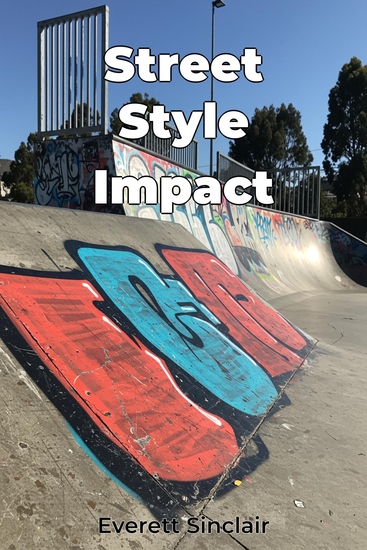
Street Style Impact explores the dynamic relationship between grassroots fashion and high-end design, revealing how trends originating in subcultures and on city streets influence the collections of luxury fashion houses. The book highlights how street style acts as an engine of design innovation, providing a constant stream of fresh ideas that challenge established fashion norms. Examining the intersection of authenticity, rebellion, and commercialization, the book argues that street style is not merely copied but actively interpreted and integrated to shape the future of fashion.

 
The book investigates the historical context of movements like punk and Harajuku, and dives into the business strategies used to harness street trends. It also explores the ethical considerations surrounding cultural appropriation, such as the use of indigenous patterns. Through case studies, photographic analysis, and expert interviews the book demonstrates how street style movements impact the industry.

 
Organized into three sections, the book introduces core concepts, develops ideas through examples like the influence of skateboarding on luxury sneakers, and concludes with a discussion of social media's role and ethical considerations. This approach provides designers, marketers, and consumers with valuable insights into the mechanics of influence within the fashion world.
Verfügbar seit: 24.02.2025.
Drucklänge: 67 Seiten.


Weitere Bücher, die Sie mögen werden

  • Journey into the magical world - and other stories - cover

    Journey into the magical world -...

    Pabitra Adhikary

    • 0
    • 0
    • 0
    Since my childhood, one question used to haunt me again and again. What is next after death? Does demise mean an unperturbed and relaxed slumber? There will be no urgency to wake up one day. Does death mean the failure of heart? And then there will be no feelings at all.
     
    What will the soul do after death? Will the soul get reunited with the great soul or
     
    paramatma or will it wander around as a ghost? Will there be salvation or will there be new rebirth?
    Zum Buch
  • Apocalypse Television - How The Day After Helped End the Cold War - cover

    Apocalypse Television - How The...

    David Craig, Robert Iger

    • 0
    • 0
    • 0
    On November 20, 1983, a three-hour made-for-TV movie, The Day After, premiered on ABC. Set in the heartland of Lawrence, Kansas, the film depicted the events before, during, and after a Soviet nuclear attack with vivid scenes of the post-apocalyptic hellscape that would follow. The film was viewed by over 100 million Americans and remains the highest rated TV movie in history. 


    The path to primetime for The Day After proved nearly as treacherous as the film's narrative. Battles ensued behind the scenes at the network, between the network and the filmmakers. But these skirmishes pale in comparison to the culture wars triggered by the film in the press, alongside a growing Nuclear Freeze movement, and from a united, pro-nuclear Right. Once efforts to alter the script failed, the White House conducted a full-throttled propaganda campaign to hijack the film's message. 


    Apocalypse Television features a dramatic insider's account of the making of and backlash against The Day After. No other book has told this story in similar fashion, venturing behind-the-scenes of the programming and news divisions at ABC, the backlash from the conservative movement and Religious Right, the challenges encountered by the film's production team, and the experiences of the citizens of Lawrence, Kansas, where the film was set and shot.
    Zum Buch
  • Your Thought - cover

    Your Thought

    Mitansh

    • 0
    • 0
    • 0
    “Believe you can and you're halfway there. No one can make you feel inferior without your consent.” “Success is not how high you have climbed, but how you make a positive difference to the world.” “Opportunities don't happen
    Zum Buch
  • Madonna's Erotica - cover

    Madonna's Erotica

    Michael Dango

    • 0
    • 0
    • 0
    Everyone wanted Madonna’s 1992 album Erotica to be a scandal. In the midst of a culture war, conservatives wanted it to be proof of the decline of family values. The target of conservative loathing, gay men reeling from the AIDS epidemic wanted it to be a celebration of a sexual culture that had rapidly slipped away. And Madonna herself wanted to sell scandal, which is why she released Erotica in the same season as her erotic thriller Body of Evidence and her pornographic coffee-table book simply titled Sex.But Erotica is more sentimental than pornographic. This ambivalence over sex is what makes the album crucial both for understanding its time and for navigating culture a generation later. As queer politics were transitioning from sexual liberation to civil rights like same-sex marriage, Madonna tried to do both. Her songs proved formative for works of queer theory, which emerged in the academy at the same time as the album. And Erotica was—and is—central to a developing consciousness about cultural appropriation. In this book, Michael Dango considers Erotica and its legacy by drawing both on the intellectual traditions at the center of today’s hysteria over critical race theory and “don’t say gay” and on his own experiences as a gay man too young to know the original carnage of AIDS and too old to grow up assuming he could get married. Madonna offered up Erotica as a key entry in the 1990s culture wars. Her album speaks all the more urgently to the culture wars of today.
    Zum Buch
  • Léon Bakst The art of Theatre and dance - cover

    Léon Bakst The art of Theatre...

    Elisabeth Ingles

    • 0
    • 0
    • 0
    At the beginning of the XXth century, there was an unprecedented explosion of creativity in all artistic fields. Overwhelming both Europe and North America, the Russian Ballet revolutionized theatrical design with their stage sets and their costumes that were ablaze with colour yet refind in effect, bearing much of the mystic of the Orient yet also visually influenced by the work of the Persian miniaturists. Together with Diaghilev, Léon Bakst showed himself to be the most talented of the theatre group designers of his time. The costumes he devised with exclusive art seemed to shimmer with a thousand colours. Dazzled by such powers of imagination, the author, Jean Cocteau, dedicated his book "Bonjour Monsieur Bakst" to him. The great contemporary composers Tchaïkovsky, Rimsky-Korsakov and Stravinsky, among others, all had occasion to call upon his creative genius. Today, his designs remain very popular and may still be seen on stage scenes all over the world, admired by a public that remains as enthusiastic as ever.
    Zum Buch
  • Luba Empire - Central Africa's Kingdom of Trade and Power - cover

    Luba Empire - Central Africa's...

    Rolf Hedger

    • 0
    • 0
    • 0
    The Luba Empire emerged as one of the most influential kingdoms in Central Africa during the pre-colonial period. Rooted in a rich tradition of oral history and cultural heritage, the empire played a central role in shaping trade, political organization, and social structures throughout the region. The Luba people developed a sophisticated society that not only thrived on local commerce but also participated in expansive regional networks, connecting diverse communities across the African continent. 
    The formation of the Luba Empire was marked by a blend of indigenous traditions and innovative political practices. At its core was a system of governance that efficiently harnessed local resources, maintained internal stability, and forged strategic alliances with neighboring groups. This centralized authority, balanced by localized autonomy, enabled the empire to mediate conflicts and expand its influence through both diplomatic and military means. The administrative techniques developed during this era laid the groundwork for a resilient state capable of adapting to shifting economic and social dynamics. 
    Economically, the Luba Empire became a beacon of trade and craftsmanship. Its strategic location allowed it to serve as a vital crossroads for commerce, facilitating the exchange of valuable goods such as salt, iron, and agricultural products. The empire’s success in trade was not only a product of its abundant natural resources but also of the innovative methods its people employed in agriculture, metallurgy, and artisanal production. These economic activities formed the backbone of a prosperous society that celebrated both practical skills and cultural achievements, fostering an environment of continuous growth and learning.
    Zum Buch