Begleiten Sie uns auf eine literarische Weltreise!
Buch zum Bücherregal hinzufügen
Grey
Einen neuen Kommentar schreiben Default profile 50px
Grey
Jetzt das ganze Buch im Abo oder die ersten Seiten gratis lesen!
All characters reduced
Natural Wood Comfort - cover

Natural Wood Comfort

Everett Sinclair

Übersetzer A AI

Verlag: Publifye

  • 0
  • 0
  • 0

Beschreibung

"Natural Wood Comfort" explores the profound impact of wood on our well-being, delving into design psychology and our innate connection to nature. The book argues that wood positively influences our psychological state by triggering biophilic responses, reducing stress, and enhancing feelings of comfort. Interestingly, research shows different types of wood, finishes, and applications can affect mood, cognitive function, and physiological stress responses. As urbanization increases, understanding how natural elements like wood can mitigate our disconnect from nature becomes crucial for creating sustainable, healthy living environments.

 
The book progresses systematically, first introducing biophilic design and the human connection to nature. It then examines the psychological effects of wood through research and case studies in residential, commercial, and healthcare settings, demonstrating improved well-being through strategic wood use. Finally, it explores the sustainability aspects, advocating for responsible forestry practices and the role of wood in reducing carbon footprints. This approach bridges environmental psychology, sustainable design, and neuroscience, providing a holistic understanding of wood's multifaceted impact and offering practical design recommendations for optimizing well-being.
Verfügbar seit: 23.02.2025.
Drucklänge: 79 Seiten.

Weitere Bücher, die Sie mögen werden

  • Life Map - A Short Guide For Future Generations - (and a couple of personal anecdotes) - cover

    Life Map - A Short Guide For...

    Ioniţă "Shumu” Mihai

    • 0
    • 0
    • 0
    My aim with this book is to help bring some clarity and a sense of direction to adults and younger people alike. 
    As an adult, if you find yourself kind of stuck, say you’ve had a fair amount of experiences up to this point, you are financially independent and overall pretty content but feel you kind of lost contact with some of your dreams and aspirations from around…10 years ago…keep on reading. 
    Or, if you’re a student who feels overwhelmed in today’s world where we’re all constantly flooded by the online medium which fights for each second of our attention and distorts reality by feeding us fake reference points…keep on reading. 
    It’s completely understandable how someone can feel lost and not know what to do with one’s life. 
    While I do not claim to hold an absolute truth, I firmly believe that this book can and will be seen as a clear and solid starting point in helping you find at least some answers to questions you have or may have, whether you’re an adult looking to improve your life, or a student feeling your life is just starting out. 
    In short, my idea was to take Abraham Maslow’s Expanded Hierarchy of Needs and pump it full of steroids. 
    I wanted to take this pyramid and turn it into a tesseract. 
    Ok…so maybe that fifth cup of coffee at 3 a.m. wasn’t such a good idea after all.
    Zum Buch
  • Champagne Charlie - The Frenchman Who Taught Americans to Love Champagne - cover

    Champagne Charlie - The...

    Petie Kladstrup, Don Kladstrup

    • 0
    • 0
    • 0
    Champagne Charlie tells the story of a dashing young Frenchman, Charles Heidsieck, who introduced hard-drinking Americans to champagne in the mid-nineteenth century and became famously known as Champagne Charlie. Ignoring critics who warned that America was a dangerous place to do business, Heidsieck plunged right in, considering it "the land of opportunity" and succeeding there beyond his wildest dreams. Those dreams, however, became a nightmare when the Civil War erupted and he was imprisoned and nearly executed after being charged with spying for the Confederacy. 


    Only after the Lincoln administration intervened was Heidsieck saved, but his champagne business had gone bankrupt and was virtually dead. Then, miraculously, Heidsieck became owner of nearly half the city of Denver, the fastest-growing city in the West. By selling the land, Heidsieck was eventually able to resurrect his business to its former glory. 


    For all its current-day glamour, effervescence, and association with the high life, champagne had a lackluster start. It was pale red in color, insipid in taste, and completely flat. Champagne's success can be traced back to King Louis XV and his mistress Madame de Pompadour, Napoleon Bonaparte, countless wars and prohibitions, and, most important to the United States, Charles Heidsieck.
    Zum Buch
  • Global Cities - Comparative Perspectives on Urbanization - cover

    Global Cities - Comparative...

    Lyric Vale

    • 0
    • 0
    • 0
    Global urbanization is one of the defining phenomena of the 21st century, reshaping the landscape of human society in profound and often unpredictable ways. Urban areas have become epicenters of economic, cultural, and technological growth, drawing millions of people in search of better opportunities. As more than half of the world’s population now resides in cities, the rapid expansion of urban areas raises both exciting prospects and complex challenges. This shift is not just about the physical growth of cities, but also the transformation of how societies function, how people live, and how global systems interact with local realities. 
    At its core, global urbanization is driven by a multitude of factors. The movement of people from rural to urban areas, spurred by the promise of economic opportunity and improved living standards, has accelerated with globalization. As the world becomes more interconnected, cities are increasingly positioned as nodes in a vast, global network. These cities are not isolated entities but are linked by flows of capital, information, and labor, contributing to the spread of economic, cultural, and technological trends. This interconnectedness means that changes in one city can have ripple effects worldwide, making the study of urbanization crucial for understanding the broader dynamics of global society. 
    However, urbanization is not a uniform process. While some cities grow through industrialization and technological advancements, others are expanding due to rapid population growth driven by migration and high birth rates. The result is a global urban landscape marked by diversity in size, scale, economic power, and social complexity. While cities like New York, London, and Tokyo have long been at the forefront of global urbanization, emerging cities in Africa, Asia, and Latin America are now gaining prominence.
    Zum Buch
  • The Happy Hooker - My Own Story - cover

    The Happy Hooker - My Own Story

    Robin Moore, Xaviera Hollander,...

    • 1
    • 7
    • 0
    The thirtieth anniversary edition of one of the modern classics of the sexual revolution—with a new Afterword by the author. 
     
    How did you first learn about sex? If you grew up in the 1970s, it may have been from a gleefully lusty tour guide named Xaviera Hollander. 
     
    In the late 1960s—that era of sexual chaos, when Playboy Clubs and love-ins were competing for national attention—a beautiful, intelligent young Dutch secretary named Xaviera de Vries moved to New York, grew swiftly tired of her desk job . . . and soon became the most visible and glamorous madam the city had ever seen. As Xaviera Hollander, she published a shockingly candid account of her life behind the brothel door. The Happy Hooker shot straight to the top of the bestseller lists, sold more than fifteen million copies, and made this enterprising young woman an international phenomenon. 
     
    Thirty years later, these delightfully explicit tales of the ’60s and ’70s swingers’ scene—including countless jaw-dropping stories of lesbianism, bondage, fetishism, and more—remain as titillating as ever, charged with the mix of shrewd observation and uninhibited appetite that made Hollander an irresistible storyteller. The Happy Hooker is a classic: the world’s greatest book on the world’s oldest profession.
    Zum Buch
  • Sprachenräume der Schweiz - Band 1: Sprachen - cover

    Sprachenräume der Schweiz - Band...

    Johannes Kabatek, Barbara...

    • 0
    • 0
    • 0
    Das vorliegende Handbuch bietet eine umfassende Darstellung der Vielfalt der in der Schweiz bis in jüngste Zeit mündlich und schriftlich verwendeten Sprachen und Dialekte und der räumlichen und sozialen Bedingtheit ihres Auftretens. Es bezieht sich nicht ausschliesslich auf die Schweiz als viersprachiges Land, sondern geht neue Wege, indem es darüber hinaus das Englische sowie Sprachen berücksichtigt, deren heutige Präsenz in der Schweiz auf Migration beruht. Auch historische Sprachen und Dialekte, die in der Schweiz und im liechtensteinischen Sprachraum gesprochen werden, sowie die drei Schweizer Gebärdensprachen werden behandelt. Mit Ausblicken über die Schweiz hinaus bietet das Handbuch eine erweiterte Perspektive auf die Räume, die die Sprachen der Schweiz einnehmen. So wird das traditionelle Verständnis von Vielsprachigkeit um neue Aspekte und aktuelle Entwicklungen ergänzt.
    Zum Buch
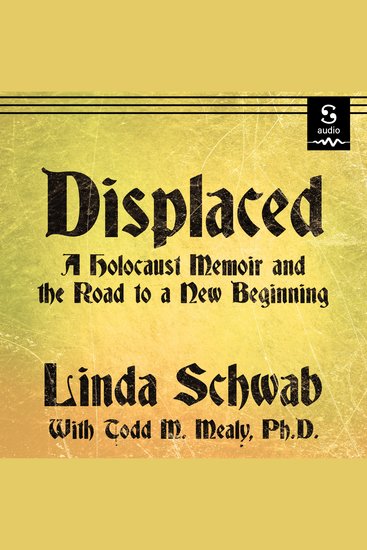
  • Displaced - A Holocaust Memoir and the Road to a New Beginning - cover

    Displaced - A Holocaust Memoir...

    Linda Schwab, Todd M. Mealy

    • 0
    • 0
    • 0
    Displaced is Linda Schwab’s Holocaust memoir, a retelling of her experience surviving 18 months in a man-made cave, another year as an exile in Poland and Germany, and three years as a refugee in a displaced persons camp. Just six years old when a band of Nazi soldiers arrived in her tiny shtetl in Myadel, Poland, Linda observed atrocities no child ever needs to witness.With her parents and two brothers, during the summer of 1942, Linda was forcibly relocated into a ghetto where most of the Jewish men were led to the nearby forest and killed in a pogrom. After the massacre, Linda escaped with her family into the Ponar Forest, but only after evading Polish nationals and Nazis that patrolled Poland's countryside. Deep in the woods, Linda’s family lived in a cave. They survived brutal winters, eluded partisan fighters that might force Linda’s father to leave the family, and remained out of sight from Nazis and Polish police, who at one point, came only feet from their dugout.Written with historian Todd M. Mealy during a time when Holocaust deniers aim to rehabilitate the Nazi ideology and as roughly 400,000 survivors remain with us, Displaced presents Schwab’s singular voice. Her narrative will help maintain—if not bolster—Holocaust knowledge, as her story of surviving the Polish wilderness during WWII and in a Displaced Persons Camp after the war is unique from most accounts. Displaced will inspire the rest of us to confront hatred in its many forms.
    Zum Buch