Rejoignez-nous pour un voyage dans le monde des livres!
Ajouter ce livre à l'électronique
Grey
Ecrivez un nouveau commentaire Default profile 50px
Grey
Abonnez-vous pour lire le livre complet ou lisez les premières pages gratuitement!
All characters reduced
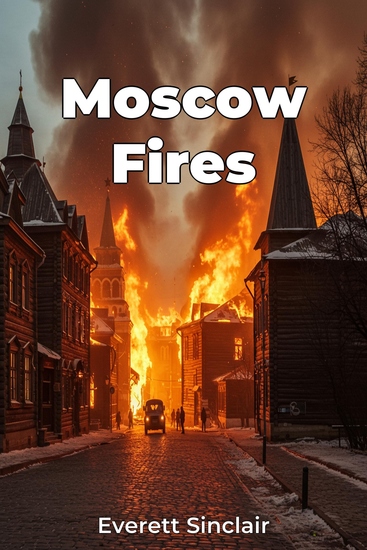
Moscow Fires - cover

Moscow Fires

Everett Sinclair

Traducteur A AI

Maison d'édition: Publifye

  • 0
  • 0
  • 0

Synopsis

Moscow Fires explores the history of Moscow through the lens of the devastating fires that repeatedly ravaged the city. More than just recounting disasters, the book examines how these events shaped Moscow's urban development and defensive strategies. Readers may be surprised to learn that these fires, despite their destructive nature, acted as catalysts for innovation, leading to the adoption of stone construction and the widening of streets to serve as firebreaks. 

 
The book argues that Moscow's cycle of destruction and rebuilding fundamentally altered its urban fabric. It challenges conventional views by demonstrating how adversity fostered progress, influencing architectural solutions and defense mechanisms. Beginning with an overview of Moscow's vulnerability, the narrative progresses chronologically, detailing each major fire's impact, the immediate responses, and the subsequent political and urban planning shifts. 

 
A significant portion of Moscow Fires is dedicated to the architectural responses to these disasters. By drawing on historical sources and incorporating interdisciplinary perspectives, the book showcases how Moscow's experience with fire shaped its unique urban character and contributed to its identity as a resilient and strategically fortified city.
Disponible depuis: 21/03/2025.
Longueur d'impression: 58 pages.

D'autres livres qui pourraient vous intéresser

  • The Holodomor - The Brutal Terror-Famine Inflicted on Millions of Ukrainians by the Soviet Union - cover

    The Holodomor - The Brutal...

    Kelly Mass

    • 0
    • 0
    • 0
    The Holodomor, also known as the Terror-Famine (meaning 'to kill through starving' in Ukrainian) or The Great Famine, was a devastating man-made disaster that struck Soviet Ukraine between 1932 and 1933. It resulted in the deaths of millions of Ukrainians, with the word "Holodomor" specifically highlighting the purposeful nature of the famine. The term reflects the severity of the event, suggesting not only a catastrophic food shortage but also a deliberate attempt to destroy the Ukrainian population through starvation. Various factors contributed to the famine's man-made characteristics, including the refusal of Soviet authorities to allow outside aid, the forced confiscation of family food supplies, and the imposition of severe restrictions on population movement. 
    The Holodomor was part of a larger Soviet famine that affected other grain-producing regions of the USSR in the same period, but Ukraine, as one of the Soviet Union's most important agricultural producers, bore the brunt of the crisis. The famine was not a result of natural disasters but of Stalinist policies, such as forced collectivization, that wreaked havoc on Ukraine's agricultural systems. The Ukrainian people, most of whom were ethnic Ukrainians, faced the unimaginable toll of starvation in what remains one of the most catastrophic peacetime events in Ukrainian history. 
    Ukraine, along with 15 other countries, officially recognized the Holodomor as a genocide perpetrated by the Soviet regime against the Ukrainian people, a stance that has been supported since 2006. The question of how many people perished remains a subject of debate. A joint declaration made to the United Nations in 2003 suggested that between 7 and 10 million Ukrainians died during the famine. However, current estimates by scholars tend to range from 3.5 to 5 million deaths.
    Voir livre
  • Depression VS Laziness - 6 Indicators You’re Struggling with More than Fatigue - cover

    Depression VS Laziness - 6...

    Leila Wattson

    • 0
    • 0
    • 0
    In today's fast-paced world, it's easy to mistake symptoms of depression for laziness. The pressure to stay productive and achieve more can make anyone feel inadequate when they struggle with daily tasks. But while both laziness and depression can result in a lack of motivation or energy, they stem from very different causes and have vastly different implications. Recognizing the difference between the two is essential for self-compassion and for seeking the proper help and treatment. 
      
    Laziness is often associated with a lack of desire to do things, simply choosing to avoid effort or responsibility. It can be seen as a personal failing or a bad habit, something that can be corrected by willpower and discipline. However, the concept of laziness often oversimplifies the complex reasons people may avoid action. Many factors, including fear, perfectionism, or lack of structure, can contribute to this behavior. 
      
    Depression, on the other hand, is a mental health condition that goes far beyond feeling "lazy." It's characterized by persistent feelings of sadness, hopelessness, and a loss of interest in activities that were once enjoyable. Depression can impact every aspect of life, including sleep, appetite, and the ability to concentrate. Unlike laziness, which is typically seen as a temporary choice, depression can cause deep, overwhelming fatigue that can make even the most basic tasks feel insurmountable.
    Voir livre
  • Titans of War - The thrilling bestselling new Ancient-Egyptian epic from the Master of Adventure - cover

    Titans of War - The thrilling...

    Wilbur Smith, Mark Chadbourn

    • 0
    • 0
    • 0
    Global bestselling author of River God and The New Kingdom, Wilbur Smith, returns with the next epic book in his brand-new Ancient Egyptian series.A RUTHLESS ENEMY. A CIVILISATION IN RUINS. A QUEST FOR SALVATION.For over fifty years Egypt has known nothing but war and devastation at the hands of the Hyksos, a bloodthirsty barbarian people from the distant east who continue to advance, crushing armies in their wake. Times are desperate, but throughout the conflict, a brave resistance fights on under the great Taita, a slave who has risen far beyond his ranks. Piay, entrusted into Taita's care by his parents at the age of just five, has been trained to become a great spy, unmatched by any other. Determined to prove his worth, he embarks on a dangerous mission to the north - to Mycenae and through the heart of Hyksos land and across the great sea - to find allies to help defend Egypt. As the situation becomes increasingly precarious, and the fate of the kingdom is hanging in the balance, can Piay succeed in his quest or will this mean the end of the glory that is Egypt once and for all?
    Voir livre
  • The Tragic Mind - Fear Fate and the Burden of Power - cover

    The Tragic Mind - Fear Fate and...

    Robert D. Kaplan

    • 0
    • 0
    • 0
    A moving meditation on recent geopolitical crises, viewed through the lens of ancient and modern tragedy 
     
    Some books emerge from a lifetime of hard-won knowledge. Robert D. Kaplan has learned, from a career spent reporting on wars, revolutions, and international politics in Europe, the Middle East, and East Asia, that the essence of geopolitics is tragedy. In The Tragic Mind, he employs the works of ancient Greek dramatists, Shakespeare, German philosophers, and the modern classics to explore the central subjects of international politics: order, disorder, rebellion, ambition, loyalty to family and state, violence, and the mistakes of power. The great dilemmas of international politics, he argues, are not posed by good versus evil—a clear and easy choice—but by contests of good versus good, where the choices are often searing, incompatible, and fraught with consequences. A deeply learned and deeply felt meditation on the importance of lived experience in conducting international relations, this is a book for everyone who wants a profound understanding of the tragic politics of our time.
    Voir livre
  • The Communist Manifesto - cover

    The Communist Manifesto

    Friedrich Engels, Karl Marx

    • 0
    • 0
    • 0
    "A spectre is haunting Europe—the spectre of communism."
    
    In a world transformed by the Industrial Revolution, Marx and Engels set out to decode the hidden mechanics of society. They argue that all of human history is the history of class struggles: the constant friction between those who own the means of production and those who sell their labor to survive. The Communist Manifesto is a call to action that envisions a future beyond exploitation, predicting the inevitable rise of the working class and the transition to a classless, stateless society. Whether viewed as a historical artifact or a living critique of global economics, this text remains essential for understanding the modern world.
    
    The Great Divide: Bourgeoisie vs. Proletariat: The Manifesto famously defines the two warring camps of the industrial age. The Bourgeoisie (the ruling capitalist class) are described as a revolutionary force that "shattered" feudalism but created a system of "naked self-interest." Opposing them is the Proletariat (the working class), whom Marx describes as the "grave-diggers" of the very system that created them.
    
    The Ten-Point Program: In the second section, the authors lay out a controversial and radical set of measures for the "most advanced countries," including the abolition of private land ownership, a heavy progressive income tax, and the centralization of credit and communication in the hands of the state. These points sparked over a century of political experimentation and debate across every continent.
    
    A Legacy of Global Change: From the revolutions of 1917 to the modern labor movements of the 21st century, the rhetoric of the Manifesto has been used to challenge the status quo. Its closing cry—"Working Men of All Countries, Unite!"—remains one of the most famous slogans in human language, symbolizing the birth of international political solidarity.
    
    Analyze the roots of the modern world. Purchase "The Communist Manifesto" today.
    Voir livre
  • A Rare Recording of Winston Churchill - cover

    A Rare Recording of Winston...

    Winston Churchill

    • 0
    • 0
    • 0
    Sir Winston Leonard Spencer Churchill (November 30, 1874 - January 24, 1965) was born in Oxfordshire, England, of mixed English and American parentage. He would become a statesman, soldier, and writer who served as Prime Minister of the United Kingdom from 1940 to 1945 -- during the Second World War -- and again from 1951 to 1955. Apart from two years between 1922 and 1924, he was a Member of Parliament from 1900 to 1964 as both a member of the Liberal Party and, later, as member and leader of the Conservative Party. Widely considered one of the 20th century's most significant figures, Churchill is seen as a victorious wartime leader who played an important role in defending Europe's liberal democracy against the spread of fascism. The following recording is Churchill's historic "This was their finest hour" speech delivered to the House of Commons of the Parliament of the United Kingdom on June 18, 1940.
    Voir livre