Rejoignez-nous pour un voyage dans le monde des livres!
Ajouter ce livre à l'électronique
Grey
Ecrivez un nouveau commentaire Default profile 50px
Grey
Abonnez-vous pour lire le livre complet ou lisez les premières pages gratuitement!
All characters reduced
Construction Machines - cover

Construction Machines

Everett Sinclair

Traducteur A AI

Maison d'édition: Publifye

  • 0
  • 0
  • 0

Synopsis

Construction Machines explores the powerful machinery that shapes our world, focusing on their architectural impact and engineering. It’s fascinating to consider how these mechanical giants, some controlled by sophisticated computer-aided control systems, enable the construction of everything from skyscrapers to bridges. The book highlights the evolution of construction machinery and their vital role in modern infrastructure development.

 
The book approaches this topic by systematically progressing through three main sections: the historical development, the core engineering principles like hydraulics, and the impact on architectural projects. By understanding their capabilities and limitations, professionals in architecture, engineering, and urban planning gain a deeper appreciation for how these machines influence design and construction strategies. Real-world examples and case studies serve to illustrate the practical applications of these technologies.

 
By combining historical analysis, engineering principles, and real-world applications in a comprehensive manner, Construction Machines provides valuable insights for students, professionals, and anyone interested in the built environment.
Disponible depuis: 05/03/2025.
Longueur d'impression: 94 pages.

D'autres livres qui pourraient vous intéresser

  • How to Be Avant-Garde - Modern Artists and the Quest to End Art - cover

    How to Be Avant-Garde - Modern...

    Morgan Falconer

    • 0
    • 0
    • 0
    Reacting to the tumultuous crises of the twentieth century, especially the horrors of World War I, avant-garde artists and writers sought to destroy art by transforming it into the substance of everyday life. Following the evolution of these revolutionary groups, How to Be Avant-Garde charts its pioneers and radical ideas. 


    Avant-gardists challenged the confines of the definition of art along with the confines of the canvas itself. Art historian Morgan Falconer starts with the Futurist founder Filippo Tommaso Marinetti, whose manifesto seeded avant-gardes across Europe. In turn, Dadaists Hugo Ball and Emmy Hennings sought to replace art with political cabaret, and the Surrealists tried to exchange it for tools to plumb the unconscious. He guides us through the Russian Constructivists with their adventures in advertising and utopianism and De Stijl with the geometric abstractions of Piet Mondrian. The Bauhaus broke more boundaries, transmuting art into architecture and design. Finally, the Situationists swapped art for politics, with their ideas inspiring the 1968 Paris student protests. 


    How to Be Avant-Garde is a journey through the interlocking networks of these creative lives with their visions of a better world, their sometimes sympathetic but often strange conversations, and their objects and writings that defied categorization.
    Voir livre
  • Use Design To Design Change - cover

    Use Design To Design Change

    James Hurst

    • 0
    • 0
    • 0
    Use Design to Design Change is a guide for creating brands that go beyond selling products to inspire, connect, and make a lasting impact. Written by designer and brand strategist James Hurst, this second edition explores how purpose-driven brands can balance people, planet, and profit to build a legacy of significance. 
    Organized into three sections—Launch, Scale, and Adapt—the book provides practical tools, actionable insights, and thought-provoking exercises to help you create a brand that resonates deeply with your audience while contributing positively to the world. 
    Whether you’re an entrepreneur, a creative thinker, or a brand leader, this book will show you how to design a brand that thrives and transforms the world around it. Packed with inspiring stories and strategies, Use Design to Design Change will empower you to rethink what’s possible for your brand.
    Voir livre
  • Nan and the Lower Body - cover

    Nan and the Lower Body

    Jessica Dickey

    • 0
    • 0
    • 0
    Nan takes a prestigious research position working for Dr. George Papanicolaou, the inventor of the Pap smear. The doctor worries Nan's new husband might distract from their important work, but Nan has a secret that could upend everyone's plans for her. Includes an interview with playwright Jessica Dickey. 
     
    This play is part of L.A. Theatre Works’ Relativity Series of science-themed plays. Lead funding for the Relativity Series is provided by the Alfred P. Sloan Foundation, bridging science and the arts in the modern world. 
     
    Recorded at The Invisible Studios, West Hollywood in November 2023. 
     
    Directed by Anna Lyse Erikson; Producing Director: Susan Albert Loewenberg 
     
    An L.A. Theatre Works full-cast recording, starring: 
     
    Shannon Cochran as Mache Papanicolaou 
    Josh Dallas as Ted Day 
    Jessica Dickey as Herself 
    Ginnifer Goodwin as Nan Day 
    Richard Schiff as Dr. George Papanicoloaou 
     
    Senior Producer: Anna Lyse Erikson  
    Prepared for audio by Mark Holden  
    Recorded, edited, designed, and mixed by Charles Carroll for The Invisible Studios, West Hollywood. 
    Senior Radio Producer: Ronn Lipkin  
    Foley Artist: Jeff Gardner
    Voir livre
  • A Darker Electricity - The Origins of Spiral Tribe Sound System - cover

    A Darker Electricity - The...

    Mark Angelo Harrison

    • 0
    • 0
    • 0
    At the time, it was unclear why the UK government targeted the Spiral Tribe travelling sound system. Even after arresting many key members and launching one of Britain's biggest court cases against them. 
    Was it really because they were a marauding horde of anarcho-techno-pirates, their outlandish music calling a generation to rise up in rebellion against conservatism, convention, and even consensus reality? 
    Or was it because, as pioneers of the 1990s free party movement, championing the new British breakbeat and European techno sound, they were reclaiming social space in warehouses and out under the stars? 
    Each weekend they pulled ever bigger crowds away from consumer culture. No superstar DJs, no door policy and everyone dancing together as equals. An inspiring, unifying force of creativity. 
    As Spiral Tribe's co-founder and visual artist (or as the Crown Prosecutor described him, 'the criminal ringleader' who'd helped 'mastermind' Britain's 'biggest ever illegal rave' at Castlemorton), Mark Angelo Harrison has a unique perspective to tell their inside story. He vividly charts their nomadic journey and the rapid escalation of their popularity - and notoriety. 
    From small squat-scene parties in London to enormous warehouse raves and free festivals. From one little overloaded van to the mighty convoy of matt-black military vehicles that instigated the teknivals of Europe.
    Voir livre
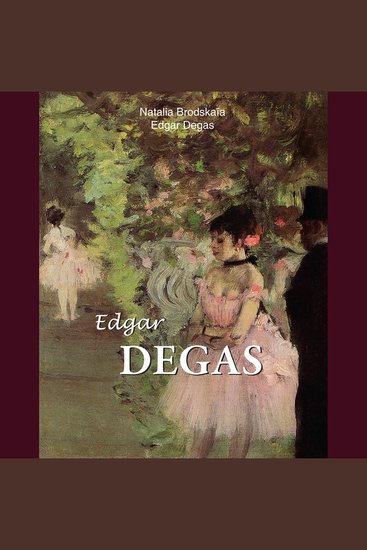
  • Edgar Degas - Ballet Movement and Introspection - cover

    Edgar Degas - Ballet Movement...

    Nathalia Brodskaya, Edgar Degas

    • 0
    • 0
    • 0
    Degas was closest to Renoir in the impressionist's circle, for both favoured the animated Parisian life of their day as a motif in their paintings. Degas did not attend Gleyre's studio; most likely he first met the future impressionists at the Café Guerbois. He started his apprenticeship in 1853 at the studio of Louis-Ernest Barrias and, beginning in 1854, studied under Louis Lamothe, who revered Ingres above all others, and transmitted his adoration for this master to Edgar Degas. Starting in 1854 Degas travelled frequently to Italy: first to Naples, where he made the acquaintance of his numerous cousins, and then to Rome and Florence, where he copied tirelessly from the Old Masters. His drawings and sketches already revealed very clear preferences: Raphael, Leonardo da Vinci, Michelangelo, and Mantegna, but also Benozzo Gozzoli, Ghirlandaio, Titian, Fra Angelico, Uccello, and Botticelli. During the 1860s and 1870s he became a painter of racecourses, horses and jockeys. His fabulous painter's memory retained the particularities of movement of horses wherever he saw them. After his first rather complex compositions depicting racecourses, Degas learned the art of translating the nobility and elegance of horses, their nervous movements, and the formal beauty of their musculature. Around the middle of the 1860s Degas made yet another discovery. In 1866 he painted his first composition with ballet as a subject, Mademoiselle Fiocre dans le ballet de la Source (Mademoiselle Fiocre in the Ballet 'The Spring') (New York, Brooklyn Museum). Degas had always been a devotee of the theatre, but from now on it would become more and more the focus of his art. Degas' first painting devoted solely to the ballet was Le Foyer de la danse à l'Opéra de la rue Le Peletier (The Dancing Anteroom at the Opera on Rue Le Peletier) (Paris, Musée d'Orsay). In a carefully constructed composition, with groups of figures balancing one another to the left and the right, each ballet dancer is involved in her own activity, each one is moving in a separate manner from the others. Extended observation and an immense number of sketches were essential to executing such a task. This is why Degas moved from the theatre on to the rehearsal halls, where the dancers practised and took their lessons. This was how Degas arrived at the second sphere of that immediate, everyday life that was to interest him. The ballet would remain his passion until the end of his days.
    Voir livre
  • Audio Nuggets: How To Develop A Deeper Voice - cover

    Audio Nuggets: How To Develop A...

    Rick Sheridan, Alfred C. Martino

    • 0
    • 0
    • 0
    Whether trying to become voiceover artist, train a puppy, address a crowd, or become a more successful business leader, having a deeper voice can offer a number of advantages. Studies have found that men with deeper voices are more confident and authoritative, and what they say is more easily remembered. But a deeper voice can also be beneficial for women, particularly in business and politics – as people prefer voting for politicians of both genders with deep voices. This audio program will offer 12 tips for developing a voice filled with warmth and expression, that has an even resonance and is easy on the ears, one that carries well so that people can understand and remember exactly what you’re saying, one that is flexible and natural, and has a wide-ranging deep pitch.
    Voir livre