Begleiten Sie uns auf eine literarische Weltreise!
Buch zum Bücherregal hinzufügen
Grey
Einen neuen Kommentar schreiben Default profile 50px
Grey
Jetzt das ganze Buch im Abo oder die ersten Seiten gratis lesen!
All characters reduced
Bunker Design Basics - cover

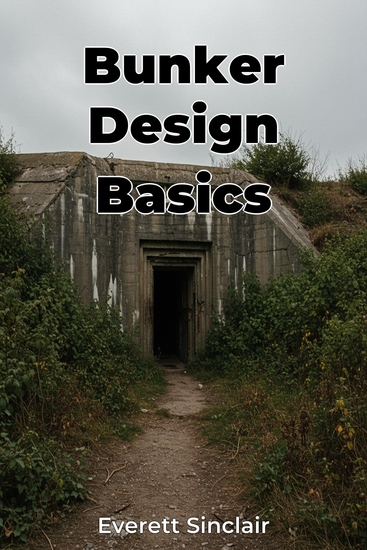
Bunker Design Basics

Everett Sinclair

Übersetzer A AI

Verlag: Publifye

  • 0
  • 0
  • 0

Beschreibung

Bunker Design Basics explores the history and engineering behind Cold War underground shelters as a response to nuclear anxieties. It examines how these structures were built for potential protection against nuclear blasts, focusing on the balance between safety, practicality, and affordability. The book argues that Cold War bunker designs offer important lessons for today's resilient infrastructure, applicable to challenges like disaster readiness and sustainable design, highlighting how understanding past solutions can inform future innovations.

 
The book details essential architectural elements like structural integrity, ventilation, and sanitation, crucial for habitable underground environments. It also investigates the use of materials like reinforced concrete and steel for blast and radiation resistance. Bunker Design Basics progresses through historical context, engineering principles, and case studies of Cold War bunkers, offering a comprehensive view of their design and construction.

 
The book's unique value lies in its integration of historical context with engineering principles, revealing the scientific reasoning and human considerations behind bunker creation. By presenting declassified documents, architectural plans, and scientific data, it provides a broad overview of bunker design, useful for understanding challenges in civil engineering, environmental science, and military history.
Verfügbar seit: 26.02.2025.
Drucklänge: 78 Seiten.

Weitere Bücher, die Sie mögen werden

  • Treating Adult Children of Emotionally Immature Parents - A Clinician's Guide - cover

    Treating Adult Children of...

    PsyD Lindsay C. Gibson

    • 0
    • 0
    • 0
    If you treat clients who grew up with an emotionally immature, unavailable, or self-involved parent, you know the lingering feelings of anger, loneliness, betrayal, or abandonment these clients experience. This comprehensive guide goes beyond mechanistic prescriptions to show you how to help clients not only recover but to also restart their own personal growth and self-actualization process. 


    In Treating Adult Children of Emotionally Immature Parents, psychologist and New York Times bestselling author Lindsay C. Gibson draws on more than thirty years of clinical experience as a psychotherapist and outlines a unique approach to treating a common syndrome that shapes the lives of so many people seeking therapy. Gibson shares her perspectives on the goals of therapy, and what therapists need to know in order to provide the most effective interventions. Using these insights, you can help your clients heal from feelings of loneliness and abandonment, improve confidence, decrease reactivity to emotionally immature behavior, find healthy ways to stop self-sacrificing and meet their own emotional needs, and rediscover their true selves. 


    By helping clients free themselves from the effects of emotionally immature people, you'll help them to create healthy, positive relationships that uplift them and improve their quality of life.
    Zum Buch
  • Circus Maximus and the Colosseum The: The History of Ancient Rome’s Most Famous Sports Venues - cover

    Circus Maximus and the Colosseum...

    Editors Charles River

    • 0
    • 0
    • 0
    The ambitious and fearless emperors that built the legendary Roman Empire from scratch, the broad-shouldered and bronzed gladiators with their iconic plume helmets and glinting swords, and elaborate parties attended by toga-wearing Romans fueled by alcohol, violence, orgies, and other godless acts all paint a picture of Roman life. 
    At the Circus Maximus, the guttural cheers of the spectators reverberated across the enormous open space, but their cries could hardly be heard over the rumble of the ground. On the ellipse-shaped track, 5 charioteers would skew their bodies and steer their magnificent vehicles around the curves. Gusts of sand and dirt flew up from the whizzing wheels and encircled the pounding hooves of the stunning stallions. Distracted personnel and guards dragging their feet were considered fair game. As one chariot careened to the side, preparing to collide with another chariot, a row of guards might have to try to duck out of the way in the nick of time. Some would be trampled by hooves. Chariot races were dangerous for participants too. A charioteer could become disoriented and fail to position himself as his horses moved instinctively, sending his body catapulting forward out of the chariot. Needless to say, chariot racing in Rome was a nail-biting spectacle. 
    When the Colosseum was built in the late 1st century A.D., the Romans, a people known for their architectural acumen, managed to amaze themselves. Martial believed the Colosseum was so grand a monument that it was even greater than the other Wonders of the Ancient World, which had been written about and visited endlessly by the Romans and Greeks in antiquity. The Colosseum was a spectacular achievement in architecture, something new and innovative, and therefore an amazing “Wonder” in its own way. The Colosseum is a large stadium even by today’s standards, and its great size conveys the power of the empire as it dominates the landscape and towers over nearby buildings.
    Zum Buch
  • I'm Not Okay and That's Okay - Mental Health Microskills to Deal with Life's Inevitable Struggles - cover

    I'm Not Okay and That's Okay -...

    PhD Steff Du Bois

    • 0
    • 0
    • 0
    Everybody struggles. Whether you're breaking down in tears at the grocery store, on the verge of cussing out your toxic family member or coworker, screaming at cars in traffic, or feeling completely alone and friendless on a Saturday night—we've ALL been there. Fortunately, there are simple ways to help you identify and improve your negative thoughts, calm the chaos of emotional overwhelm, and feel better quickly. 


    I'm Not Okay and That's Okay offers in-the-moment microskills—little strategies for big change—based in proven-effective cognitive behavioral therapy (CBT), acceptance and commitment therapy (ACT), and real-life experience. You'll learn to recognize unhelpful thinking patterns; cope with feelings of sadness, anger, worry, fear, and frustration; and improve your relationships. Most importantly, you'll uncover the root cause of why you feel the way you do, what's making you feel worse, and how you can deal with these intense feelings in healthier ways. 


    The world is rapidly changing and becoming more and more uncertain. But you can stay grounded—even when everything around you is spiraling out of control. 


    You've got this. And this fun, heartfelt guide has your back.
    Zum Buch
  • Living into Death Dying into Life: A Christian Theology of Life Eternal - cover

    Living into Death Dying into...

    Peter C. Phan

    • 0
    • 0
    • 0
    At the end our lives, we look forward to eternal life. Now you can take a fascinating journey through eschatology, the theology of the Last Things.  In these twelve lectures, you will join renowned theologian Dr. Peter Phan in encountering De Novissimis—the “Last Things.” You will explore the realities that occur at the end of life (i.e., death and dying) as well as those that occur in the afterlife (i.e., judgment, purgatory, hell, heaven, the resurrection, and the consummation of the world).  You will address two basic questions: how do we know about these last realities, and how do we talk about them? Because of modern medicine, we can speak empirically about dying as a physical act. Death, however, extends beyond science—we do not have scientific information about what happens after death.  In this superb course, you will look first at the issues of our knowledge and language about death. You will examine the methods by which we can learn about the afterlife and the kind of language that must be used to speak about it. You will then the realities often discussed when dealing with the afterlife. Each lecture is framed as a question, inviting you to reflect upon and further explore the nature of the afterlife.  As you move through these lectures, you will tackle the most fundamental questions about life, death, and the world to come. Join Peter Phan on this insightful theological journey today. This course is part of the Learn25 collection and includes a free PDF study guide. *Photo by John Spade.
    Zum Buch
  • Götz von Berlichingen: A short biography - 5 Minutes: Short on time – long on info! - cover

    Götz von Berlichingen: A short...

    5 Minutes, 5 Minute Biographies,...

    • 0
    • 0
    • 0
    Götz von Berlichingen, last of the German knights and famous Goethe protagonist: Life and work in a short biography! Everything you need to know, brief and concise. Infotainment, education and entertainment at its best!
    Zum Buch
  • The Absent Father Effect on Daughters - Father Desire Father Wounds - cover

    The Absent Father Effect on...

    Susan E. Schwartz

    • 0
    • 0
    • 0
    The Absent Father Effect on Daughters investigates the impact of absent—physically or emotionally—and inadequate fathers on the lives and psyches of their daughters through the perspective of Jungian analytical psychology. This book tells the stories of daughters who describe the insecurity of self, the splintering and disintegration of the personality, and the silencing of voice. 


    Issues of fathers and daughters reach to the intra-psychic depths and archetypal roots, to issues of self and culture, both personal and collective. Susan E. Schwartz illustrates the maladies and disappointments of daughters who lack a father figure and incorporates clinical examples describing how daughters can break out of idealizations, betrayals, abandonments, and losses to move towards repair and renewal. The book takes an interdisciplinary approach, expanding and elucidating Jungian concepts through dreams, personal stories, fairy tales, and the poetry of Sylvia Plath, along with psychoanalytic theory, including Andre Green's 'dead father effect' and Julia Kristeva's theories on women and the body as abject. 


    Examining daughters both personally and collectively affected by the lack of a father, this book is highly relevant for those wanting to understand the complex dynamics of daughters and fathers to become their authentic selves.
    Zum Buch