

Begleiten Sie uns auf eine literarische Weltreise!
Buch zum Bücherregal hinzufügen
Grey
Einen neuen Kommentar schreiben Default profile 50px
Grey
Jetzt das ganze Buch im Abo oder die ersten Seiten gratis lesen!
All characters reduced
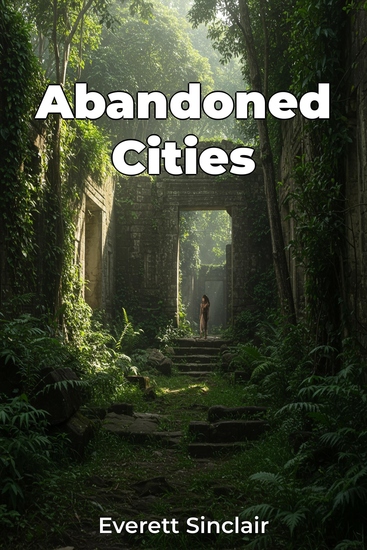
Abandoned Cities - cover

Abandoned Cities

Everett Sinclair

Übersetzer A AI

Verlag: Publifye

  • 0
  • 0
  • 0

Beschreibung

Abandoned Cities explores the compelling question of why thriving urban centers become deserted, offering valuable insights for contemporary urban planning. The book delves into the stories behind these silent ruins, examining environmental factors like climate change and resource depletion, alongside socio-political dynamics such as economic collapse or conflict. It highlights how architectural and planning missteps contribute to unsustainable urban environments, emphasizing the precarious balance between humanity and the built world.

 
The book uniquely integrates historical analysis with modern urban planning, moving beyond mere documentation to extract actionable lessons. Case studies from diverse continents and eras reveal the environmental, socio-political, and design-related causes of abandonment. For example, resource depletion can render a city uninhabitable, while political instability can trigger mass exodus. These case studies are thematically grouped to explore the range of factors involved.

 
The book progresses by first establishing a theoretical framework and then moving into specific examples. Ultimately, Abandoned Cities provides practical recommendations for creating more resilient and adaptable urban environments. By understanding past failures, we can avoid repeating those mistakes and build more sustainable urban centers for the future.
Verfügbar seit: 21.02.2025.
Drucklänge: 68 Seiten.

Weitere Bücher, die Sie mögen werden

  • Māori History: A Captivating Guide to the History of the Indigenous Polynesian People of New Zealand - cover

    Māori History: A Captivating...

    Captivating History

    • 0
    • 0
    • 0
    Have you ever asked yourself who exactly are the Māori, the indigenous people of New Zealand? Find your answer in this guide about Māori history! 
    Through this audiobook, you’ll follow the voyages of ancient Polynesians who arrived on the shores of New Zealand. These early Polynesian settlers eventually transformed into the unique Māori civilization. 
    After falling into prolonged isolation, the Māori people developed their own distinctive culture and lifestyle, feeling they were the only humans in the whole universe. Yet, the solitude was slowly breached by European explorers, who were seeking new lands to trade with and conquer. What followed was a period of peaceful cooperation in which the Western visitors showed respect to the Māori. 
    This guide will then lead you through the times of rising tensions, sparking conflicts between the European settlers and the Māori. However, their struggle wasn’t limited only to armed conflicts but also epidemics and cultural invasion, making their future ultimately uncertain. 
    Despite that, the Māori miraculously managed to persevere through their stubbornness and adaptivity, using politics to preserve their civilization and future. 
    Here are some of the captivating facts you’ll find in this audiobook:The origins of the Māori people.How the Māori civilization developed in seclusion from the rest of the world.What Māori life was like before European contact.How and when the Māori isolation period ended.How the European presence changed the Māori civilization.Why the Māori-European relations soured.The Māori heroes in the struggles against the colonial settlers.What happened during the New Zealand Wars.How the Māori survived the European challenges. 
    Scroll up and click the “add to cart” button to learn more about the Māori people and why it matters!
    Zum Buch
  • Trauma Stewardship - An Everyday Guide to Caring for Self While Caring for Others - cover

    Trauma Stewardship - An Everyday...

    Connie Burk, Laura van Dernoot...

    • 0
    • 0
    • 0
    This beloved bestseller-over 180,000 copies sold-has helped caregivers worldwide keep themselves emotionally, psychologically, spiritually, and physically healthy in the face of the sometimes overwhelming traumas they confront every day. 
     
    A longtime trauma worker, Laura van Dernoot Lipsky offers a deep and empathetic survey of the often-unrecognized toll taken on those working to make the world a better place. We may feel tired, cynical, or numb or like we can never do enough. These, and other symptoms, affect us individually and collectively, sapping the energy and effectiveness we so desperately need if we are to benefit humankind, other living things, and the planet itself. 
     
    In Trauma Stewardship, we are called to meet these challenges in an intentional way. Lipsky offers a variety of simple and profound practices, drawn from modern psychology and a range of spiritual traditions, that enable us to look carefully at our reactions and motivations and discover new sources of energy and renewal. She includes interviews with successful trauma stewards from different walks of life and even uses New Yorker cartoons to illustrate her points. 
     
    "We can do meaningful work in a way that works for us and for those we serve," Lipsky writes. "Taking care of ourselves while taking care of others allows us to contribute to our societies with such impact that we will leave a legacy informed by our deepest wisdom and greatest gifts instead of burdened by our struggles and despair."
    Zum Buch
  • Autumn Time Festivals in Finland Estonia Latvia and Lithuania - cover

    Autumn Time Festivals in Finland...

    Niina Niskanen

    • 0
    • 0
    • 0
    Autumn was a magical time in Finland, Latvia, Lithuania and Estonia. Estonia and Finland belong to the same language family (Finno-Ugric languages) but the similarities of these old autumn time festivals in these four countries are strikingly similar. 
    In this course, we will touch on some of the important Finnish and Baltic gods and deities that were connected to harvest and fertility. What happened during All Hallow´s Eve, and how in all these cultures, there was a special time period that was completely dedicated to honouring the ancestors and remember those who had passed away. 
    Several of these old festivals are no longer celebrated, but some of them like Finnish Kekri and Mardipäev in Estonia, still hold certain traditions that have lived on ´till today. 
    This course can help you to build a deeper understanding of the world view of ancient Baltic and Finno-Ugric tribes and the society that was based on agriculture. 
    - You will learn about the importance of family and honouring the ancestors. 
    -Names of these festivals, and when they were celebrated. 
    -Different magical rituals and spells were performed during these holidays. 
    - You will learn why the forest was such an important place in the past and home to many myths 
    -How the spirits were invited to be part of these festivities. 
    By the end of this course, you have a better understanding of folklore and the connections that these cultures had with one another. 
    Zum Buch
  • The Secret of Death and Way to Immortality - cover

    The Secret of Death and Way to...

    Swami Nikhilananda, Swami...

    • 0
    • 0
    • 0
    What happens after death? Some say that we continue to live in a different form; while others say that death is the complete extinction of our existence. Since the beginning of human thought, we have asked ourselves three simple questions: Who am I? Where have I come from? Where am I going? 
    This book, based on the teachings of Yoga and Vedanta, seeks to answer these questions about death and life after death. The answer to death is Knowledge of the Self--realization of our true identity, our divine existence, our spiritual nature--and to not be afraid of the unknown. 
    Chapter 1: Is Death the End? by Swami Nikhilananda 
    Chapter 2: Fear of Death by Swami Adiswarananda 
    Chapter 3: Sufferings of Life by Swami Adiswarananda 
    "Life on earth is meant for our soul to journey on towards its freedom. The soul’s three basic desires are immortality, unrestricted awareness, and unbounded joy. These are attained only when the soul discovers its true identity, the all-embracing Self. In search of its identity, the soul changes bodies and places, and finally, knowing the limitations of all pleasures and realizing that everything finite is shadowed by death, it practices detachment and desirelessness and realizes its immortal Self. Immortality is the return of the prodigal son to his all-loving father. It is the return of the reflection of the sun to the sun. It is the river of individual consciousness meeting the infinite ocean of Pure Consciousness. It is the realization that we are like leaves of a tree and that our true identity is the tree. Immortality is our separative existence joining the infinite existence of absolute freedom... The journey to this final freedom is a solitary one; alone a person is born, alone he suffers, and alone he dies. By realizing his true Self, he becomes united with all beings and things and attains to final freedom. Only then comes the end of all sorrow, all fear, all anxiety."
    Zum Buch
  • Byzantines and Ottomans The: The History of the Medieval Middle East’s Most Influential Empires - cover

    Byzantines and Ottomans The: The...

    Editors Charles River

    • 0
    • 0
    • 0
    In terms of geopolitics, perhaps the most seminal event of the Middle Ages was the successful Ottoman siege of Constantinople in 1453. The city had been an imperial capital as far back as the 4th century, when Constantine the Great shifted the power center of the Roman Empire there, effectively establishing two almost equally powerful halves of antiquity’s greatest empire. Constantinople would continue to serve as the capital of the Byzantine Empire even after the Western half of the Roman Empire collapsed in the late 5th century. Naturally, the Ottoman Empire would also use Constantinople as the capital of its empire after their conquest effectively ended the Byzantine Empire, and thanks to its strategic location, it has been a trading center for years and remains one today under the Turkish name of Istanbul. 
    The end of the Byzantine Empire had a profound effect not only on the Middle East but Europe as well. Constantinople had played a crucial part in the Crusades, and the fall of the Byzantines meant that the Ottomans now shared a border with Europe. The Islamic empire was viewed as a threat by the predominantly Christian continent to their west, and it took little time for different European nations to start clashing with the powerful Turks. In fact, the Ottomans would clash with Russians, Austrians, Venetians, Polish, and more before collapsing as a result of World War I, when they were part of the Central Powers. 
    The Ottoman conquest of Constantinople also played a decisive role in fostering the Renaissance in Western Europe. The Byzantine Empire’s influence had helped ensure that it was the custodian of various ancient texts, most notably from the ancient Greeks, and when Constantinople fell, Byzantine refugees flocked west to seek refuge in Europe. Those refugees brought books that helped spark an interest in antiquity that fueled the Italian Renaissance and essentially put an end to the Middle Ages altogether.
    Zum Buch
  • Greatest Capitals of the Maya The: The History of the Most Influential Mayan Cities in the Classic and Postclassic Periods - cover

    Greatest Capitals of the Maya...

    Charles River Editors

    • 0
    • 0
    • 0
    Many ancient civilizations have influenced and inspired people in the 21st century. The Greeks and Romans continue to fascinate the West today. But of all the world’s civilizations, none have intrigued people more than the Mayans, whose culture, astronomy, language, and mysterious disappearance all continue to captivate people. In 2012 especially, there was a renewed focus on the Mayans, whose advanced calendar has led many to speculate the world would end on the same date the Mayan calendar ends, but if anything, the focus on the “doomsday” scenario overshadowed the Mayans’ true contribution to astronomy, language, sports, and art.  
    The Maya maintained power in the Yucatan for over a thousand years, and at the height of its “Classical era” (3rd-9th centuries A.D.), the city of Tikal was one of the power centers of the empire. Archaeologists believe Tikal had been built as early as the 5th or 4th century BC, and eventually it became a political, economic and military capital that was an important part of a far-flung network across Mesoamerica, despite the fact it was seemingly conquered by Teotihuacan in the 4th century AD. It seems the foreign rulers came to assimilate Mayan culture, thus ensuring Tikal would continue to be a power base, and as a result, the city would not be abandoned until about the 10th century AD. 
    Chichén Itzá was inhabited for hundreds of years and was a very influential center in the later years of Maya civilization. At its height, Chichén Itzá may have had over 30,000 inhabitants, and with a spectacular pyramid, enormous ball court, observatory and several temples, the builders of this city exceeded even those at Uxmal in developing the use of columns and exterior relief decoration. Likewise, early Mayapán was closely connected to the overshadowing power of the region at the time: the mighty trading city of Chichén Itzá.  
    Zum Buch
