Begleiten Sie uns auf eine literarische Weltreise!
Buch zum Bücherregal hinzufügen
Grey
Einen neuen Kommentar schreiben Default profile 50px
Grey
Jetzt das ganze Buch im Abo oder die ersten Seiten gratis lesen!
All characters reduced
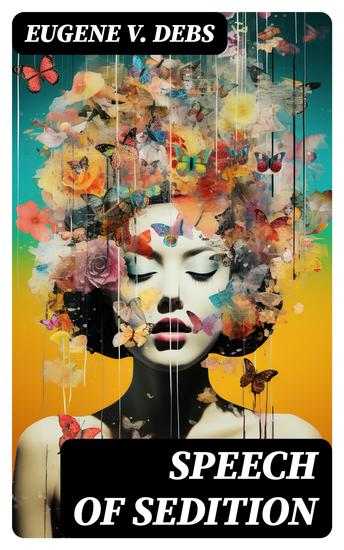
Speech of Sedition - Enriched edition - cover

Speech of Sedition - Enriched edition

Eugene V. Debs

Verlag: DigiCat

  • 0
  • 0
  • 0

Beschreibung

In "Speech of Sedition," Eugene V. Debs articulates his passionate stance against the injustices of capitalism and the erosion of civil liberties during a time of national turmoil. Delivered during World War I, this profound address captures Debs's distinct literary style, marked by rousing rhetoric and an unwavering commitment to social justice. The speech serves as a compelling critique of American imperialism and the suppression of dissent, reflecting the social and political climate that silenced many voices in the early 20th century. Debs's eloquent language and persuasive arguments elevate the discourse around socialism and workers' rights, placing him firmly in the context of labor movement literature and political activism of his era. Eugene V. Debs was a prominent labor leader and one of the founding figures of the American socialist movement. His experiences in the railway strikes and his relentless advocacy for the working class profoundly influenced his political beliefs and activism. Debs's own encounters with the legal repercussions of his anti-war rhetoric underscore the significance of this speech, as he faced imprisonment for exercising his right to free expression, thus becoming a symbol of resistance against state repression. "Speech of Sedition" is essential reading for anyone interested in the intersections of labor rights, civil liberties, and political dissent. Debs's powerful oratory not only resonates with contemporary struggles for social justice but also invites readers to reflect on the importance of safeguarding freedom of speech amid oppression. This text is a call to action for those seeking to understand the socio-political history of America and the enduring relevance of Debs's message.

In this enriched edition, we have carefully created added value for your reading experience:
- A succinct Introduction situates the work's timeless appeal and themes.
- The Synopsis outlines the central plot, highlighting key developments without spoiling critical twists.
- A detailed Historical Context immerses you in the era's events and influences that shaped the writing.
- A thorough Analysis dissects symbols, motifs, and character arcs to unearth underlying meanings.
- Reflection questions prompt you to engage personally with the work's messages, connecting them to modern life.
- Hand‐picked Memorable Quotes shine a spotlight on moments of literary brilliance.
- Interactive footnotes clarify unusual references, historical allusions, and archaic phrases for an effortless, more informed read.
Verfügbar seit: 17.11.2023.
Drucklänge: 31 Seiten.

Weitere Bücher, die Sie mögen werden

  • Observing Conflict Escalation in World Society - Ukraine's Maidan and Mali's Breakup - cover

    Observing Conflict Escalation in...

    Richard Bösch

    • 0
    • 0
    • 0
    How do conflicts escalate? This is one of the major questions in conflict research. To offer further answers, Richard Bösch follows a tripartite agenda: First, he develops a constructivist methodology for the study of conflict escalation embedded in a Luhmannian systems theoretical world society perspective. Bösch argues that conflicts can be observed as social systems and he looks at the process of conflict escalation by analysing communication. Second, this analysis offers two case studies: the Maidan protests in Ukraine 2013-2014 and Mali's crisis 2010-2012. Third, it gives insights on how systems theoretical research can be beneficial for Peace and Conflict Studies.
    Zum Buch
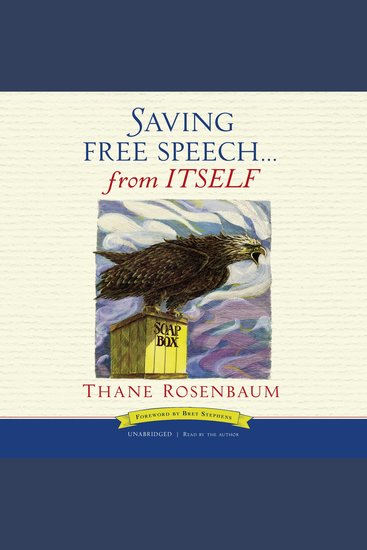
  • Saving Free Speech … from Itself - cover

    Saving Free Speech … from Itself

    Thane Rosenbaum

    • 0
    • 0
    • 0
    Saving Free Speech … from Itself sets the tone for the fractious discussion of how the First Amendment should be interpreted in today’s society and how the free speech aspect of it should not be weaponized by individuals and groups whose agenda includes causing harm to innocent people 
    It comes with a Foreword by Bret Stephens, the well-known columnist of The New York Times. 
    In an era of political correctness, race-baiting, terrorist incitement, the ‘Danish’ cartoons, the shouting down of speakers, and, of course, ‘fake news,’ liberals and conservatives are up in arms both about speech and its excesses, and what the First Amendment means. Speech has been weaponized. Everyone knows it, but no one seems to know how to make sense of the current confusion, and what to do about it. Thane Rosenbaum’s provocative and compelling book is what is needed to understand this important issue at the heart of our society and politics. 
    Our nation’s founders did not envision speech as a license to trample on the rights of others. And the Supreme Court has decided cases where certain categories of speech are already prohibited without violating the Constitution. Laws banning hate speech are prevalent in other democratic, liberal societies, where speech is not valued above human dignity, and yet in Germany, France, the UK and elsewhere, life continues, freedoms have not rolled to the bottom of the bogeyman of a ‘slippery slope,’ and democracies remain vibrant. There is already a great deal of second guessing about the limits of free speech. In 1977, courts permitted neo-Nazis to march in a Chicago suburb populated by Holocaust survivors. Today, many wonder whether the alt-right should have been prevented from marching in Charlottesville in 2017. Even the ACLU, which represented both groups, is having doubts as to whether the First Amendment should override basic notions of equality and citizenship.
    Zum Buch
  • The American Imperative - Reclaiming Global Leadership through Soft Power - cover

    The American Imperative -...

    Daniel F. Runde

    • 0
    • 0
    • 0
    It's time for America to get back in the international leadership game. 


    What should our global strategy look like in an age of renewed great power competition? And what must America offer to a newly empowered developing world when we're no longer the only major player? 


    In The American Imperative, international development expert Daniel Runde makes the case for building a new global consensus through vigorous internationalism and the judicious use of soft power. Runde maps out many of the steps that we need to take—primarily in the non-military sphere—to ensure an alliance of stable and secure, like-minded, self-reliant partner nations in order to prevent rising authoritarian powers such as China from running the world.
    Zum Buch
  • Psychology of Peoples - Its influence on their evolution - cover

    Psychology of Peoples - Its...

    Gustave Le Bon

    • 0
    • 0
    • 0
    After receiving a doctorate in medicine, Le Bon travelled in Europe, North Africa, and Asia and wrote several books on anthropology and archaeology. His interests later shifted to natural science and social psychology. Gustave Le Bon is best known for his seminal work „Crowd Psychology“ where he describes the psychological effects in various group settings. In „Psychology of Peoples“ written in 1894 he utilizes his anthropological knowledge and cross-references it with social psychology. He developed a view that history is the product of racial or national character, with emotion, not intelligence, being the dominant force in social evolution. He attributed true progress to the work of an intellectual elite. As a product of its time and conditions, the content of this book is partly highly controversial and should be seen as an intellectual challenge. Some arguments should be outright rejected, cause they haven’t stood the test of time. To his credit, already back in 1894 Le Bon foresaw the dangers of the application of socialism, well before the Russian Revolution and Mao’s takeover of China. 
    Zum Buch
  • Black Lives Native Lands White Worlds - A History of Slavery in New England - cover

    Black Lives Native Lands White...

    Jared Ross Hardesty

    • 0
    • 0
    • 0
    Shortly after the first Europeans arrived in seventeenth-century New England, they began to import Africans and capture the area's indigenous peoples as slaves. By the eve of the American Revolution, enslaved people comprised only about 4 percent of the population, but slavery had become instrumental to the region's economy and had shaped its cultural traditions. This story of slavery in New England has been little told. 


    In this concise yet comprehensive history, Jared Ross Hardesty focuses on the individual stories of enslaved people, bringing their experiences to life. He also explores larger issues such as the importance of slavery to the colonization of the region and to agriculture and industry, New England's deep connections to Caribbean plantation societies, and the significance of emancipation movements in the era of the American Revolution. Thoroughly researched and engagingly written, Black Lives, Native Lands, White Worlds is a must-listen for anyone interested in the history of New England.
    Zum Buch
  • University - A Reckoning - cover

    University - A Reckoning

    Lee C. Bollinger

    • 0
    • 0
    • 0
    The American university―one of the most successful institutions in human history―is facing an unprecedented assault from the president of the US. Experts on authoritarianism have drawn comparisons to other countries where strongmen subdued universities as part of their power grabs. Yet as former Columbia president Lee C. Bollinger points out in his account of the university's significance, in such dire times one has no choice but to state clearly and forcefully what one stands for. 
     
    Bollinger reveals how the structure of the university contributes to the success of the American system―because it provides those who study and work within it a degree of creative freedom hard to find elsewhere―and why that structure is both impossible to recreate and vulnerable to outside attack. The fundamental mission of the university is to enhance knowledge, but this is not merely a high-minded idea. It is, as Bollinger demonstrates, a notion rooted deeply in the Constitution, specifically the First Amendment, the basis of our political and social life. The university helps realize the First Amendment; the First Amendment helps make the university. Bollinger argues that, with the press diminished, the university remains the only source of truth-seeking for those who still believe in democracy. The university must be defended if the American experiment is to continue.
    Zum Buch