

Rejoignez-nous pour un voyage dans le monde des livres!
Ajouter ce livre à l'électronique
Grey
Ecrivez un nouveau commentaire Default profile 50px
Grey
Abonnez-vous pour lire le livre complet ou lisez les premières pages gratuitement!
All characters reduced
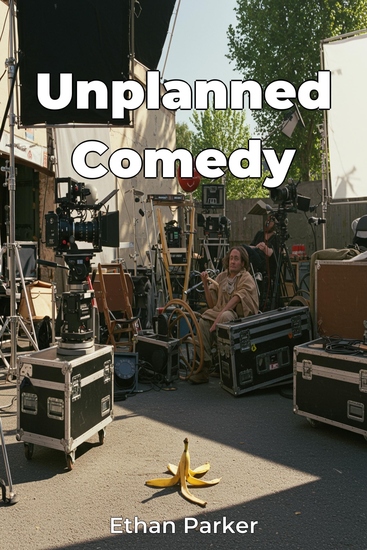
Unplanned Comedy - cover

Unplanned Comedy

Ethan Parker

Traducteur A Ai

Maison d'édition: Publifye

  • 0
  • 0
  • 0

Synopsis

"Unplanned Comedy" explores the fascinating world of unintentional humor found in history, film, and television. It delves into moments where serious events unexpectedly become comedic, offering a unique perspective on political gaffes, media blunders, and on-set accidents. This book examines why we laugh at the unexpected, revealing insights into societal norms and human fallibility.

 
One intriguing aspect is how historical events, initially perceived seriously, gain comedic value over time. Another is the way live broadcast errors or unscripted moments can become legendary, blurring the lines between reality and performance.

 
The book approaches the topic by defining "unplanned comedy" and distinguishing it from intentional forms of humor like satire. It then investigates the psychological and sociological reasons behind our amusement. Progressing from historical and political contexts to the film and television industry, the book analyzes examples ranging from diplomatic incidents turned comedic fodder to on-set accidents in movies. It supports its analysis with archival footage, transcripts, and interviews, offering a comprehensive overview of how unintentional comedy shapes our perception of the world.
Disponible depuis: 29/03/2025.
Longueur d'impression: 59 pages.

D'autres livres qui pourraient vous intéresser

  • RAISING QUAMINA - The True Story of a Name the System Couldn't Erase - cover

    RAISING QUAMINA - The True Story...

    Duane Alfred Quamina

    • 0
    • 0
    • 0
    A True-Life Odyssey of Survival, Legacy, and Redemption. The name Quamina carries centuries of resistance, dignity, and power. This is the story of one man who refused to let that name die. 
    From the 1823 Demerara slave revolt led by Quamina Gladstone to the streets of 1980s America, Raising Quamina traces the unbreakable thread of Black defiance and resistance across time and continents. Rev. Duane A. Quamina steps into the legacy of his ancestors—not to romanticize rebellion, but to expose the brutal systems built to erase men like him. 
    Born into a world of quiet wars and loud betrayals, Quamina endured childhood trauma, military sabotage, encounters with the Turkish and Medellin cartels, and two wrongful imprisonments—in Germany and the United States. His legal battle in the infamous Wells Fargo prosecution—centered around the largest attempted heist in American history—ultimately led him to serve time in the historic Atlanta Penitentiary, a fortress of American punishment once home to some of the nation’s most notorious inmates, including Al Capone, Vincent “The Chin” Gigante, Carlos Lehder, Michael Milken, G. Gordon Liddy, and Frank Abagnale. 
    But this is not a story of defeat. It is a resurrection. 
    Guided by ancestral memory, spiritual awakening, and nonviolent leadership, Quamina rises from systemic injustice to reclaim his identity—and his voice. Raising Quamina is both personal and political, spiritual and historical. It is a testimony. 
    Raising Quamina is more than a memoir—it’s a call to conscience and a mirror held up to history. 
    With cinematic clarity and poetic truth, Rev. Duane A. Quamina lays bare the realities that others tried to bury. This is a story reclaimed, a legacy reborn, and a truth that refused to be erased. Once you start reading, you won’t walk away the same.
    Voir livre
  • Dust and Light - On the Art of Fact in Fiction - cover

    Dust and Light - On the Art of...

    Andrea Barrett

    • 0
    • 0
    • 0
    The celebrated National Book Award–winning writer's intimate exploration of how fact is transformed into fiction. 


    In this thoughtful collection of essays, Andrea Barrett draws from her experiences writing some of the most acclaimed historical fiction of our time to explore the mysteries and delights of the genre. Inspiration found in the past, she argues, can illuminate fiction, just as dust scatters light and makes the unseen visible. Delving into some of the largest questions in the genre—How does a writer find meaningful subject matter beyond the confines of their life? How are scraps of history transformed into a fully formed narrative?—Barrett explores how she came to create some of her beloved works and explores lessons gleaned from the work of such masters of historical fiction as Toni Morrison, Leo Tolstoy, Hilary Mantel, and Colm Tóibín. Candid and elegant, Dust and Light is the perfect book for anyone who loves reading fiction set in the past, as well as for anyone aspiring to write it.
    Voir livre
  • The New Science of Politics - An Introduction - cover

    The New Science of Politics - An...

    Eric Voegelin

    • 0
    • 0
    • 0
    “Thirty-five years ago few could have predicted that The New Science of Politics would be a best-seller by political theory standards. Compressed within the Draconian economy of the six Walgreen lectures is a complete theory of man, society, and history, presented at the most profound and intellectual level. . . . Voegelin’s [work] stands out in bold relief from much of what has passed under the name of political science in recent decades. . . . The New Science is aptly titled, for Voegelin makes clear at the outset that a ’return to the specific content’ of premodern political theory is out of the question. . . . The subtitle of the book, An Introduction, clearly indicates that The New Science of Politics is an invitation to join the search for the recovery of our full humanity.”—From the new Foreword by Dante Germino“This book must be considered one of the most enlightening essays on the character of European politics that has appeared in half a century. . . . This is a book powerful and vivid enough to make agreement or disagreement with even its main thesis relatively unimportant.”—Times Literary Supplement“Voegelin . . . is one of the most distinguished interpreters to Americans of the non-liberal streams of European thought. . . . He brings a remarkable breadth of knowledge, and a historical imagination that ranges frequently into brilliant insights and generalizations.”—Francis G. Wilson, American Political Science Review“This book is beautifully constructed . . . his erudition constantly brings a startling illumination.”—Martin Wright, International Affairs
    Voir livre
  • Saratoga and Yorktown: The History of the American Revolution’s Most Important Campaigns - cover

    Saratoga and Yorktown: The...

    Editors Charles River

    • 0
    • 0
    • 0
    At the end of 1776, the American war effort was on the verge of collapse, and despite Washington’s success at Trenton, the British were confident that they could quell the rebellion in 1777. That winter, the British planned a complicated campaign in which British armies from Canada and New York would strike out across New England and link up, with the goal of cutting off the Northern colonies. Indeed, 1777 did prove to be the pivotal year of the war, but not in the way the British intended. 
    In December 1776, Benjamin Franklin was sent by Congress to France to attempt to secure a critically needed alliance. Franklin was an ideal choice for Enlightened France, which revered Franklin for his scientific accomplishments and his known reputation as a brilliant man. Franklin had also been a diplomat before the Revolution, spending several years in London on behalf of the colonies. However, the French refused to provide more than arms and money throughout 1777, until they learned in December 1777 about Saratoga and Burgoyne’s surrender. With that news, French King Louis XVI entered into a formal military alliance with the United States, and in February 1778, France joined the war. 
    Yorktown was a former tobacco trading post now in decline, not much bigger than a large village. But Yorktown was tucked away on the northern edge of the York peninsula in rural Virginia, and in 1781 it became the site of a brief siege between two small armies, fought with all the decorum and formality of 18th century European warfare. As he made his dispositions at Yorktown in September 1781, he had every reason to expect another British success. The ensuing siege panned out rather differently. On October 19, 1781, for just the second time during the war (the other at Saratoga), an entire British field army surrendered to the rebel patriots.
    Voir livre
  • The Study of Sociology - cover

    The Study of Sociology

    Herbert Spencer

    • 0
    • 0
    • 0
    Hebert Spencer coined the famous expression “survival of the fittest”. "The Study of Sociology, written in 1873," was the first major work in the English language on the subject of Sociology. This is a must-have book for listeners who are interested in studying a seminal work in Sociology and discovering Spencer’s groundbreaking work in the field.
    Voir livre
  • Puerto Rico - A History of Economic Shifts - cover

    Puerto Rico - A History of...

    Anya Solace

    • 0
    • 0
    • 0
    Puerto Rico’s economic history is a complex narrative shaped by its geography, colonial past, and evolving relationship with the United States. As an island strategically positioned in the Caribbean, Puerto Rico has long been a crossroads of trade and cultural exchange. Its economic transformations have been influenced by global markets, shifting policies, and the resilience of its people. From the early days of indigenous trade and Spanish colonial rule to its modern struggles with debt and recovery, the island’s economy has undergone dramatic shifts that reflect broader historical forces.  
    Before European contact, Puerto Rico’s indigenous Taíno population lived in a society largely based on subsistence farming, fishing, and trade with neighboring islands. The arrival of Spanish colonizers in 1493 fundamentally altered the island’s economic structure, introducing mercantilist policies that prioritized resource extraction for the benefit of Spain. The encomienda system, which forced indigenous labor into agricultural production and mining, marked the beginning of Puerto Rico’s long history of external economic control. As sugarcane, coffee, and tobacco plantations expanded, the island became increasingly dependent on these cash crops, with African slaves and, later, poor laborers fueling the agricultural economy.  
    In 1898, Puerto Rico’s economic trajectory changed abruptly when the United States took control following the Spanish-American War. The transition from Spanish to American rule reshaped trade networks, introducing new economic policies that favored U.S. business interests. The Foraker Act of 1900 established a civilian government but left Puerto Rico politically and economically subordinate to the United States. The shift from a Spanish mercantile system to an American capitalist framework brought opportunities but also deep inequalities.
    Voir livre
