Begleiten Sie uns auf eine literarische Weltreise!
Buch zum Bücherregal hinzufügen
Grey
Einen neuen Kommentar schreiben Default profile 50px
Grey
Jetzt das ganze Buch im Abo oder die ersten Seiten gratis lesen!
All characters reduced
Unnecessary Film Sequels - cover

Unnecessary Film Sequels

Ethan Parker

Übersetzer A Ai

Verlag: Publifye

  • 0
  • 0
  • 0

Beschreibung

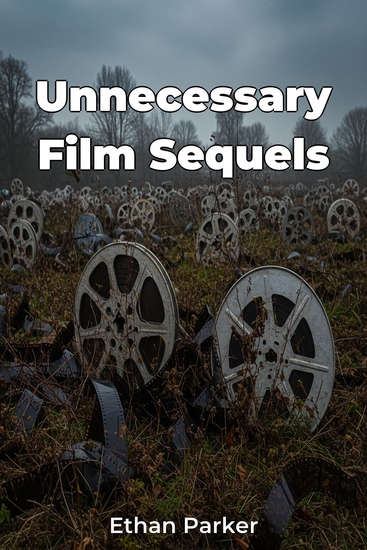
Unnecessary Film Sequels delves into the realm of film franchises, dissecting those sequels that tarnish the legacy of beloved originals. The book examines the driving forces behind these unwelcome additions, such as studio interference and financial incentives, and their impact on how we perceive the original films. For example, sometimes sequels dilute original themes, mischaracterize beloved characters, and introduce convoluted plotlines. The book argues that prioritizing franchise expansion without understanding what made the initial film resonate can lead to creative bankruptcy.

 
Beginning with a definition of what makes a sequel unnecessary, it progresses through case studies, analyzing both critical and commercial failures, as well as sequels that, despite box office success, lack artistic merit.

 
Ultimately, Unnecessary Film Sequels advocates for greater creative control for filmmakers and a more cautious approach to franchise development.
Verfügbar seit: 29.03.2025.
Drucklänge: 53 Seiten.
Weitere Bücher, die Sie mögen werden

  • The Legendary Toad's Place - Stories from New Haven's Famed Music Venue - cover

    The Legendary Toad's Place -...

    Randall Beach, Brian Phelps

    • 0
    • 0
    • 0
    Anyone who has lived near New Haven, Connecticut, in the past forty-plus years has surely heard of Toad's Place. With a capacity of 750, Toad's has served as the perfect spot for musicians who prefer smaller venues. U2 played one of their first US concerts there, on their Boy tour. In 1978, Bruce Springsteen was in New Haven and arrived at Toad's unannounced, and got up and played. The surprises kept coming and the club was attracting big names, as well as up-and-comers. In 1989, the Rolling Stones played a surprise show on a Saturday night, giving 700 fans the night of their dreams. Nothing could have been better—the Rolling Stones in downtown New Haven was unimaginable! That is only a taste of the stories that are uncovered in this book. Randall Beach and Toad's owner Brian Phelps recall the legendary shows and behind-the-scenes stories.
    Zum Buch
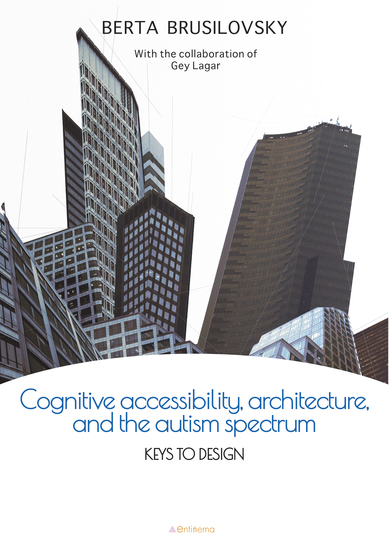
  • Cognitive accesibility architecture and the autism spectrum - Keys to design - cover

    Cognitive accesibility...

    Berta Brusilovsky

    • 0
    • 1
    • 0
    This text deals fundamentally with design and architecture: the route of spatial recognition, which is the least known —or worked on— within the approaches of the autism spectrum given its difficulty in being synthesized in a paradigm or normative set. The objective is to create a framework to approach the design of environments and buildings, in order to facilitate spatial development in everyday life and, especially, in learning situations.
    The spatial route, which is the project, creates:
    - A set of spatial coordinates that liberates the user from the anguish of not recognizing, of not understanding the space in which he is developing. And that offer him the possibility of finding the way, directing him to where he needs or wants to go.
    - Structure of the exterior and interior, with their corresponding activities placed in a comprenssible way through concepts of organization: functional and sensorial sequence of events. And creation of spaces for group and individual tasks, paying special attention to places of transition and recovery between opposite or different activities, both physical and emotional.
    - The aspects that are developed in terms of recommendations are synthesized in a construct that brings together the aspects of general, functional, formal and sensory organization of plans, elevations and details. Achieving with these “person-space” adjustments a  higher quality of personal life and of its affective and learning  environment.
    - Design components that in the case of autism should be considered in order to seek with the project greater facility of understanding, use and space-emotional development of people from childhood to adult life.
    Zum Buch
  • The Fever Syndrome - cover

    The Fever Syndrome

    Alexis Zegerman

    • 0
    • 0
    • 0
    Professor Richard Myers, now in his 70s and suffering from advanced Parkinson’s disease, is about to receive a lifetime achievement award for his work in the development of in-vitro fertilization. That calls for a family reunion, and given this high-functioning, dysfunctional family, there’s bound to be trouble ahead. As they gather, old resentments erupt as they fight over Richard’s legacy while facing another family member’s serious illness. 
     
    Incudes a conversation with playwright Alexis Zegerman. 
     
    This play is part of L.A. Theatre Works’ Relativity Series of science-themed plays. Lead funding for the Relativity Series is provided by the Alfred P. Sloan Foundation, bridging science and the arts in the modern world. 
     
    Recorded at The Invisible Studios, West Hollywood in December 2023. 
     
    Directed by Sarah Drew 
    Producing Director: Susan Albert Loewenberg 
     
    An L.A. Theatre Works full cast recording, starring: 
     
    Hugo Armstrong as Professor Richard Myers 
    Seamus Dever as Thomas Myers 
    Sarah Drew as the voice of Karen 
    Patrick Heusinger as Anthony Myers 
    Kelly McCreary as Dot Myers-Cooper 
    Monica McSwain as Lily Cooper and Young Dot 
    Matthew Floyd Miller as Nate Cooper 
    Desean K. Terry as Phillip Tennyson 
    Joanne Whalley as Megan Myers. 
     
    Senior Producer: Anna Lyse Erikson 
    Prepared for audio by Mark Holden. 
    Recorded, designed, and mixed by Charles Carroll, and edited by Neil Wogensen for The Invisible Studios, West Hollywood. 
    Piano music and musical characters adapted and performed by Rusty Tinder, recorded by Charles Carroll, and Directed by Mark Holden. 
    Senior Radio Producer: Ronn Lipkin 
    Foley Artist: Stacey Martinez
    Zum Buch
  • The Redhead Gets The Gig - A Musical Memoir - cover

    The Redhead Gets The Gig - A...

    Linn Lorkin

    • 0
    • 0
    • 0
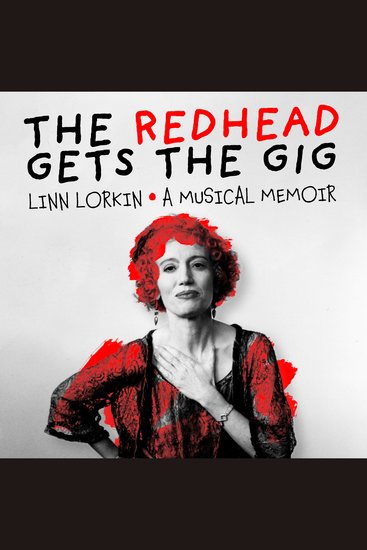
    The world's first auto-song-ography! Linn Lorkin sat at a piano so that she could read her memoir playing and singing as she went. The result is an audiobook that will make you laugh and cry ... and tap your feet. It’s the fabulously entertaining tale of a farm-girl from New Zealand, a country with no show-business culture whatsoever (at the time), who forges her own path and ends up playing and singing in some of the glittering capitals of the world. A colourful, funny, at times almost unbelievable, story – witness her first professional gig singing for prostitutes and sailors in Copenhagen and her stint in a dire Naples prison – is brought to life by this born performer’s own voice and snippets of her own songs. Prepare to fall in love with Linn Lorkin, her story and her music. 
    https://www.audioculture.co.nz/profile/linn-lorkin 
    linnlorkin.bandcamp.com 
    www.pianobarlady.com
    Zum Buch
  • Most Famous Silent Film Actors The: The History of the Actors Who Helped Shape Hollywood in the Roaring Twenties - cover

    Most Famous Silent Film Actors...

    Editors Charles River

    • 0
    • 0
    • 0
    Only a select few actors become international stars in their time, but none had as unique a career as Charlie Chaplin. Chaplin was the first true film star, and he managed to do so even when films were still silent. He has been honored with too many awards to count, and the fact that his name remains instantly recognizable nearly a century after his first film is a testament to his influence. Chaplin is known for the singular blend of pathos and humor evinced by his films, and it is not uncommon for audiences to laugh and cry at alternate points of a Chaplin film, a trait that continues to endear audiences even to this day. 
    In the 1920s, the burgeoning movie industry was starting to come into its own, and alongside actor and director Charlie Chaplin, Buster Keaton was at the peak of Hollywood. It’s no surprise that Keaton was so effective in silent films, because he had been practicing comedy in his family’s vaudeville acts as “The Little Boy Who Can’t Be Damaged”, becoming a popular performer by the age of 5. Indeed, his physical form of comedy, which initially involved having his father throwing him around the stage, translated well onto the screen, and some of his slapstick and other comic gags remain legendary even today, in part because Keaton practiced his own stunts.  
    Everything about Rudolph Valentino, from his body to the characters he played, was exotic. His career may have been abbreviated by his premature death at the age of 31, but Valentino popularized the (somewhat racist) stereotype of the “Latin lover” in Hollywood, and even his name was markedly more out of the ordinary than those of other actors. In an era dominated by hyper-masculine actors like Douglas Fairbanks, or comedians such as Charlie Chaplin and Buster Keaton, Valentino had a more ethnic and mysterious appeal, and he was lusted after by women to a degree that remains unsurpassed in the industry.
    Zum Buch
  • Django Unchained - The Ultimate Trivia Collection - From The Movie Directed By Quentin Tarantino - cover

    Django Unchained - The Ultimate...

    Film Trivia Metaverse

    • 0
    • 0
    • 0
    DJANGO UNCHAINED 
    THE ULTIMATE TRIVIA COLLECTION 
      
    FROM THE MOVIE DIRECTED BY QUENTIN TARANTINO 
      
    CREATED BY FILM TRIVIA METAVERSE 
      
    ABOUT THE FILM 
    Django Unchained is a 2012 Western film directed by Quentin Tarantino. Set in the pre-Civil War South, it follows Django, a freed slave, who teams up with Dr. King Schultz, a German bounty hunter, to track down the notorious Brittle brothers. As they work together, Django seeks to rescue his wife, Broomhilda, from the brutal plantation owner, Calvin Candie. The film explores themes of slavery, revenge, and justice, with Tarantino’s signature blend of dark humor, stylized violence, and sharp dialogue. It offers a revisionist take on the Western genre, blending historical commentary with cinematic spectacle. 
      
    TRIVIA SAMPLES: 
      
    “During the filming of a dinner scene, Leonardo DiCaprio had to stop because he found it difficult to use so many racial slurs. Samuel L. Jackson pulled him aside and told him, "Motherfucker, this is just another Tuesday for us." 
      
    “Jamie Foxx used his own horse, Cheetah, in the movie, a horse he received as a birthday gift four years prior. 
      
    “Leonardo DiCaprio was uncomfortable playing such a racist character. However, Tarantino convinced him to portray the character in an even more menacing manner, assuring him that if he didn't take it to the extreme, people would hold it against him forever. 
      
    “According to critic Alex Ross, the alliance between Django (Jamie Foxx) and Dr. King Schultz (Christoph Waltz) is not as unrealistic as it may seem. In the 1840s, many German revolutionaries and progressives left Europe for the U.S., where they often became involved in the anti-slavery movement.
    Zum Buch