Join us on a literary world trip!
Add this book to bookshelf
Grey
Write a new comment Default profile 50px
Grey
Subscribe to read the full book or read the first pages for free!
All characters reduced
Workplace Justice Systems - cover

Workplace Justice Systems

Ethan Evans

Translator A AI

Publisher: Publifye

  • 0
  • 0
  • 0

Summary

"Workplace Justice Systems" explores the crucial role of fairness, conflict resolution, and fair management practices in shaping positive work environments. It argues that by understanding industrial psychology and organizational behavior, companies can actively foster justice, boosting employee morale and productivity. The book delves into key aspects like distributive, procedural, and interactional justice, highlighting how fair compensation policies and transparent performance appraisal systems influence employee perceptions. One intriguing insight is how perceived unfairness can lead to decreased job satisfaction and increased absenteeism. This book takes a systematic approach, starting with the basic concepts of workplace justice and progressing to specific conflict resolution techniques like mediation and negotiation. It dedicates a section to the role of management in shaping fairness perceptions, and culminates with practical guidelines and real-world case studies for implementing comprehensive workplace justice systems. By integrating psychological theory with practical applications, "Workplace Justice Systems" provides a unique and valuable guide for managers and HR professionals aiming to create a more equitable and productive workplace.
Available since: 02/20/2025.
Print length: 115 pages.

Other books that might interest you

  • Blessings and Disasters - A Story of Alabama - cover

    Blessings and Disasters - A...

    Alexis Okeowo

    • 0
    • 0
    • 0
    From a New Yorker staff writer and PEN award winner, a blend of memoir, history, and reportage on one of the most complex and least understood states in America.“In Alabama, we exist at the border of blessing and disaster….”Alexis Okeowo grew up in Montgomery—the former seat of the Confederacy—as the daughter of Nigerian immigrants. Here, she weaves her family’s story with Alabama’s, defying stereotypes about her endlessly complex, often-pigeonholed home state. She immerses us in a landscape dominated today not by cotton fields but by Amazon warehouses, encountering high-powered Christian business leaders lobbying for tribal sovereignty and small-town women coming out against conservative politics. Okeowo shows how people can love their home while still acknowledging its sins.In this perspective-shifting work that is both an intimate memoir and a journalistic triumph, Okeowo investigates her life, other Alabamians’ lives, and the state’s lesser-known histories to examine why Alabama has been the stage for the most extreme results of the American experiment.A Macmillan Audio production from Henry Holt & Company
    Show book
  • William Stanek's The Living Crater Lake Biography - Fire Collapse and the Lake Born from a Mountain - cover

    William Stanek's The Living...

    The Editors of Our American...

    • 0
    • 0
    • 0
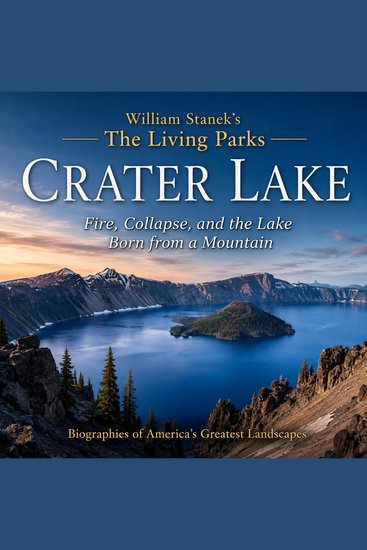
    Before there was Crater Lake, there was a mountain.
    
    Volcanic construction built it. Catastrophic eruption emptied part of the system beneath it. The summit collapsed. Snow and rain slowly filled the enormous basin that remained.
    
    William Stanek's The Living Crater Lake Biography follows the story from fire and collapse through blue water, forest, Indigenous relationships, scientific interpretation, exploration, tourism, preservation, fish introductions, fire management, and the changing work of caring for an extraordinary closed lake system.
    
    The beauty of Crater Lake begins with disappearance.
    
    Its biography asks what happens when destruction creates something new-and when people then try to preserve a landscape that has always been a product of radical change.
    Show book
  • The Perfect Sword - Forging the Dark Ages - cover

    The Perfect Sword - Forging the...

    Edoardo Albert, Paul Gething

    • 0
    • 0
    • 0
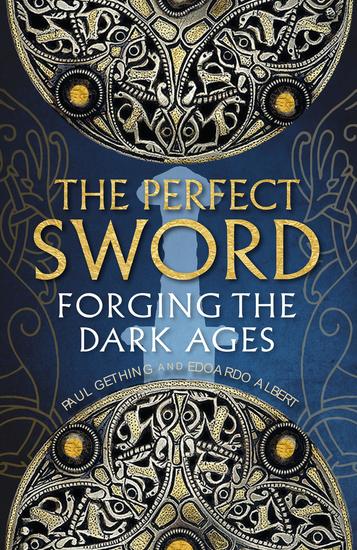
    The story of the Bamburgh Sword – one of the finest swords ever forged.
    In 2000, archaeologist Paul Gething rediscovered a sword. An unprepossessing length of rusty metal, it had been left in a suitcase for thirty years. But Paul had a suspicion that the sword had more to tell than appeared, so he sent it for specialist tests. When the results came back, he realised that what he had in his possession was possibly the finest, and certainly the most complex, sword ever made, which had been forged in seventh-century Northumberland by an anonymous swordsmith.
    This is the story of the Bamburgh Sword – of how and why it was made, who made it and what it meant to the warriors and kings who wielded it over three centuries. It is also the remarkable story of the archaeologists and swordsmiths who found, studied and attempted to recreate the weapon using only the materials and technologies available to the original smith. 
    Show book
  • Anatolia and the Bronze Age: The History of the Earliest Kingdoms and Cities that Dominated the Region - cover

    Anatolia and the Bronze Age: The...

    Editors Charles River

    • 0
    • 0
    • 0
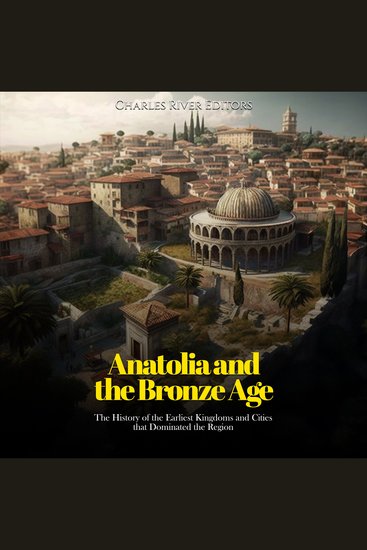
    While the Bronze Age is recognized as one of history’s most important phases, it’s been hard for historians to precisely date. The idea of the Bronze Age comes from a three-age system developed in the 19th century through which archaeologists and historians believe cultures evolve. These three ages are the Stone Age, the Bronze Age, and the Iron Age, and the concept of the system stems from the simultaneous development of museums in Europe during that time. In the Royal Museum of Nordic Antiquities in Denmark, Christian Jürgensen Thomsen, the director of the museum, began classifying objects of stone, bronze, or iron to better categorize and exhibit them. Each archaeological artifact was thus sorted according to their materials and further organized by shape and style. Through such methodology, working alongside archaeological reports, he was able to show how certain objects changed over time. 
    	During the Late Bronze Age, from about 1500-1200 BCE, the Near East was a time and place where great kingdoms and empires vied for land and influence, playing high stakes diplomatic games, trading, and occasionally going to war with each other in the process. The Egyptians, Hittites, Babylonians, Assyrians, and several smaller Canaanite kingdoms were all part of this system, which was one of the first true “global” systems in world history and also one of the most materially prosperous eras in antiquity. The major kingdoms are well-known to most people, but among them were powerful neighbors, many of whom have been mostly overlooked.  
    The transition from the Bronze to the Iron Age during the late 13th and early 12th centuries BCE arguably changed the structure and course of world history more fundamentally than any period before or since, and at the center of this period of turmoil was a group of people known today as the Sea Peoples, the English translation of the name given to them by the Egyptians.
    Show book
  • Magus - The Art of Magic from Faustus to Agrippa - cover

    Magus - The Art of Magic from...

    Anthony Grafton

    • 0
    • 0
    • 0
    In literary legend, Faustus is the quintessential occult personality of early modern Europe. The historical Faustus, however, was something quite different: a magus—a learned magician fully embedded in the scholarly currents and public life of the Renaissance. And he was hardly the only one. Anthony Grafton argues that the magus in sixteenth-century Europe was a distinctive intellectual type, both different from and indebted to medieval counterparts as well as contemporaries like the engineer, the artist, the Christian humanist, and the religious reformer. Alongside these better-known figures, the magus had a transformative impact on his social world. 


    Magus details the arts and experiences of several learned magicians. Grafton explores their methods, the knowledge they produced, the services they provided, and the overlapping political and social milieus to which they aspired—often, the circles of kings and princes. During the late fifteenth and early sixteenth centuries, these erudite men anchored debates about licit and illicit magic, the divine and the diabolical, and the nature of "good" and "bad" magicians. Over time, they turned magic into a complex art, which drew on contemporary engineering as well as classical astrology, probed the limits of what was acceptable in a changing society, and promised new ways to explore the self and exploit the cosmos.
    Show book
  • Orkney Days - An Island Life - cover

    Orkney Days - An Island Life

    Christine Muir

    • 0
    • 0
    • 0
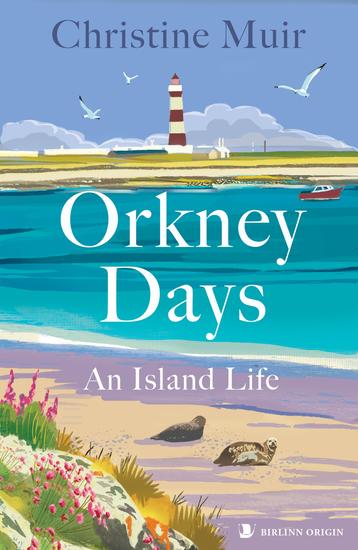
    This is the charming and poignant account of twenty-five years spent in Orkney. After her marriage to an islander, Christine Muir went to live on the tiny island of North Ronaldsay, where she and her husband brought up their four children and ran a small croft.
    Following the seasons though the year, Orkney Days is full of observations of the natural world at their doorstep. Beautiful descriptions of the island and its flora and fauna – from wildflowers and medicinal herbs to seals and seabirds – are mingled with memories of a young family growing up and the rhythms of daily life far from the bustle of the modern world. There is much too about the work involved in running their croft and the cattle and sheep that are its mainstay, about the traditions and lore of the island which stretch back over countless generations, and about the modern developments which changed it forever.
    Show book