Rejoignez-nous pour un voyage dans le monde des livres!
Ajouter ce livre à l'électronique
Grey
Ecrivez un nouveau commentaire Default profile 50px
Grey
Abonnez-vous pour lire le livre complet ou lisez les premières pages gratuitement!
All characters reduced
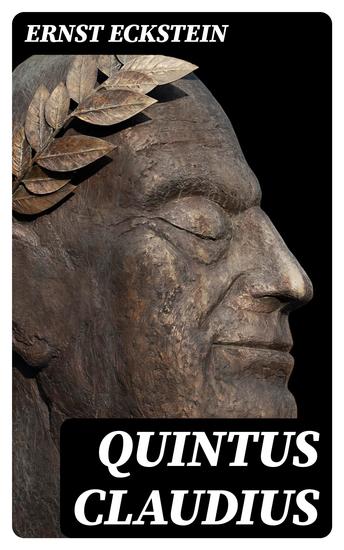
Quintus Claudius - cover

Quintus Claudius

Ernst Eckstein

Traducteur Clara Bell

Maison d'édition: DigiCat

  • 0
  • 0
  • 0

Synopsis

Ernst Eckstein's "Quintus Claudius" is a masterfully crafted historical novel that immerses readers in the intricacies of Roman society during the turbulent times of the late Republic. Utilizing a lyrical yet precise prose style, Eckstein deftly weaves a narrative that explores themes of power, identity, and moral conflict through the eyes of its titular character, Quintus Claudius. Rich in historical detail, the novel draws on contemporary accounts of political machinations and personal dilemmas, presenting a vivid tableau of a civilization on the brink of transformation. Ernst Eckstein, a distinguished scholar and author, was deeply influenced by his extensive studies in classical literature and history, which informed his understanding of the sociopolitical dynamics of ancient Rome. His academic background, combined with a profound appreciation for the human condition, allowed him to give life to Quintus Claudius, a character grappling with the contradictions of duty and desire amid societal upheaval. Eckstein's insights into the era's philosophical currents elevate the narrative beyond mere historical fiction. This compelling work is highly recommended for readers who seek not only enjoyment but also intellectual engagement with the complexities of Roman history and its enduring resonance in contemporary society. "Quintus Claudius" invites a thoughtful reflection on the nature of ambition and the consequences of one's choices, making it an essential read for enthusiasts of literary historical fiction.
Disponible depuis: 13/11/2022.
Longueur d'impression: 535 pages.
D'autres livres qui pourraient vous intéresser

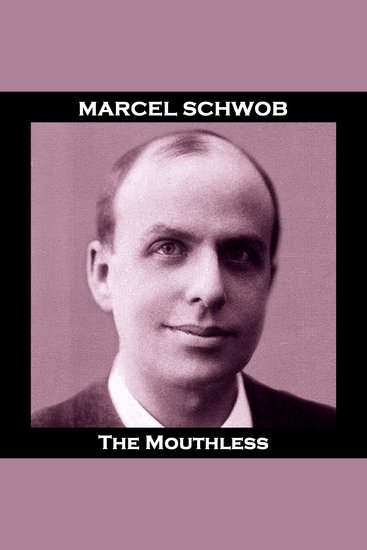
  • The Mouthless - A tale from the French symbolist writer known mainly to be the primary influence on Jorge Luis Borges - cover

    The Mouthless - A tale from the...

    Marcel Schwob

    • 0
    • 0
    • 0
    Mayer André Marcel Schwob was born in Chaville, Hauts-de-Seine, France on 23rd August 1867 into a cultivated Jewish family.  
     
    As a child he devoured the works of Poe and Stevenson in French and then again in English.  His attachment to the bizarre and dark was already forming. 
     
    His education at the Lycée of Nantes earned him the 1st Prize for Excellence.  In 1881, he was in Paris with his maternal uncle to study at the Lycée Louis-le-Grand.  Schwob quickly developed his multilingual abilities and then studied philology and Sanscrit at the École pratique des hautes études before completing his military service in Vannes with the artillery. 
     
    After completing a Bachelor of Arts in 1888 he became a professional journalist and worked for the Phare de la Loire, the Événement and L'Écho de Paris. 
     
    The 1890’s marked his establishment as a brilliant writer with the publication of six short story collections.   
     
    He fell ill in 1896 with a chronic, incurable intestinal disorder.  He also suffered recurring bouts of influenza and pneumonia.  Intestinal surgery was given several times, at first with success but, by 1900, after two more surgeries, he was told that nothing more could be done for him.  Schwob now existed on kefir and fermented milk. 
     
    By the turn of the century, despite failing health, and often too ill to write, he embarked on several long travels, including to Vailima in the South Pacific where his literary hero Stevenson had died.  
     
    Schwob was regarded as a symbolist writer and a ‘precursor of Surrealism’.  He wrote over a hundred short stories, journalistic articles, essays, biographies, literary reviews and analysis, translations and plays.  
     
    Marcel Schwob died on 26th February 1905 of Pneumonia.  He was 37.
    Voir livre
  • The Revolt of Mother - A wife and mother does whats best for her family despite opposition - cover

    The Revolt of Mother - A wife...

    Mary Wilkins E Freeman

    • 0
    • 0
    • 0
    Mary Eleanor Wilkins Freeman was born in Randolph, Massachusetts on the 31st October 1852 to parents who were strict and orthodox Congregationalists. 
     
    When she was a teenager the family moved to Brattleboro, Vermont and it was there she finished her education and began writing verse and stories for children. 
     
    When the family’s dry-goods store closed in 1873 the family, now impoverished, returned to Randolph where her mother was to die mother three years later. 
     
    She published ‘The Ghost Story’ in 1881 after it won a short story competition.  With elements of the supernatural and domestic realism she had hit upon a solid formula for success. 
     
    Two years later her father died and with no immediate family and only a small estate she now committed to writing full-time to secure an income.  For the times it was a brave move but her undoubted talent meant success would follow. 
     
    Over her career she published more than two dozen volumes of short stories and novels and is most well-known for ‘A New England Nun’.  Her works were mainly set in New England and many of her female characters are strong and assertive, challenging contemporary stereotypes over their then roles, values and relationships in society.  As a feminist she was keen to engage her audience in a discussion about the lack of control women had over many issues including the family finances. 
     
    A meeting with the younger Dr. Charles Manning Freeman began a slow, decade long, courtship that endured many obstacles and delays until they eventually married on New Years Day, 1902.   
     
    They built a home in Metuchen, where Mary was something of a local celebrity. Sadly her husband suffered from alcoholism and addiction to sleeping powders, fast horses and was also prone to womanizing.  He was committed to the New Jersey State Hospital for the Insane and with that the couple separated.  After his death in 1923, he left his estate to his chauffeur and one dollar to Mary.  
     
    On 13th March 1930, Mary E Wilkins Freeman suffered a fatal heart attack in Metuchen. She was 77.
    Voir livre
  • The Unpicking - cover

    The Unpicking

    Donna Moore

    • 1
    • 0
    • 0
    Stirling, 1877. Lillias Gilfillan, a recently orphaned girl of sixteen, falls in love and elopes with a man who sees her as wealthy and naïve: 'a little boat without its oars'. In a sea of rising debt and deception, Lillias must learn quickly, or drown.
    Glasgow, 1894. Clementina knows little mercy living in a home for 'wayward girls'. With the 'Jingling Devil' always lurking in the shadows and a child growing inside her, can she outrun him and save her best friend in the process?
    Glasgow, 1919. Mabel is one of the first policewomen in Glasgow, on a mission to find a murderer. In doing so, she finds a web of corruption and now the 'Jingling Devil' wants her dead.
    'The Unpicking' spans three generations of 'hysterical women' who take on systemic corruption and injustice, despite all odds.
    Voir livre
  • White Horizon - cover

    White Horizon

    T.K. Blackwood

    • 0
    • 0
    • 0
    The year is 1992. 


    The Soviet Blitzkrieg in Germany has been beaten to a bloody halt along the Rhine River. The Reds rush masses of teenage conscripts and rusty reservists to the front, while NATO scrambles to mount a killing blow against their reeling nemesis. 


    The flames of war spread north to Scandinavia, embroiling Sweden and threatening Norway. In this grinding war of attrition, both sides endure, and the death toll mounts. Is a breakthrough at hand or has the carnage only begun?
    Voir livre
  • 3 Stories Set in Ancient Times - A trio of classic tales perfect for a commute walk or quiet night in - cover

    3 Stories Set in Ancient Times -...

    Tennessee Williams, Ovid,...

    • 0
    • 0
    • 0
    There is something about the number 3.    
    The Ancient Greeks believed 3 was the perfect number, and in China 3 has always been a lucky number, and they know a thing or two.   
    Most religions also have 3 this and 3 that and, of course, in these more modern times, three’s a crowd may be too many, except when it’s a ménage à trois.  It seems good things usually come in threes. 
    Whatever history and culture says WE think 3, a hat-trick of stories, is a great number to explore themes and literary avenues that classic authors were so adept at creating. 
     
    01 - 3 Stories Set in Ancient Times 
    02 - The Vengeance of Nitocris by Tennessee Williams writing as Thomas Lanier Williams 
    03 - Pyramus & Thisbe by Ovid 
    04 - The Shades, A Phantasy by Vladimir Korolenko
    Voir livre
  • The Mystery Of Cabin Island - cover

    The Mystery Of Cabin Island

    Franklin W. Dixon

    • 0
    • 0
    • 0
    While trying to plan what to do for the winter holidays, the Hardy boys are heartily rewarded for their prowess in solving crimes by Mr. Jefferson, an eccentric antiques dealer and a victim of the carjackers from The Shore Road Mystery . Mr. Jefferson allows the boys and two of their friends to vacation on his island, but the fun outing soon takes a turn for the worse: among missing supplies, a snow storm, and a shady figure named Mr. Haneligh who keeps trying to assert his authority over the island, the boys realize that there may be more to the eccentric old man and his past than they first thought. This book was published in 1929 and then rewritten in 1966.
    Voir livre