Rejoignez-nous pour un voyage dans le monde des livres!
Ajouter ce livre à l'électronique
Grey
Ecrivez un nouveau commentaire Default profile 50px
Grey
Abonnez-vous pour lire le livre complet ou lisez les premières pages gratuitement!
All characters reduced
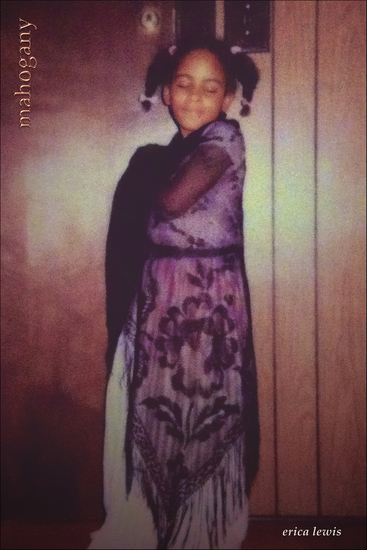
mahogany - cover

mahogany

Eric Lewis

Maison d'édition: Wesleyan University Press

  • 0
  • 0
  • 0

Synopsis

mahogany takes its name from the dark wood prized for its durability, workability, and elegant look, and from the Diana Ross movie, whose theme song asks if what lies ahead is what you really want. This book is the third in a trilogy, and like the first two books it is steeped in pop music. Each poem here takes its title from a line of a Diana Ross and The Supremes song, as well as songs from Diana Ross' solo career. Short lines flow down the page like postmodern psalms, connecting dailyness to timelessness, merging the historical and the beloved through reverence for family, music, and the life we actually live. mahogany is a lament for the passing of time and unimaginable loss, and at the same time it models the daily search for joy, and the deep shine that can arise from the darkest times.[sample poem]i'm like a woman who once knew splendor*sometimes i feel like the pink pantherall naked and pinklost in the morass ofdo the best you can todayand nigga heal thy selfour end of winterspirits breaklike old tibetan snowi rememberyou was conflictedand i found myself alonehere on my ancient hurtthe disquieting humof living historydear god, pleaseput my head above my heartwe can only be togetherif the stories are toldplain facesame instrumentjust a couple of coke bottlesfull of gasolinelike god and rainis a waste of timemy mother used to clean housesas a childsome days i can barelyget out of bedin my mindshe's like diana rossscrubbing the white lady's stairsin lady sings the bluesexcept prettierand with green eyesi've just been livingoff of cough dropsand water and angerjust sitting in the whole foodsparking lot eating pineapplei am literallythe definition of "hot mess"pain changes everythingsomebody comeand pick upmy limp bodyoff the groundi am dyinga slow ohio deathwe miss you starmanit's our first sunrise of the burn* "dark side of the world"erica lewis
Disponible depuis: 05/09/2023.
Longueur d'impression: 129 pages.

D'autres livres qui pourraient vous intéresser

  • Mumsy - cover

    Mumsy

    Lydia Marchant

    • 0
    • 0
    • 0
    Sophie is about to become a single mum – a third-generation one – and she's terrified. How will she afford to feed her baby? Or a Deluxe Snuggle Pod? Can she hold on to her job? What if she's crap at parenthood? Surely she can count on her own mum and nan to help...
    Except her mum's got used to having a life of her own, and doesn't fancy giving up pole-dancing class and Tinder to go back to changing nappies and no sleep. Meanwhile, fresh out of hospital with a broken leg, her nan's having a three-quarter-life crisis of her own.
    From slammed doors to living-room karaoke, Lydia Marchant's play Mumsy is a sparky, soulful comedy drama about the highs and lows of motherhood. It premiered at Hull Truck Theatre in March 2023.
    Voir livre
  • Annabel Lee - cover

    Annabel Lee

    Edgar Allan Poe

    • 0
    • 0
    • 0
    Annabel Lee is the last complete poem by Edgar Allan Poe. Like many of Poe's poems, it explores the theme of the death of a beautiful woman. 
    The narrator, who fell in love with Annabel Lee when they were young, has a love for her so strong that even angels are jealous. He retains his love for her even after her death. 
    There has been debate over who - if anyone - was the inspiration for Annabel Lee. Though many women have been suggested, Poe's wife Virginia Eliza Clemm Poe is one of the more credible candidates. 
    ©2009 Listen & Live Audio, Inc.; (P)2009 Listen & Live Audio, Inc.
    Voir livre
  • The Maguk Well - Audio Book - cover

    The Maguk Well - Audio Book

    Leoni Robens

    • 0
    • 0
    • 0
    Babble is to speak rapidly and randomly as did the people at the tower of Babel when they lost their ability to speak to one another. Here in my babbling book of poetry I unite together foreign languages of different worlds scattered far and wide 
    To well describe and depict another realm far better than best-“Good, Gooder and Goodest….” A ‘Maguk Kingdom’ of babbling towers, brooks, spires and domes, one of my marvellous stories ‘Maguk World of Princess Cardinal Fairy Alice with her Lil’ cat Papillon pet Fairy Dinah’, falling through an endless Maguk Well, who travel in an ethereal adventure to the bottomless pits of the world in an unparalleled universe beyond countless Giga bytes and Decimbleters (my own made up words of poetic art) including so many funny poems inside short poetry story. One will thoroughly enjoy reading with great gusto and cherishing Alice through another spiritual perspective. 
    Therefore concluding one last example the Hebrew word ‘ayin’ which is not only the name of a Hebrew letter but also the Hebrew term for eye. My audience be like the “Hebrew Eye”- “Eyes that are windows to the soul. Looking at these poetically charged organs one may proceed to read into ‘Magic world!’- ‘THE MAGUK WELL’
    Voir livre
  • Julia or The Convent of St Claire - Poem by a 18th Century female author who was also an abolitionist pioneer - cover

    Julia or The Convent of St...

    Amelia Opie

    • 0
    • 0
    • 0
    Amelia Alderson, an only child, was born on the 12th November 1769 in Norwich, England. 
    After the death of her mother on New Year’s Eve 1784 she became her father's housekeeper and hostess. 
    The young Amelia was energetic, attractive, and an admirer of fashion.  She spent much of her youth writing poetry and plays and putting on local amateur theatricals.  At 18 she had published anonymously ‘The Dangers of Coquetry’. 
    Amelia married in the spring of 1798 to the artist John Opie at the Church of St Marylebone, in Westminster, and together they lived in Berners Street where Amelia was already living. 
    Her next novel in 1801 ‘Father and Daughter’, was very popular even though it dealt with such themes as illegitimacy, a socially difficult subject for its times.  From this point on published works were far more regular.  The following year her volume ‘Poems’ appeared and was again very popular.  Novels continued to flow and she never once abandoned her social activism and her call for better treatment of women and the dispossessed in her works.  She was also keenly involved in a love of society and its attendant frills. 
    Encouraged by her husband to write more she published Adeline Mowbray in 1804, an exploration of women's education, marriage, and the abolition of slavery.  
    Her husband died in 1807 and she paused from writing for a few years before resuming with further novels and poems.  Of particular interest was her short poem ‘The Black Man's Lament’ in 1826.  Her life now was in the main spent travelling and working for charities and against slavery.  She even helped create a Ladies Anti-Slavery Society in Norwich which organised a parliamentary petition of 187,000 names of which hers was the first name. 
    After a visit to Cromer, a seaside resort on the North Norfolk coast, she caught a chill and retired to her bedroom.  
    Amelia Opie died on the 2nd December 1853 in Norwich.  She was 84.
    Voir livre
  • Poetry of the Romantics - cover

    Poetry of the Romantics

    John Keats

    • 0
    • 0
    • 0
    The period of English romantic poetry occurred roughly between 1800 and 1850 and was represented by poets such as William Blake, Lord Byron, Samuel Taylor Coleridge, John Keats, Percy Bysshe Shelley, and William Wordsworth. All of these poets are featured in this collection of more than 50 poems read by award-winning actors that include Joan Allen, Julie Christie, Stephen Fry, Glenda Jackson, and Jude Law.
    Voir livre
  • Beauty of the Human Form - cover

    Beauty of the Human Form

    Mike Blake

    • 0
    • 0
    • 0
    This Poem is Titled 'Beauty of the Human Form.  ::  
    It is a poem about the never ending fascination of People with the Human body. 
    Some might say, its in our DNA. That maybe so.  
    The Greeks knew how to display it, as both eroticism and as an Art form. 
    Showing both sexes in the 'Perfect' perfection of Beauty! 
    Unfortunately; the human form, especially the female human form has been in the last few decades 
    since the new renaissance or as we call the sexual revolution or as is now the 'free society'. 
    Denigrated to an object not of art but purely of desire, or descended into the more pornographic exploitive realms of decor art. 
    *NO A.I. has been used in the creation of this Poem. * As for all his poems & s/stories.* 
    *Just the purity of thought of the Author. 
    ***** Please leave your Review/feedback, many thanks. 
    ***** To see more Poems by the same Author please click the Link HERE: https://www.amazon.com/-/e/B00SG40RM8 
    To contact the Author: Please add me Mike Miko on Facebook & then message me, thanks. 
    https://www.facebook.com/wild.poetry.webs 
    I will then contact the Author your behalf. 
    Instagram: wild_poetrys / wild.poetry.webs                Please Like :) 
    FB: https://www.facebook.com/New.Poets.Corner 
    Website: www.wild-poetry.com 
    Twitter: miko_1_dollar ~
    Voir livre