Rejoignez-nous pour un voyage dans le monde des livres!
Ajouter ce livre à l'électronique
Grey
Ecrivez un nouveau commentaire Default profile 50px
Grey
Abonnez-vous pour lire le livre complet ou lisez les premières pages gratuitement!
All characters reduced
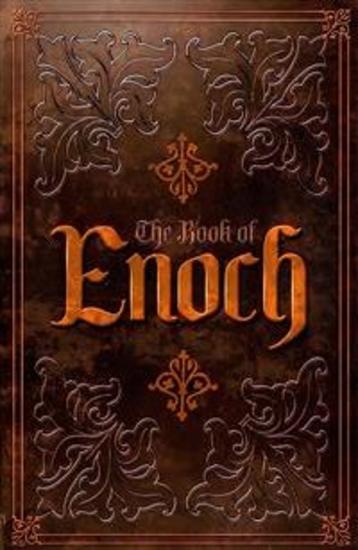
The Book of Enoch - cover

The Book of Enoch

Enoch, Thomas R., Horn

Maison d'édition: Crux Press

  • 0
  • 0
  • 0

Synopsis

The Bible, as we hold it today, is esteemed by many religious institutions and especially Conservative Christians to be the inspired, inerrant Word of God. This doctrinal position affirms that the Bible is unlike all other books or collections of works in that it is free of error due to having been given by inspiration of God, and is profitable for doctrine, for reproof, for correction, for instruction in righteousness: that the man of God may be perfect, thoroughly furnished unto all good works (2 Tim. 3:16, 17). While no other text can claim this same unique authority, the Book of Enoch is an ancient Jewish religious work, ascribed by tradition to Enoch, the great-grandfather of Noah, which played a crucial role in forming the worldview of the authors of the New Testament, who were not only familiar with it but quoted it in the New Testament, Epistle of Jude, Jude 1:14 15, and is attributed there to "Enoch the Seventh from Adam" (1 En 60:8). The text was also utilized by the community that originally collected and studied the Dead Sea Scrolls. While some churches today include Enoch as part of the biblical canon (for example the Ethiopian Orthodox Tewahedo Church and Eritrean Orthodox Tewahedo Church), other Christian denominations and scholars accept it only as having historical or theological non-canonical interest and frequently use or assigned it as supplemental materials within academic settings to help students and scholars discover or better understand cultural and historical context of the early Christian Church. The Book of Enoch provides commentators valuable insight into what many ancient Jews and early Christians believed when, God, who at sundry times and in divers manners spake in time past unto the fathers by the prophets (Heb. 1:1). As Dr. Michael S. Heiser in the Introduction to his important book Reversing Hermon so powerfully notes: For those to whom 1 Enoch sounds unfamiliar, this is the ancient apocalyptic literary work known popularly (but imprecisely) as the Book of Enoch. Most scholars believe that 1 Enoch was originally written in Aramaic perhaps as early as the 3rd century B.C. The oldest fragments of the book were found among the Dead Sea Scrolls and dated to roughly the second century B.C. This places the book squarely in the middle of what scholars call the Second Temple Period (ca. 500 B.C. 70 A.D.), an era more commonly referred to as the Intertestamental Period. This book will use the more academic designation ( Second Temple Period ) [...] The Watcher story of 1 Enoch, as many readers will recall, is an expansion of the episode described in Genesis 6:1-4, where the sons of God (Hebrew: beney ha- elohim) came in to the daughters of man (Gen 6:4; ESV). Consequently, Watchers is the Enochian term of choice (among others) for the divine sons of God. While the story of this supernatural rebellion occupies scant space in Genesis, it received considerable attention during the Second Temple Period [...] The Enochian version of the events of Gen 6:1-4 preserves and transmits the original Mesopotamian context for the first four verses of the flood account. Every element of Gen 6:1-4 has a Mesopotamian counterpoint a theological target that provides the rationale for why these four verses wound up in the inspired text in the first place. Connections to that backstory can be found in the Old Testament, but they are scattered and unsystematically presented. This is not the case with Second Temple Jewish literature like 1 Enoch. Books like 1 Enoch preserve all of the Mesopotamian touchpoints with Gen 6:1-4 when presenting their expanded retelling of the events of that biblical passage. The Book of Enoch is therefore intended to be an important supplemental resource for assisting serious researchers and students in the study of the Bible.
Disponible depuis: 10/06/2023.

D'autres livres qui pourraient vous intéresser

  • Mind-Lines Lines for Changing Minds - The Magic of Conversational Reframing - cover

    Mind-Lines Lines for Changing...

    L. Michael Hall, Bob Bodenhamer

    • 0
    • 0
    • 0
    This book will teach you how to recognize and use the magic of language. Mind-Lines reworks Sleight-of-Mouth patterns using the logical level system of Meta-States. In doing so the authors bring order, understanding, and magic to the use of language in influencing, persuading, selling, negotiating, and many other human interactions.
    Voir livre
  • Thus Spoke My Therapist - Nietzsche Without the Mental Breakdown - cover

    Thus Spoke My Therapist -...

    Sophia Blackwell

    • 0
    • 0
    • 0
    hus Spoke My Therapist: Nietzsche Without the Mental Breakdown is your one-way ticket to understanding one of history’s most misunderstood philosophers—without needing a doctorate or a prescription for existential dread. 
    This isn’t your professor’s Nietzsche. It’s Nietzsche with a cocktail of sarcasm, clarity, and just enough emotional damage to be relatable. Philosophy grad student and sarcasm connoisseur Sophia Blackwell slices through the fog of German metaphysics to deliver a book that actually explains what the mustachioed madman was on about—and makes you laugh so hard you forget you're spiraling. 
    Inside, you'll find: 
    Why "God is dead" isn’t just something said by goth teenagers. 
    How Christianity pulled off history’s greatest guilt trip. 
    What the "will to power" has to do with office politics and Instagram likes. 
    How eternal recurrence is basically Groundhog Day with higher stakes. 
    Why the Übermensch is less Hitler, more “that weirdly self-assured friend who makes their own almond milk.” 
    Perfect for people who want to understand philosophy without having to fake a seizure halfway through Thus Spoke Zarathustra. Whether you're a moody teenager, recovering philosophy major, or just someone who wants to win arguments online, this book will arm you with Nietzschean insights and the comedic timing to survive modern life’s absurdity. 
    Warning: Reading this may result in increased self-awareness, spontaneous existential crises, and the irresistible urge to quote Nietzsche at brunch
    Voir livre
  • Our Polyvagal World - How Safety and Trauma Change Us - cover

    Our Polyvagal World - How Safety...

    Stephen W. Porges, Seth Porges

    • 0
    • 0
    • 0
    The creator of the Polyvagal Theory explains the principles in simple terms that are accessible to all. 


    Since Stephen Porges first proposed the Polyvagal Theory in 1994, its basic idea—that the level of safety we feel impacts our health and happiness—has radically shifted how researchers and clinicians approach trauma interventions and therapeutic interactions. Yet despite its wide acceptance, most of the writing on the topic has been obscured behind clinical texts and scientific jargon. 


    Our Polyvagal World definitively presents how Polyvagal Theory can be understandable to all and demonstrates how its practical principles are applicable to anyone looking to live their safest, best, healthiest, and happiest life. What emerges is a worldview filled with optimism and hope, and an understanding as to why our bodies sometimes act in ways our brains wish they didn't. 


    Filled with actionable advice and real-world examples, this book will change the way you think about your brain, body, and ability to stay calm in a world that feels increasingly overwhelming and stressful.
    Voir livre
  • The Last Courtesan - Writing My Mother's Memoir - cover

    The Last Courtesan - Writing My...

    Anonyme

    • 0
    • 0
    • 0
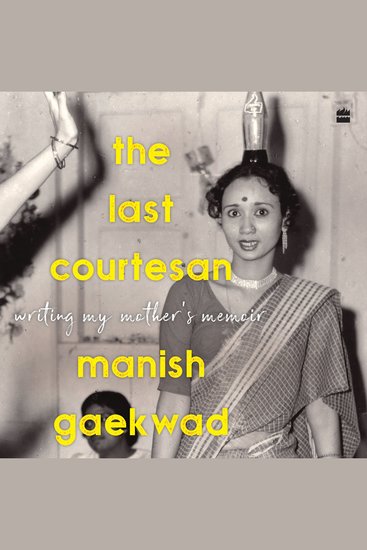
    The 1993 Bow Bazaar bomb blast in Calcutta brought an end to the kothas in the busy commercial district. Over the next few years, as dance bars and disco music replaced the old-world charm of mujras, kathak and thumri, the tawaifs began to abandon the profession. Rekhabai, a courtesan, found herself at a crossroads, facing an uncertain future. Where should she go? What should she do next?  
    Originally from the Kanjarbhat tribe, Rekhabai was sold and trained as a tawaif while she was still a child. In the 1980s, when kothas were no longer recognized as centres for aesthetics, and society disapproved of the tawaif's art, as they felt it was sex work in the guise of adakari (performance), Rekhabai made a name for herself in Calcutta and Bombay as a singing-dancing star. It was an era when she had to dodge guns, goons and Ghalib's ghazals to carve out her own destiny, provide for her large family and raise her son in an English-medium boarding school. 
    In this poignant memoir, she narrates the unbelievable story of her survival to her son with candour, grace and humour, never missing a beat and always full of heart.
    Voir livre
  • Enquiry Concerning the Principles of Morals and Other Works An - cover

    Enquiry Concerning the...

    David Hume

    • 0
    • 0
    • 0
    In his authobiography, David Hume declared unequivocally that this work, An Enquiry Concerning the Principles of Morals (1751) is ‘of all my writings, historical, philosophical, or literary, incomparably the best.’ In it, Hume takes the discussion away from traditional attitudes where either rational or metaphysical issues govern moral principles. Instead, he introduces the human factor, introducing the sentiments and passions inherent in human psychology.  
    In the opening paragraph of his Enquiry he states the ground clearly: ‘There has been a controversy started of late, much better worth examination, concerning the general foundation of Morals; whether they be derived from Reason, or from Sentiment; whether we attain the knowledge of them by a chain of argument and induction, or by an immediate feeling and finer internal sense; whether, like all sound judgement of truth and falsehood, they should be the same to every rational intelligent being; or whether, like the perception of beauty and deformity, they be founded entirely on the particular fabric and constitution of the human species.’ 
    He challenges the notion that reason can dictate moral principles independently of our desires and sentiments, arguing instead that reason serves as a tool to navigate and articulate our moral sentiments. 
    Central to Hume's thesis is the concept of moral approbation and disapprobation, which he contends stem from our natural inclination to feel pleasure or aversion in response to certain actions or traits. 
    He pursues his theme with characteristic clarity, concentrating on topics including benevolence, justice, utility, qualities useful to ourselves and others. He rejects moral absolutism which presumes the existence of immutable moral laws. Throughout, he emphasizes the importance of empathy and compassion as essential components of ethical behaviour.  
    Hume's "An Enquiry Concerning the Principles of Morals" stands as a testament to his profound insight into the complexities of human nature and morality. 
    This recording also contains two essays which also reflect the independence of his views for his time, On Suicide and On the Immortality of the Soul.
    Voir livre
  • Titans of Capital - How Concentrated Wealth Threatens Humanity - cover

    Titans of Capital - How...

    Peter Phillips, Dan Kovalik

    • 0
    • 0
    • 0
    A fascinating examination of the rapid concentration of global capital, with chapters that focus on China and Russia. 


    In Titans of Capital, Peter Phillips, a political sociologist, poses three key research questions: To what extent do the wealthy influence—or even dominate—decision making that affects all of us in society? Who are the most powerful people? And how does the accumulation of capital work? 


    Networks of wealthy individuals have evolved since the COVID-19 pandemic, and Titans of Capital shows how the financial investments of transnational elites threaten human rights and the future of the planet. Phillips warns that while continued concentration of global capital increases the profits enjoyed by the global economy's "Titans,", it also increases global inequality, starvation, and civil unrest, threatening the lives of the hundreds of millions of people living in extreme poverty. It is imperative to ask how we can reverse the concentration of Titan wealth and revitalize grassroots democracy unbridled by extreme wealth. Identifying 117 global Titans by name and exposing the networks and interests that unite them provides listeners opposed to militarism and committed to economic equality with crucial tools to directly engage the power elite who endanger life on earth.
    Voir livre