Join us on a literary world trip!
Add this book to bookshelf
Grey
Write a new comment Default profile 50px
Grey
Subscribe to read the full book or read the first pages for free!
All characters reduced
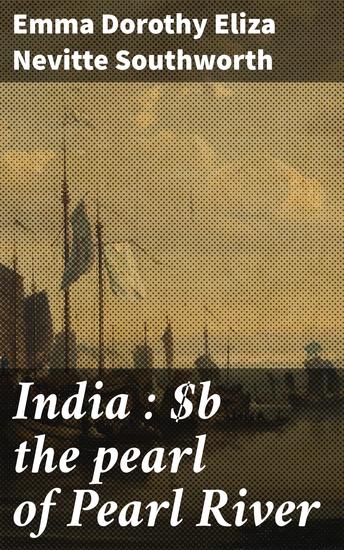
India : the pearl of Pearl River - A Tale of Love Adventure and Cultural Clash in Colonial India - cover

India : the pearl of Pearl River - A Tale of Love Adventure and Cultural Clash in Colonial India

Emma Dorothy Eliza Nevitte Southworth

Publisher: Good Press

  • 0
  • 0
  • 0

Summary

In "India: The Pearl of Pearl River," Emma Dorothy Eliza Nevitte Southworth weaves a rich tapestry of adventure and romance against a backdrop of cultural exploration. This novel, characterized by its vivid descriptions and intricate characterizations, immerses readers in the struggles and triumphs of its protagonists. Set during a time when America was grappling with its identity, Southworth's narrative juxtaposes the allure of the exotic East with the moral dilemmas faced by its characters. Her literary style, notable for its emotive language and detailed portrayals, invites readers to navigate the complexities of love, honor, and societal expectations amidst a landscape rich in both beauty and conflict. Southworth, a prominent American author of the 19th century, was known for her keen observations of social issues, particularly concerning women's roles in society. Drawing from her own experiences and the zeitgeist of her era, she crafted narratives that reflected the tensions and aspirations of her own life. Her work often echoes the changing tides of American culture, which may have influenced her depiction of the foreign yet familiar world of India. "India: The Pearl of Pearl River" is not just a tale of love and adventure; it is a profound commentary on the intersections of culture and identity. I recommend this book to readers who appreciate historical fiction enriched with social commentary and those intrigued by the intricate dance between the familiar and the exotic.
Available since: 07/11/2023.
Print length: 252 pages.

Other books that might interest you

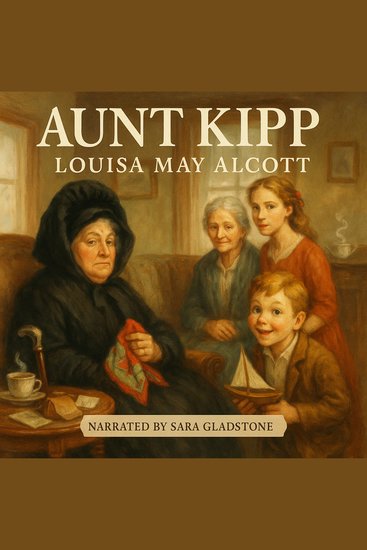
  • Aunt Kipp - cover

    Aunt Kipp

    Louisa May Alcott

    • 0
    • 0
    • 0
    Louisa May Alcott’s Aunt Kipp is a warm and witty tale of family trials, truth-telling children, and the reform of a difficult relative. 
    Polly Snow, her frail mother, and her mischievous younger brother “Toady” struggle to make ends meet while depending on the uncertain goodwill of their wealthy but domineering Aunt Kipp. With her towering black bonnet, sharp tongue, and constant reminders of her fragile health, Aunt Kipp seems to hold her fortune—and their future—over them like a storm cloud. But through humor, honesty, and unexpected affection, this domestic comedy reveals the power of kindness and change of heart. 
    Filled with Alcott’s trademark blend of sentiment, humor, and social observation, Aunt Kipp is both a sharp portrait of Victorian family life and a heartwarming reminder that it’s never too late to love and be loved.
    Show book
  • This Is Where It Ends - A Novel - cover

    This Is Where It Ends - A Novel

    Cindy K. Sproles

    • 0
    • 0
    • 0
    Award-Winning Author Pens a Unique Southern Tale 
     
    When Minerva Jane Jenkins was just 14 years old, she married a man who moved her to the mountains. He carried with him a small box, which he told her was filled with gold. And when he died 50 years later, he made her promise to keep his secret. She is to tell no one about the box or the treasure it contains. 
     
    Now 94, Minerva is nearing the end of what has sometimes been a lonely life. But she's kept that secret. Even so, rumors of hidden gold have a way of spreading, and Minerva is visited by a reporter, Del Rankin, who wants to know more of her story. His friend who joins him only wants to find the location of the gold. Neither of them knows quite who they're up against when it comes to the old woman on the mountain. 
     
    As an unlikely friendship develops, Minerva is tempted to reveal her secret to Del. After all, how long is one bound by a promise? But the truth of what's really buried in the box may be hidden even from her.
    Show book
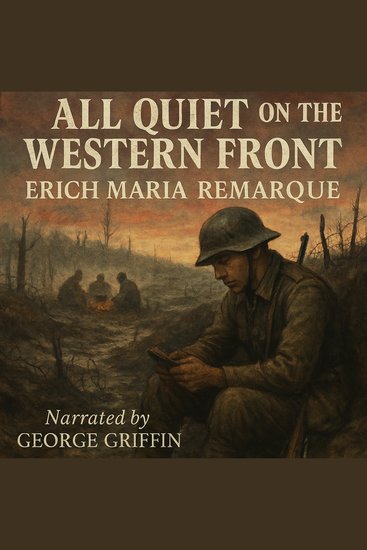
  • All Quiet on the Western Front - cover

    All Quiet on the Western Front

    Eric Maria Remarque

    • 0
    • 0
    • 0
    “All Quiet on the Western Front” is one of the most powerful anti-war novels ever written—a timeless classic that strips away the myths of glory and honor to reveal the brutal, dehumanizing truth of warfare. 
    Told through the eyes of Paul Bäumer, a young German soldier on the front lines of World War I, this harrowing narrative plunges listeners into the mud-soaked trenches, the constant threat of death, and the emotional numbness born of unspeakable loss. Paul and his comrades entered the war filled with patriotic zeal, only to find themselves disillusioned and emotionally shattered by the relentless cruelty of battle. 
    Through moments of fleeting camaraderie and raw introspection, Remarque crafts a haunting tribute to the lost youth of an entire generation. George Griffin’s evocative narration brings the quiet suffering and small mercies of these soldiers vividly to life in this unforgettable portrayal of the human cost of war.
    Show book
  • Top 10 Short Stories The - The 1860's - The Men - The top ten short stories written in the 1860s by male authors - cover

    Top 10 Short Stories The - The...

    Fyodor Dostoyevsky, Charles...

    • 0
    • 0
    • 0
    Short stories have always been a sort of instant access into an author’s brain, their soul and heart.  A few pages can lift our lives into locations, people and experiences with a sweep of landscape, narration, feelings and emotions that is difficult to achieve elsewhere. 
     
    In this series we try to offer up tried and trusted ‘Top Tens’ across many different themes and authors. But any anthology will immediately throw up the questions – Why that story? Why that author?  
     
    The theme itself will form the boundaries for our stories which range from well-known classics, newly told, to stories that modern times have overlooked but perfectly exemplify the theme.  Throughout the volume our authors whether of instant recognition or new to you are all leviathans of literature. 
     
    Some you may disagree with but they will get you thinking; about our choices and about those you would have made.  If this volume takes you on a path to discover more of these miniature masterpieces then we have all gained something. 
     
    This mid-century decade reveals a journey traversing continents and genres as authors explore and revel in the telling of tumultuous times of social upheaval as nations are divided by Civil War or expand with the brute force of Imperial Dreams.  Our writers are here to document and narrate more about this fascinating decade. 
     
    01 - The Top 10 - The 1860's - The Men - An Introduction 
    02 - The Crocodile. An Extraordinary Incident - Part 1 by Fyodor Dostoyevsky 
    03 - The Crocodile. An Extraordinary Incident - Part 2 by Fyodor Dostoyevsky 
    04 - The Signalman by Charles Dickens 
    05 - The Generous Gambler by Charles Baudelaire 
    06 - The Romance of Certain Old Clothes by Henry James 
    07 - Malachi's Cove by Anthony Trollope 
    08 - The Outcasts of Poker Flat by Bret Harte 
    05 - The Astounding Adventure of Wheeler J Calamity, Related by Himslef by W S Gilbert 
    10 - The Spectre Bridegroom by William Hunt 
    11 - The 9.30 Up-Train by Sabine Baring-Gould 
    12 - The Man Without a Country by Edward Everett Hale
    Show book
  • Rabies - A tale of disease from Spains greatest short story writer - cover

    Rabies - A tale of disease from...

    Vicente Blasco Ibáñez

    • 0
    • 0
    • 0
    Vicente Blasco Ibáñez was born in Valencia, Spain on 29th January 1867.  
     
    At university, he studied law and graduated in 1888 but never felt the urgency to practice - he was more interested in politics, journalism, literature and women.   
     
    Politically he was a militant Republican partisan and, in his youth, founded a newspaper, El Pueblo (The People). The newspaper was taken to court many times and he made many enemies. In one incident he was shot and almost killed. In 1896, Ibáñez was arrested and sentenced to a few months in prison. 
     
    Despite this colourful background he found time to write novels. His first published work was ‘La Araña Negra’ (The Black Spider) in 1892, a work that he later repudiated although at the time it was a useful vehicle for him to express his anti-clerical views. 
     
    In 1894, he published ‘Arroz y Tartana’ (Airs and Graces), about a late 19th Century widow in Valencia trying to keep up appearances in order to marry her daughters well.   
     
    Ibáñez’s next sequence of books studied rural life in the farmlands of Valencia and failed to gain much of an audience.   
     
    His writing now took on a new direction with its now familiar sensational and melodramatic themes in 1908 with ‘Sangre y Arena’ (Blood and Sand), which follows the career of Juan Gallardo from his poor beginnings as a child in Seville, to his rise to becoming a famous matador in Madrid 
     
    However, his greatest success was ‘Los Cuatro Jinetes del Apocalipsis (The Four Horsemen of the Apocalypse) in 1916, which tells a tangled tale of the French and German sons-in-law of an Argentinian land-owner who find themselves fighting on opposite sides in the First World War.  It was a literary and commercial sensation and became the best-selling book of 1919.  It also propelled Rudolph Valentino to stardom in the 1921 film. 
     
    Ironically his fame in the English-speaking world has come not as a novelist but as the stories behind some of Hollywood’s greatest silent movies. 
     
    Vicente Blasco Ibáñez died in Menton, France on January 28th, 1928, the day before his 61st birthday.
    Show book
  • The Indians Won - cover

    The Indians Won

    Martin Cruz Smith, David Heska...

    • 0
    • 0
    • 0
    First published in 1970 and long out of print, The Indians Won is a stunning work of speculative fiction that imagines that, following the defeat of Custer and Benteen at the Little Bighorn in 1876, the many Indigenous tribes of America formed an alliance to sweep the whites out of the center of the country and form a new nation, bounded on both coasts by the United States. One hundred years later the two nations, having taken very different paths toward stewardship of the land and resources, are on the brink of war again, as the five hundred million wasichu of the United States eye the vast, open center of the continent, just as they had prior to their expulsion in the nineteenth century. The difference is, now they are both nuclear powers.Imaginative, enthralling, rich in historical detail, and written from the perspective of a Native American writer, The Indians Won is an emotionally charged novel that asks the question: What if the Indians had won?
    Show book