Begleiten Sie uns auf eine literarische Weltreise!
Buch zum Bücherregal hinzufügen
Grey
Einen neuen Kommentar schreiben Default profile 50px
Grey
Jetzt das ganze Buch im Abo oder die ersten Seiten gratis lesen!
All characters reduced
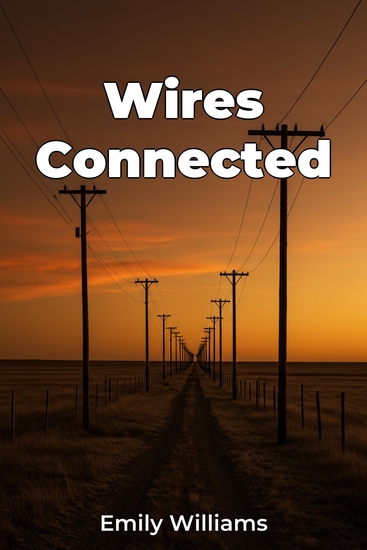
Wires Connected - cover

Wires Connected

Emily Williams

Übersetzer A AI

Verlag: Publifye

  • 0
  • 0
  • 0

Beschreibung

Wires Connected explores the telegraph's revolutionary impact, marking a pivotal point in the history of communication and technological innovation. This book examines how the simple telegraph wire transformed societies by shrinking distances and enabling near-instantaneous communication, a stark contrast to the slower methods of the 19th century. The telegraph's influence extended beyond mere communication; it reshaped business practices, accelerated news dissemination, and even altered international relations, laying the groundwork for future technologies like the telephone and the internet.

 
The book progresses chronologically, starting with the key inventions and figures behind the telegraph's creation, then detailing the construction of telegraph lines across continents and oceans. Subsequent chapters delve into the telegraph's broad social and economic impacts, analyzing its use in journalism, finance, and governance. It highlights the telegraph's role as a catalyst for the digital age, offering a comprehensive look at its technological, social, economic, and political implications.

 
The book uniquely emphasizes the telegraph's societal impact, arguing that it fundamentally changed our perception of time and space. By presenting historical documents, technical manuals, and personal correspondence, Wires Connected offers a fresh perspective on the telegraph's enduring legacy and its essential role in shaping our interconnected world.
Verfügbar seit: 03.03.2025.
Drucklänge: 60 Seiten.

Weitere Bücher, die Sie mögen werden

  • The Prophecies - cover

    The Prophecies

    Anonym

    • 0
    • 0
    • 0
    Brought to you by Altrusian Grace Media and narrated by Matthew Schmitz. 
     Nostradamus’s The Prophecies presents hundreds of tightly compressed quatrains that fracture time and history into symbolic glimpses of upheaval, power, and ruin. The work avoids narrative order; instead it disperses images of kings, empires, celestial disturbances, plagues, and wars across a fog of allegory, where each vision feels suspended between history and imagination. The language is deliberately opaque—layered with astrological references, classical allusions, and oblique metaphors—forcing the reader to navigate a shifting terrain of potential meanings rather than fixed predictions.
    Zum Buch
  • Raising a Bilingual Child - A step-by-step guide for parents - cover

    Raising a Bilingual Child - A...

    Barbara Zurer Pearson

    • 0
    • 0
    • 0
    Raising a Bilingual Child is a guidebook for what to do and what to expect when you're parenting a bilingual-to-be. It can be used as a quick reference to help with a specific strategy, but also provides the bigger picture of the stages learners go through on their path to language and literacy in one, two, or more languages. The book includes many inspirational accounts from parents and childhood bilinguals. It dispels myths about bilingualism and explains how learning multiple languages at a young age can enhance your child's overall intellectual and emotional development. This version is abridged by the author to focus on the most practical advice.
    Zum Buch
  • Stories from Kathasaritasagara series -4 - From Various sources - cover

    Stories from Kathasaritasagara...

    Anusha HS

    • 0
    • 0
    • 0
    The book Kathasaritsagara has been created by Soma Deva. It consists of 21,500 shlokas. 
    This book Kathasaritsagara has been divided into 18 lambakaas, and those 18 lambakaas are still more divided into 125 Tharanga's. 
    Some lambakaas are very big, while some are very small. 
    If there are 115 Shlokas in the 11th Lambaka, there are around 4925 Shlokas in 12th Lambaka. 
    During ancient times from the mouth of Lord Shiva, this story got birth. Those who listen to this story will experience all sorts of worldly pleasures. They will be blessed by Lord Shiva and at last reach jnana Loka by the blessings of lord shiva.
    Zum Buch
  • The Colonial Legacy - How Colonialism Shaped Modern Political and Economic Landscapes - cover

    The Colonial Legacy - How...

    Arlo Holders

    • 0
    • 0
    • 0
    Colonialism has been a defining force in shaping the modern world, leaving an indelible mark on political systems, economic structures, and cultural identities. At its core, colonialism is the practice of domination, where one nation establishes control over another, often exploiting its resources and people for economic and political gain. While the phenomenon of colonialism spans centuries, its modern form gained momentum during the Age of Exploration in the 15th and 16th centuries, when European powers began venturing across the globe in search of wealth, land, and influence. 
    The roots of colonialism lie in the desire for expansion and power. Early explorers like Christopher Columbus, Vasco da Gama, and Ferdinand Magellan set the stage for European empires to claim vast territories across Africa, Asia, and the Americas. These expeditions were often justified by a mix of economic motives, religious zeal, and a belief in cultural superiority. The promise of lucrative trade routes, access to valuable resources such as spices, gold, and silver, and the opportunity to spread Christianity drove these early ventures. Over time, colonial ambitions evolved into fully-fledged empires, with nations like Britain, Spain, Portugal, France, and the Netherlands establishing global dominance. 
    Colonial rule profoundly altered the political and social structures of the colonized regions. Indigenous governance systems were often dismantled and replaced with centralized administrations that reflected the interests of the colonizing power. This shift not only disrupted traditional ways of life but also laid the foundation for many of the political challenges faced by former colonies today. Economically, colonies were exploited for their resources, creating a system of wealth extraction that enriched the colonizers at the expense of local populations.
    Zum Buch
  • Healing Childhood trauma 2-1 Series - The Perfect Series for Victims of Childhood Sexual Abuse - cover

    Healing Childhood trauma 2-1...

    Nancy Loyat

    • 0
    • 0
    • 0
    If you were sexually abused as a child or minor and its consequences still affect your life, read this. 
    You are no longer alone. For years, I didn’t understand the source of my anger. Past and present were tangled, leaving me feeling rejected and abandoned. To find clarity, I tried several therapeutic approaches, alone and in groups. The secret buried in my memory poisoned my life. All I wanted was to feel better, but I didn’t know how. 
    Years passed before I discovered the truth. My life felt like a windswept leaf—frustration and anger ruled me. It wasn’t until I hit rock bottom—overreacting to comments, without a job or money, asked to move out—that my body reminded me of the trauma I had buried: childhood sexual abuse. 
    Common behaviors among victims include: 
    Trust issues 
    Taking care of others at their own expense 
    Persistent anger or panic 
    Overreacting to remarks 
    Living aimlessly or trying to escape 
    Inability to focus on real needs or make decisions 
    Difficulty identifying priorities 
    Possible post-traumatic stress disorder (PTSD) 
    Talking about such pain is difficult, yet its effects often lead to destructive behavior. Joining a support group helped me understand that victims of childhood sexual abuse are survivors. Through readings and exercises with the group, I learned to recognize my wounds and name long-repressed emotions. 
    If you believe your life could be better without anger or shame, this book is for you.
    Zum Buch
  • Derrida - Deconstruction and the Play of Meaning - cover

    Derrida - Deconstruction and the...

    Hector Davidson

    • 0
    • 0
    • 0
    Jacques Derrida, one of the most influential philosophers of the 20th century, revolutionized the way we think about language, meaning, and interpretation. His development of the concept of deconstruction has left a profound impact on philosophy, literary theory, and critical thought. To understand Derrida's legacy, it is essential to explore the key elements of his intellectual journey and how his ideas continue to shape contemporary discourse. 
    Derrida was born in Algeria in 1930, and his philosophical development was deeply influenced by the intellectual currents of post-war Europe, particularly phenomenology, structuralism, and existentialism. His work challenged the assumptions that underpinned much of Western thought, especially the metaphysical foundations of philosophy. One of his central concerns was the question of meaning and how it is constructed. He argued that meaning is never fixed, but instead is constantly shifting and dependent on a network of differences. This idea of différance, a term Derrida coined to describe the interplay of differences in language, became a cornerstone of his philosophy. 
    At the heart of Derrida's thought is the critique of the Western philosophical tradition, which he believed had centered itself around binary oppositions—such as presence/absence, speech/writing, and mind/body. These oppositions, Derrida argued, are not natural or inherent, but rather are constructed and perpetuated through language. By deconstructing these binaries, Derrida aimed to reveal the hidden power structures and assumptions that shaped our understanding of the world. He proposed that language itself is unstable, always in flux, and that meaning can never be fully contained or reduced to simple terms.
    Zum Buch