Begleiten Sie uns auf eine literarische Weltreise!
Buch zum Bücherregal hinzufügen
Grey
Einen neuen Kommentar schreiben Default profile 50px
Grey
Jetzt das ganze Buch im Abo oder die ersten Seiten gratis lesen!
All characters reduced
Mainstream Shift Markers - cover

Mainstream Shift Markers

Emily Williams

Übersetzer A AI

Verlag: Publifye

  • 0
  • 0
  • 0

Beschreibung

"Mainstream Shift Markers" explores the pivotal moments when mainstream publishing began embracing LGBTQ+ voices, offering a historical analysis of this significant cultural shift. The book argues that LGBTQ+ inclusion wasn't a smooth progression but a series of hard-won battles shaped by activism, shifting social norms, and the commercial appeal of LGBTQ+ content. For example, the surge in AIDS literature during the 1980s and 1990s played a crucial role in bringing LGBTQ+ experiences to a wider audience.

 
The book examines the evolution of LGBTQ+ representation in publishing, from subtle early depictions to the emergence of specialized LGBTQ+ presses and the subsequent mainstreaming of LGBTQ+ authors and stories. It progresses chronologically, delving into the impact of events like the Stonewall riots and significant legal decisions. A key focus is on the publishing industry's role as a gatekeeper, determining which stories are told and by whom, while also addressing ongoing debates about authenticity and cultural appropriation.
Verfügbar seit: 07.04.2025.
Drucklänge: 72 Seiten.
Weitere Bücher, die Sie mögen werden

  • Mysterious Egypt: A Collection of Ancient Egyptian Mysteries Strange Stories and Archaeological Oddities - cover

    Mysterious Egypt: A Collection...

    Charles River Editors

    • 0
    • 0
    • 0
    Part of the reason Egyptian history is so intriguing is because it is so enigmatic. The imposing monuments, the strange practice of mummification, the picturesque form of writing, the colorful art, and other aspects of Egyptian life all make for an inspiring and somewhat baffling culture. To this day, despite the wealth of written materials and countless monuments, Egyptologists constantly uncover more mysteries about ancient Egypt, even if many of those mysteries are somewhat mundane and appeal more to academics. Historians still debate precise chronologies of dynasties, theological nuances, and architectural details. 
    At the same time, such a great and alien civilization has inevitably inspired many strange theories about how it was founded, and how its grand monuments were built. Some of them border on the absurd, including associations with UFOs and Atlantis that have plagued Egyptologists from the beginning. Not only does the “evidence” for these wild theories vanish under close scrutiny, but they emit a whiff of racism as well by implying the Egyptians weren’t capable of building the great monuments themselves. 
    The reality is far more interesting, and almost as weird. Despite being the most intensely studied ancient culture in the world, there is no shortage of Egyptian mysteries worth studying, and even some of Egypt’s most famous monuments, such as the Sphinx and the Great Pyramid of Giza, are the subjects of heated controversies among scholars. Serious, educated researchers have debated the eras in which they were built, and whether there could be hidden chambers with untold riches inside. Even among the experts who have dedicated their lives to studying this ancient civilization, Egypt has not given up all of its mysteries.
    Zum Buch
  • Greatness is a Choice - A battle-tested guide on how to live a great life - cover

    Greatness is a Choice - A...

    Ethan Penner

    • 0
    • 0
    • 0
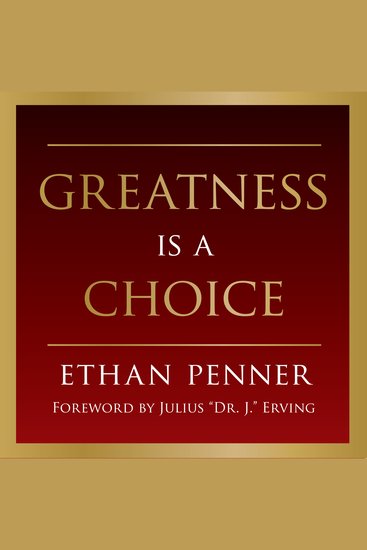
    In Greatness Is a Choice, Wall Street legend Ethan Penner presents a jewel box filled with thoughts and ideas thatchallenge readers by stimulating a higher level of awareness and critical thinking. Penner’s forthright style makes the book invaluable to a broad range of readers. Each chapter is a guidepost for today’s challenging societal issues, but the words are also rooted in timeless thinking culled from Penner’s considerable personal and professional experiences. Greatness Is a Choice asks readers to consider new ideas and strategies as critical tools in the pursuit of a better life for themselves and their families.  
    Greatness Is a Choice is also a compendium of values and ideals anyone can adopt to achieve greater personal and societal fulfillment. Penner writes about kindness, respect, and faith, along with a healthy reverence for family and legacy. Penner challenges readers to see the natural interconnectivity of politics, finance, economics, ideology, faith, nature, and music. Readers will: Discover new ways of thinking about how to define and attain personal success.Be reminded of the American principles that contributed to the nation’s rapid ascent and still serve as a beacon of hope, equality, and prosperity. Learn how choices to pursue a life of personal growth also benefit society.Be challenged to think and take action to do their part in creating a more peaceful and productive future. 
    Greatness Is a Choice is a must-read for anyone with the courage to be intellectually challenged, consider and adopt new ideas, and think deeply about choices that lead to better lives for ourselves and our children. It is an ideal book to share with others to help establish a better intellectual framework for our future.
    Zum Buch
  • Teasing Ellis: An Erotic Lesbian Romance (The Ellis Chronicles - book 10) - cover

    Teasing Ellis: An Erotic Lesbian...

    T.E. Robbens

    • 0
    • 0
    • 0
    Book 10 of The Ellis Chronicles - Ellis and Lynn are getting closer despite Katie's best attempts to divert them. Lynn's sparkling blue eyes tease Ellis at every turn and Ellis can't keep Lynn off her mind or out of her dreams. But even in a very steamy dream about Lynn, Katie finds a way to break Ellis' concentration.
    Zum Buch
  • Sicily: The History and Legacy of the Mediterranean’s Most Famous Island - cover

    Sicily: The History and Legacy...

    Charles River Editors

    • 0
    • 0
    • 0
    It is hard to find an island on the map more central than Sicily. Located at the crossroads between Europe and Africa, and between the Eastern and Western Mediterranean, Sicily has rarely been governed as an independent, unified state. Nonetheless, the island has always occupied a front-row seat to some of the most important events in history, and nowhere is this more obvious than during antiquity.  
    	After the Punic Wars, Sicily would remain a Roman domain until the end of antiquity, and affairs on the island dramatically affected the Romans at home. The First Servile War (135-132 BCE) and Second Servile War (104-100 BCE) both took place in Sicily, and they were perhaps the largest (and temporarily successful) slave revolts in antiquity, demonstrating a great unease in the early stages of Roman imperialism. In 70 BCE, the Roman orator and statesman Cicero gave a speech against Verres, the corrupt governor of the island, and over 2,000 years later it still provides an invaluable glimpse into the way things were run in Sicily and the Roman Republic as a whole.  
    	Over 1500 years later, the largest island of the Mediterranean remains a complicated place with a fraught relationship to the Italian mainland. Separated by only the narrow Strait of Messina, Sicily feels like a different country in many ways, and the differences between Sicilians and Italians are much vaster than the tiny geographical separating them might intimate. For example, the linguistic differences between the two are substantial, as Sicilian is practically its own language, rather than just a dialect. It differs from Italian most apparently insofar as the normal final “o” of masculine nouns is replaced by a “u,” but beyond that difference, there are lengthy, five syllable words that a standard Italian tongue tends to trip over. In fact, most Italians have difficulty understanding Sicilian if they can comprehend any of it at all.
    Zum Buch
  • Facilitation - A Framework for Psychoactive Exploration and Healing - cover

    Facilitation - A Framework for...

    Julian Palmer

    • 0
    • 0
    • 0
    Julian Palmer is a pioneering figure in psychedelic culture in Australia and internationally, particularly known for formulating and popularizing a DMT smoking blend called "Changa." In this book, Julian shares in detail how he facilitated plant medicine ceremonies and psychedelic sessions for people over more than two decades of underground practice, before his retirement in 2023. 
    With a particular focus on non-traditional plant medicine work — especially the acacias and ayahuasca — the book also spans a broad range of psychoactive substances, exploring how they can be shared to support healing, transformation and a deeper understanding of the nature of reality. 
    Even highly experienced facilitators are sure to find genuine wisdom here, in this honest collection of stories, insights and reflections on what it takes to create truly ideal conditions for people to engage deeply with psychedelics.
    Zum Buch
  • Stuart Restoration The: The History and Legacy of the English Monarchy’s Return to Power in the Late 17th Century - cover

    Stuart Restoration The: The...

    Editors Charles River

    • 0
    • 0
    • 0
    Oliver Cromwell is one of the most important men in England’s history, but everything he struggled for collapsed within two decades of his death. The army, Parliament and the citizens of London grappled with each other for control of the country, and even the army no longer remained a united political force. Civil war almost broke out again as a force under Lambert failed to prevent General Monck, the military governor of Scotland, from marching south and dissolving the Rump Parliament. Excluded MPs were restored on condition that they themselves dissolve Parliament, and following fresh elections without military intervention, a new Parliament met on April 25, 1660. Dominated by Presbyterians and Royalists, it accepted a settlement offered by the man titling himself Charles II, the son and heir of Charles I. On May 25, 1660, Charles II returned to England, and less than two years after Cromwell’s death, his work was undone by the Restoration. King Charles II heaped ignominy upon defeat by having Cromwell’s body dug up and posthumously executed. Cromwell’s body was then decapitated, as was Ireton’s, and their heads were placed on a pike above Westminster Hall, where Charles I had been tried, for several years.  
    	Despite the Restoration, however, and despite the fact England’s republican experiment barely outlasted Cromwell, the Commonwealth and Restoration were hugely important in asserting the power of Parliament, and it permanently shifted England’s political balance firmly towards a constitutional monarchy limited by Parliament. The Stuart monarchy was restored on condition of compromise with Parliament and the army, and a precedent had been set for Parliament to replace the monarch, a precedent it would follow in the 1680s when James II was replaced by William and Mary in a settlement that set even more limits around the monarch.
    Zum Buch