A wild moor. A love that burns too fiercely. A darkness that refuses to die.
At the storm-lashed estate of Wuthering Heights, Heathcliff and Catherine Earnshaw form a bond so powerful it defies class, reason, and time itself. But jealousy, cruelty, and heartbreak twist their love into something fierce and destructive—leaving scars that echo across generations. As vengeance rises and secrets unravel, the moors become a stage for one of literature's most haunting romances.
Praised as "a masterpiece of raw emotion and unforgettable intensity," Emily Brontë's only novel captivates readers with its gothic atmosphere, turbulent characters, and fearless exploration of obsession, loyalty, and the darker side of love.
If you crave emotionally charged storytelling, stormy landscapes, and characters who linger in the soul, this novel is essential reading.
Step onto the moors—open the book and feel the wind of Wuthering Heights sweep you away.
The bookshelves of American literature are incredible collections that have gathered together centuries of very talented authors. From this continent their fame spread and whilst among their number many are now forgotten or neglected their talents endure. Among them is Clark Ashton Smith.
Edgar Allan Poe was an American writer, poet, editor and literary critic, considered part of the American Romantic Movement. Best known for his tales of mystery and the macabre, Poe was one of the earliest American practitioners of the short story and is considered the inventor of the detective-fiction genre. He is further credited with contributing to the emerging genre of science fiction. Here is a fifth collection of some of his best stories: The Pit and The Pendulum, A Descent Into The Maelstrom, and Mesmeric Revelation.
This story brings together Roderick Serle and Ruth Anning, two different personalities failing to communicate meaningfully. Serle is high with self-esteem and Anning on the other hand has retreated into a tiny world which excludes any dangers of engagement.
The Masque of the Red Death, a short story written by Edgar Allan Poe, follows Prince Prospero's attempts to avoid a dangerous plague known as the Red Death by hiding in his abbey. He, along with many other wealthy nobles, has a masquerade ball within seven rooms of his abbey, each decorated with a different color. In the midst of their revelry, a mysterious figure enters and makes his way through each of the rooms. When Prospero confronts this stranger, he falls dead. The story follows many traditions of Gothic fiction and is often analyzed as an allegory about the inevitability of death, though some critics advise against an allegorical reading. Many different interpretations have been presented, as well as attempts to identify the true nature of the disease of the "Red Death."
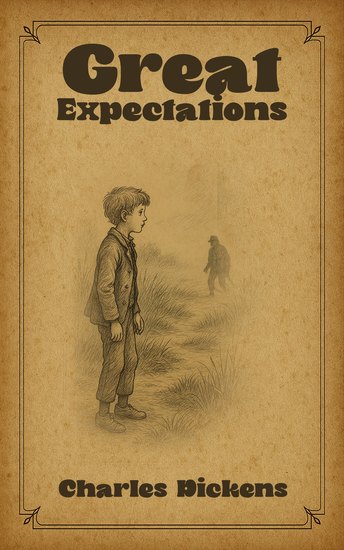
Great Expectations is one of Charles Dickens's most beloved and enduring novels—a compelling coming-of-age story that explores ambition, identity, love, and moral growth. Set in Victorian England, the novel follows the life of Pip, an orphaned boy whose humble beginnings shape his early understanding of the world, only to be challenged by unexpected fortune and painful self-discovery.
Pip's life changes dramatically after a mysterious benefactor provides him with the means to become a "gentleman." As he enters London society, Pip becomes increasingly consumed by wealth, status, and the desire to rise above his origins. Central to his emotional journey is his unrequited love for the cold and beautiful Estella, who has been raised by the eccentric and bitter Miss Havisham—an unforgettable character trapped in the ruins of her own broken past.
Through Pip's struggles and mistakes, Dickens examines the true meaning of gentility and success. The novel contrasts external refinement with inner virtue, revealing how pride, vanity, and social ambition can distort one's values. Alongside its vivid characters and dramatic plot twists, Great Expectations offers sharp social commentary on class divisions, justice, and the rigid structures of Victorian society.
Ultimately, Great Expectations is a story of personal transformation and redemption. As Pip learns the cost of his "great expectations," he is forced to confront his own flaws and rediscover compassion, loyalty, and humility. Rich in emotional depth, symbolism, and timeless wisdom, the novel remains a powerful exploration of what it truly means to grow up—and to become a better human being.
The Stockbroker's Clerk is one of the 56 short Sherlock Holmes stories written by Sir Arthur Conan Doyle. It is the fourth of the twelve collected in The Memoirs of Sherlock Holmes in most British editions of the canon, and third of eleven in most American ones (owing to the omission of the "scandalous" "Adventure of the Cardboard Box"). The story was first published in Strand Magazine in March 1893 and featured seven illustrations by Sidney Paget. Famous works of the author Arthur Conan Doyle: A Study in Scarlet, The Sign of the Four, The Adventures of Sherlock Holmes, The Memoirs of Sherlock Holmes, The Hound of the Baskervilles, The Return of Sherlock Holmes, The Valley of Fear, His Last Bow, The Case-Book of Sherlock Holmes, Stories of Sherlock Holmes, The Lost World.
Ihr Account wird momentan auf einem anderen Gerät benutzt.
Es ist bereits eine Sitzung auf einem anderen Gerät geöffnet.
Abmelden
Erneut verbinden
Ihr Account wird momentan auf einem anderen Gerät benutzt.
Um darauf zugreifen zu können, müssen die Berechtigungen und obligatorischen Richtlinien (markiert mit *) überprüft und akzeptiert werden.
Wenn Sie Hilfe oder weitere Informationen benötigen, schreiben Sie an support@24symbols.com
Akzeptieren
Ihr Account wird momentan auf einem anderen Gerät benutzt.
OK
Bestätigungs-E-Mail noch einmal schicken
Ihr Account wird momentan auf einem anderen Gerät benutzt.
Wir haben versucht, Ihr Abo abzubuchen, aber es ist uns nicht gelungen. Das teilt uns Ihre Bank/Karte mit:
Wenn Sie weiterlesen möchten, müssen Sie sich möglicherweise an Ihre Bank wenden oder Ihre Zahlungsinformationen hier ändern:
Ich möchte meine Karte aktualisieren!
Haben Sie Fragen? Schreiben Sie uns an support@24symbols.com und wir werden Ihnen weiterhelfen.
Cookies helfen uns bei der Bereitstellung unserer Dienste. Durch die Nutzung unserer Dienste erklären Sie sich damit einverstanden, dass wir Cookies setzen.Mehr erfahren