Begleiten Sie uns auf eine literarische Weltreise!
Buch zum Bücherregal hinzufügen
Grey
Einen neuen Kommentar schreiben Default profile 50px
Grey
Jetzt das ganze Buch im Abo oder die ersten Seiten gratis lesen!
All characters reduced
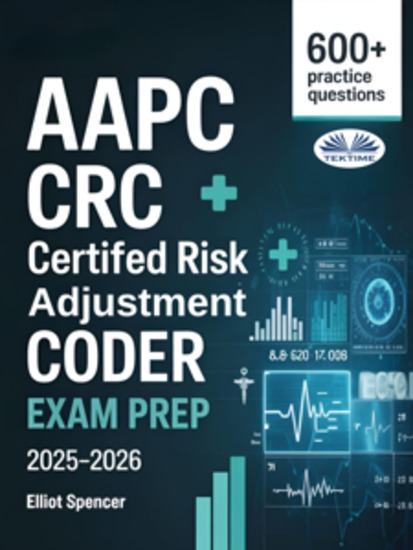
AAPC CRC Certified Risk Adjustment Coder Exam Prep 2025–2026 - Study Guide With 600+ Practice Questions Detailed Answer Explanations & Proven Test-Taking Strategy - cover

AAPC CRC Certified Risk Adjustment Coder Exam Prep 2025–2026 - Study Guide With 600+ Practice Questions Detailed Answer Explanations & Proven Test-Taking Strategy

Elliot Spencer

Verlag: Tektime

  • 0
  • 0
  • 0

Beschreibung

The AAPC CRC Certified Risk Adjustment Coder Exam Prep 2025–2026 by Elliot Spencer is expertly crafted to address the challenges faced by aspiring and current medical coders who want to advance their careers in the lucrative field of risk adjustment coding. This book is more than just a study manual — it is a powerful learning tool packed with over 600 meticulously designed practice questions, detailed answer explanations, and proven test-taking strategies that mirror the real exam environment. Every page is tailored to reinforce critical concepts, improve coding accuracy, and enhance your understanding of complex risk adjustment models, HCC coding, and compliant documentation standards.Are you struggling to master the complexities of Certified Risk Adjustment Coding and worried that your exam preparation isn’t enough to secure your certification? Do you find yourself overwhelmed by the vast coding guidelines, intricate documentation requirements, and constantly evolving healthcare regulations? If you’re looking for a proven, comprehensive, and results-driven study guide that not only prepares you but empowers you to confidently pass the AAPC CRC Certified Risk Adjustment Coder Exam, your search ends here.The AAPC CRC Certified Risk Adjustment Coder Exam Prep 2025–2026 by Elliot Spencer is expertly crafted to address the challenges faced by aspiring and current medical coders who want to advance their careers in the lucrative field of risk adjustment coding. This book is more than just a study manual — it is a powerful learning tool packed with over 600 meticulously designed practice questions, detailed answer explanations, and proven test-taking strategies that mirror the real exam environment. Every page is tailored to reinforce critical concepts, improve coding accuracy, and enhance your understanding of complex risk adjustment models, HCC coding, and compliant documentation standards.In an industry where precision and compliance are paramount, this guide equips you with the skills and knowledge to navigate ICD-10-CM coding intricacies, understand CMS guidelines, and interpret hierarchical condition categories with confidence. Elliot Spencer’s clear, concise explanations break down complicated topics into manageable lessons, making study time efficient and effective. Whether you’re a beginner or a seasoned coder, this book bridges the gap between theory and practice, transforming your exam preparation into a focused, successful journey.This indispensable exam prep guide also integrates the latest industry updates, ensuring you stay ahead in a rapidly changing healthcare landscape. With targeted practice questions and detailed answer rationales, you’ll develop critical thinking skills essential for passing the CRC exam on your first attempt. It’s more than just memorization — it’s about mastering the application of coding knowledge in real-world scenarios.If you are serious about certification and career growth in risk adjustment coding, investing in this comprehensive study guide is your first step toward success. Don’t let uncertainty or inadequate preparation hold you back from achieving your goals. Empower yourself with the best tools, practice smart, and walk into your exam with confidence.Take control of your future today. Add AAPC CRC Certified Risk Adjustment Coder Exam Prep 2025–2026 to your cart and start your journey toward certification excellence now.PUBLISHER: TEKTIME
Verfügbar seit: 25.07.2025.
Drucklänge: 320 Seiten.

Weitere Bücher, die Sie mögen werden

  • China’s Route to Carbon Neutrality: Perspectives and the Role of Renewables - cover

    China’s Route to Carbon...

    Irena International Renewable...

    • 0
    • 0
    • 0
    This report draws on IRENA’s existing, technology-focused studies to offer key insights from global experiences relevant to China’s energy transition.
    Zum Buch
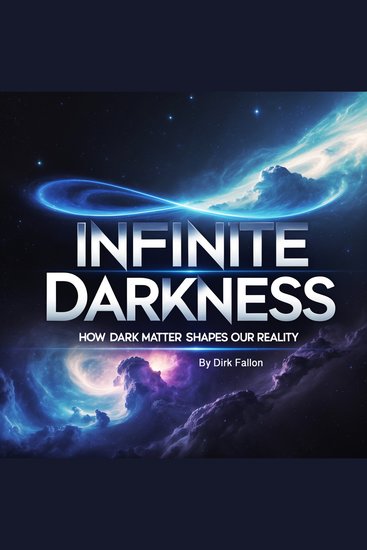
  • Infinite Darkness - How Dark Matter Shapes Our Reality - cover

    Infinite Darkness - How Dark...

    Dirk Fallon

    • 0
    • 0
    • 0
    Dark matter is one of the most intriguing mysteries in modern science. Despite making up approximately 27% of the universe, it cannot be seen or detected directly using traditional instruments. The name "dark matter" itself stems from the fact that it does not emit, absorb, or reflect light, making it invisible to the electromagnetic spectrum. However, its existence is inferred from its gravitational effects on visible matter, such as galaxies, stars, and other celestial objects. Without dark matter, the motion of galaxies would not make sense, as they appear to be moving far too quickly for the amount of visible matter they contain. This unseen substance holds galaxies together and ensures the stability of the universe’s large-scale structure. 
    The story of dark matter begins in the 1930s with the work of Swiss astronomer Fritz Zwicky. While studying the Coma galaxy cluster, Zwicky found that the visible matter in the galaxies was not enough to account for the way the galaxies were moving. He proposed that there must be some form of unseen mass providing additional gravitational pull, which he called "dark matter." Although his hypothesis was met with skepticism, it laid the foundation for further research into this invisible force. 
    Over the following decades, scientists gathered more indirect evidence supporting the existence of dark matter. In the 1970s, astronomer Vera Rubin and her colleague Kent Ford observed the rotation of galaxies and found that stars on the outer edges were moving much faster than expected. Based on the laws of physics and the visible mass, these stars should have been moving more slowly and would have been flung out of their orbits. The only explanation for their high speed was the presence of a significant amount of unseen mass—dark matter.
    Zum Buch
  • Fluid Dynamics - Principles and Applications of Fluid Flow - cover

    Fluid Dynamics - Principles and...

    Mark Hedges

    • 0
    • 0
    • 0
    Fluid dynamics is a branch of physics that deals with the behavior of fluids (liquids and gases) in motion. It is a fundamental subject in engineering, physics, and applied sciences, playing a crucial role in various industries, including aerospace, automotive, energy, and environmental studies. Understanding how fluids move and interact with their surroundings helps engineers and scientists design efficient systems, predict natural phenomena, and develop innovative technologies. 
    At its core, fluid dynamics is governed by a set of fundamental principles derived from classical mechanics and thermodynamics. These include the conservation of mass, momentum, and energy. The governing equations, such as the Navier-Stokes equations, describe the motion of fluids by relating forces, pressure, velocity, and viscosity. The study of fluid dynamics is essential for solving real-world problems, from designing aircraft wings and optimizing fuel injection systems to predicting weather patterns and ocean currents. 
    Fluids can exhibit different types of motion depending on external forces, constraints, and their physical properties. A key distinction in fluid dynamics is between laminar flow and turbulent flow. Laminar flow is characterized by smooth, orderly fluid layers, whereas turbulent flow is chaotic and involves complex mixing and vortices. The Reynolds number, a dimensionless quantity, helps determine whether a flow will be laminar or turbulent based on factors like velocity, viscosity, and characteristic length.
    Zum Buch
  • Finding Meaning in Wine - A US Blend - cover

    Finding Meaning in Wine - A US...

    Michael Sinowitz

    • 0
    • 0
    • 0
    This book examines controversies in American wine culture and how those controversies intersect with and illuminate current academic and cultural debates about the environment and about interpretation. 


    With a specific focus on the United States of America, the methods that we use to discuss literature and other art are applied to wine-making and wine culture. The book explores the debates about how to evaluate wine and the problems inherent in numerical scoring as well as evaluative tasting notes, whether winemakers can be artists, the discourse in wine culture involving natural wine and biodynamic farming, as well as how people judge what makes a wine great. These interpretative commitments illuminate an underlying metaphysics and allegiance to a culture of reason or feeling. The discussions engage with a broad range of writers and thinkers, such as Roland Barthes, Susan Sontag, Louis Menand, Michael Pollan, Greg Garrard, John Guillory, Amitov Ghosh, Pierre Bourdieu, and Barbara Herrnstein-Smith. The book draws upon not only a number of texts produced by wine critics, wine writers, literary critics, and theorists but also extensive interviews with wine writers and multiple California winemakers. These interviews contribute to a unique reflection on wine and meaning.
    Zum Buch
  • Earthmusic - cover

    Earthmusic

    Paul Winter

    • 0
    • 0
    • 0
    Since the 1960s, Paul Winter has been in the vanguard of musicians whose art expresses special appreciation for the natural music of our world--wolf, whale, wind and water, combined with everything from Bach to Bossa Nova. In this visit Paul tells about the making of Missa Gaia, and his lifelong love affair with music that "presses your wonder button."
    Zum Buch
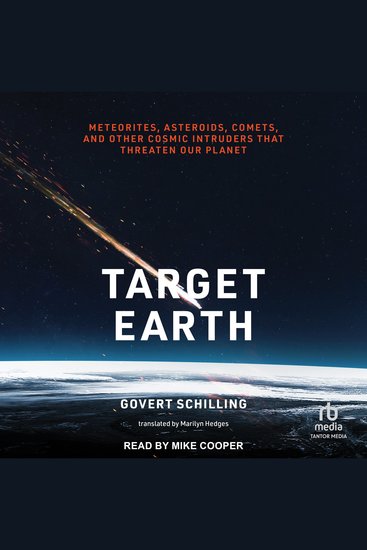
  • Target Earth - Meteorites Asteroids Comets and Other Cosmic Intruders That Threaten Our Planet - cover

    Target Earth - Meteorites...

    Govert Schilling

    • 0
    • 0
    • 0
    An acclaimed science writer tells the story of cosmic projectiles that may be on a collision course with our Earth. 


    The impact of an asteroid led to the extinction of the dinosaurs. Could another giant cosmic missile soon be heading our way? In Target Earth, acclaimed Dutch astronomy writer Govert Schilling provides a full account of what we know, and need to know, about all the extraterrestrial matter constantly bombarding our planet—from microscopic dust particles and space debris to massive meteorites, comets, and asteroids. 


    Drawing upon the latest scientific discoveries, Schilling explores virtually every aspect of cosmic impacts—from small meteorites to devastating collisions, from the craters that marked our planet's surface to the impacts that left their mark on other celestial bodies, and from searches for near-miss lumps of rock to ways of protecting humanity from an assault from the cosmos. Along the way, he considers near misses in the past and the possibility of others in the future and ponders the positive side of these visitations from space: If our planet had not been the target of cosmic rubble from its very formation, life on Earth would likely never have gotten started.
    Zum Buch