Begleiten Sie uns auf eine literarische Weltreise!
Buch zum Bücherregal hinzufügen
Grey
Einen neuen Kommentar schreiben Default profile 50px
Grey
Jetzt das ganze Buch im Abo oder die ersten Seiten gratis lesen!
All characters reduced
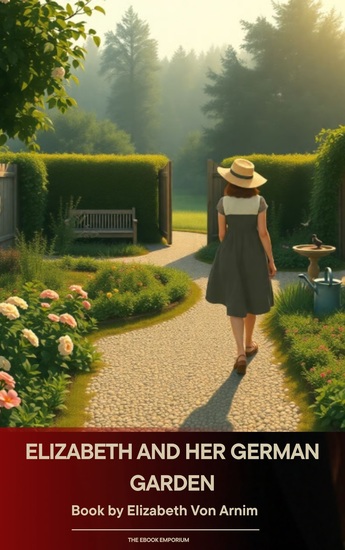
Elizabeth and Her German Garden - cover

Elizabeth and Her German Garden

Elizabeth Von Arnim

Verlag: The Ebook Emporium

  • 0
  • 0
  • 0

Beschreibung

"I am convinced that a garden is the best place to be in when you are unhappy."

Sick of the stifling social expectations of high society and the relentless demands of domestic life, "Elizabeth" finds her sanctuary in a neglected, overgrown estate in North Germany. Through her eyes, we experience the changing seasons and the arduous yet rewarding task of bringing a garden to life. This is not just a book about flowers; it is a sharp, satirical, and deeply personal manifesto on a woman's right to her own time, her own thoughts, and her own plot of land.

A Rebel in a Sun Hat: While Elizabeth's husband—humorously dubbed "The Man of Wrath"—and her judgmental visitors represent the rigid patriarchal structures of the late Victorian era, Elizabeth finds her freedom among the roses and larkspur. With a biting wit that predates the "modern" woman, she dissects the absurdities of her social circle while finding profound spiritual renewal in the dirt beneath her fingernails.

The Foundation of Modern "Slow Living": Long before it became a movement, Elizabeth von Arnim captured the essence of "slow living." Her prose is a vibrant tapestry of botanical detail and philosophical musings. Elizabeth and Her German Garden remains a beloved classic for anyone who has ever felt that a afternoon spent alone with a book and a flowerbed is worth more than a dozen formal dinner parties.

Escape to a world where flowers are the only conversation that matters. Purchase "Elizabeth and Her German Garden" today and find your own sanctuary.
Verfügbar seit: 06.01.2026.
Drucklänge: 102 Seiten.
Weitere Bücher, die Sie mögen werden

  • Northanger Abbey - cover

    Northanger Abbey

    Jane Austen

    • 0
    • 0
    • 0
    She loves gothic novels. She expects dark secrets. Reality has other plans.
    Young Catherine Morland enters society armed with a lively imagination and a love of thrilling romances. When she visits the mysterious Northanger Abbey, she begins to suspect hidden crimes and shocking secrets—only to discover that real life, with its social missteps and emotional lessons, can be far more surprising. With warmth and wit, Austen turns youthful fantasy into a charming story of self-discovery.
    
    Celebrated as "one of Austen's funniest and most self-aware novels," this delightful classic pokes fun at gothic fiction while celebrating sincerity, kindness, and common sense. Its humor and heart continue to enchant readers everywhere.
    
    If you enjoy clever satire, gentle romance, and stories that smile at their own imagination, this novel is pure Austen joy.
    
    Open the book—and laugh along as expectations meet reality.
    Zum Buch
  • The Complete Supernatural Stories - cover

    The Complete Supernatural Stories

    Algernon Blackwood

    • 0
    • 0
    • 0
    What if the greatest horror was not evil—but the vast unknown?
    
    The Complete Supernatural Stories of Algernon Blackwood gathers the full body of supernatural fiction from one of the masters of atmospheric horror. Renowned for his subtle terror and cosmic imagination, Blackwood wrote stories where nature itself becomes mysterious, consciousness expands beyond reason, and unseen forces quietly overwhelm the human mind.
    
    Unlike shock-driven horror, Blackwood's tales rely on mood, suggestion, and spiritual unease. Forests whisper, ancient presences awaken, and ordinary people confront realities far larger than themselves. His work deeply influenced modern horror writers, including H. P. Lovecraft.
    
    This definitive collection brings together Blackwood's most celebrated supernatural tales, offering readers a haunting journey into the occult, the mystical, and the unknowable.
    
    Inside this eBook, you'll explore:
    
    All supernatural and weird fiction stories by Algernon Blackwood
    
    Iconic works such as "The Willows" and "The Wendigo"
    
    Psychological, cosmic, and nature-based horror
    
    A cornerstone collection of classic supernatural literature
    
    Praised by generations of writers and readers, Algernon Blackwood's stories remain among the most powerful explorations of fear ever written.
    
    Enter the silence where something waits. Buy now and experience the complete supernatural stories of Algernon Blackwood.
    Zum Buch
  • A Farewell to Arms - cover

    A Farewell to Arms

    Ernest Hemingway

    • 0
    • 0
    • 0
    This new audiobook edition of Hemingway's classic is narrated by Audie Award nominee and AudioFile Golden Voice Kevin R. Free.  
    It is a moving and beautiful book. —Percy Hutchison in the The New York Times Book Review, 1929  
    Hemingway’s rhythmic, stripped-down, often-mimicked style lulls readers into a sort of trance that allows his final line to explode like a tossed grenade, devastating in its simplicity. —Valerie Trapp in The Atlantic, in their list of The Great American Novels  
    Frederic Henry is an American lieutenant of an ambulance corps serving in the Italian front of World War I. During his service he meets Catherine Barkley, an English nurse who goes on to work closely with him.  
    As the relationship between Frederic and Catherine develops, the novel follows the effects the war has on them and those around them. But the war is not the centerpiece of the book; rather, it serves more as a background and plot device for the growth of the characters’ interpersonal relationships.  
    A Farewell to Arms went on to become his first bestseller, with contemporary critics calling it “the premier American war novel from World War I.” It cemented his reputation as a powerful voice of the Lost Generation, and modern critics consider it among his best works.
    Zum Buch
  • The Red Badge of Courage - cover

    The Red Badge of Courage

    Stephen Crane

    • 0
    • 0
    • 0
    "He had fled, he told himself, because annihilation had approached."
    
    Experience the American Civil War not through the grand strategy of generals, but through the frantic heartbeat of a single private. Henry Fleming, a young recruit known simply as "The Youth," enters the war with romantic visions of "Grecian" glory. However, when the real smoke of battle clears, he finds himself paralyzed by terror. After fleeing the front lines in a moment of panic, Henry becomes obsessed with his perceived cowardice. He longs for a "red badge of courage"—a visible wound—to hide his internal shame. Crane's vivid, impressionistic prose drags the reader through the mud, the chaos, and the transformative fire of the front lines as Henry seeks a way to redeem himself in his own eyes.
    
    The Birth of Impressionism in Fiction: Stephen Crane's style was revolutionary. Instead of a detached historical account, he uses colors, sounds, and fragmented images to mirror the sensory overload of combat. The "monstrous" machinery of war and the "red sun" pasted in the sky like a wafer create an atmosphere that feels more like a lived memory than a story.
    
    The Internal Battle: The true conflict of the novel isn't between the Union and the Confederacy, but within Henry himself. Crane explores the universal struggle of a young person confronting the reality that they might not be the hero they imagined. The novel deconstructs the concept of "courage," suggesting it is often a mixture of vanity, herd instinct, and mindless rage.
    
    Why It Is a Literary Essential: The Red Badge of Courage remains timeless because it focuses on the universal human condition under extreme pressure. It is a slim, intense volume that stripped away the Victorian sentimentality of war and replaced it with a psychological depth that influenced every great war writer of the 20th century, from Hemingway to O'Brien.
    
    Face the "Great Blue Monster" of war. Purchase "The Red Badge of Courage" today.
    Zum Buch
  • Roger Malvin's Burial - cover

    Roger Malvin's Burial

    Nathaniel Hawthorne

    • 0
    • 0
    • 0
    There are stories that stay quiet, even after you finish them. Roger Malvin's Burial is one of those. It's not about war, though it begins there. It's about what a man carries when no one's watching—what he tells no one, not even himself. Hawthorne doesn't accuse. He simply opens a door and lets us stand in the silence. This story doesn't resolve. It echoes.
    Zum Buch
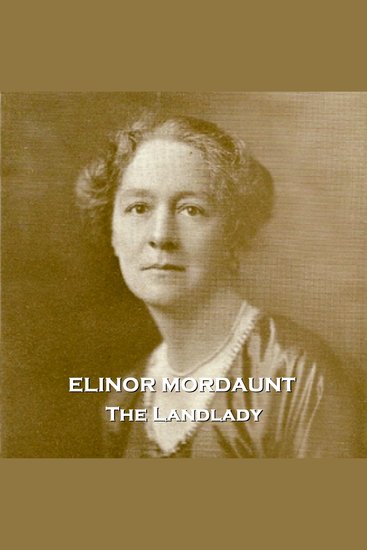
  • The Landlady - A rare benevolent ghost sighting in this story of a couple moving into a new home - cover

    The Landlady - A rare benevolent...

    Elinor Mordaunt

    • 0
    • 0
    • 0
    Evelyn May Clowes was born on 7th May 1872 in Cotgrave, Nottinghamshire.  
     
    Growing up in genteel circumstances, her early childhood was spent at Charlton Down House near Cheltenham, Gloucestershire, and her teenage years near Heythrop in the Cotswolds.  
     
    She was educated at home by governesses, excelling at German, Latin, Greek, shorthand, landscape painting, and fabric and wallpaper design. 
     
    In 1897 she went to Mauritius as companion to her cousin Caroline and in 1898 married Maurice Wilhemn Wiehe, the owner of a sugar plantation. She gave birth to two stillborn children. After a few years of marriage, she found life difficult and returned to England. Shortly afterwards she went by herself to Australia, arriving in June 1902 and gave birth to a son a few months later.   
     
    She lived in Melbourne for about eight years.  To earn a living she took on a wide and varied range of jobs; she edited a woman's fashion paper, wrote short stories and articles, made blouses, designed embroideries, tilled gardens, acted as a housekeeper, and did other artistic work. Her health was not strong, but she undertook any kind of work which would provide a living for herself and her infant son. This gained her an experience of life which was readily put to use in her literary works. 
     
    Her first book, ‘The Garden of Contentment’, was published in 1902 under her pen-name Elinor Mordaunt. It was the first of many works that covered fiction, short stories, travel and autobiography. 
     
    She changed her name by deed poll to Evelyn May Mordaunt on 1st July 1915 and gained a further reputation as a writer of short stories for magazines which display both her humour and sense of tragedy. Travel was always high on her priority and the experiences used not only for pleasure but in her writings and, as travel books, ideas in themselves.  
     
    On 27th January 1933 at Tenerife, in the Canary Islands, she married a retired barrister from Gloucestershire. In her own words, the marriage ‘ended in tragedy.’ 
     
    Elinor Mordaunt died on 25th June 1942 at the Radcliffe Infirmary, Oxford. She was 70.
    Zum Buch